
Forgotten Dairies
Despite Petrol Discount, Nigerians Still Groan In Consumer Market -By Isaac Asabor
Nigerians need more than a temporary promise of cheaper petrol. They need an economy in which the cost of living becomes manageable and government policies produce tangible improvements in their daily lives. The ultimate test of the discount is not what the government says it intends to achieve, but what consumers can actually afford when they leave the filling station and enter the marketplace.

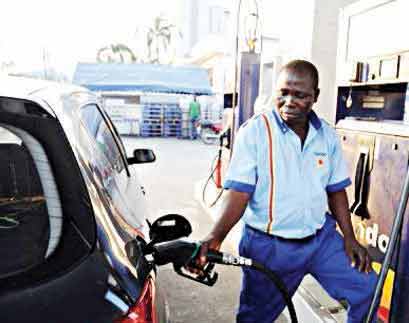
The Federal Government’s 30-day petrol discount scheme at Nigerian National Petroleum Company Limited (NNPC) filling stations has yet to translate into meaningful relief for Nigerians grappling with the rising cost of living. Despite the promise of cheaper petrol, households, commuters and businesses continue to contend with high transportation costs, expensive food items and other essential commodities that have become increasingly difficult to afford.
Rather than easing the economic burden on consumers, the intervention has raised questions about the effectiveness of temporary price relief in an economy where the cost of virtually everything is influenced by the price of petroleum products. More concerning are complaints by transport operators about sudden increases in petrol pump prices in some instances, suggesting that the intended benefits of the scheme may not be reaching consumers as expected.
This raises a fundamental question: what is the value of a petrol discount if Nigerians continue to groan under the weight of high transportation fares and rising prices in the consumer market?
Nigerians are not asking for complicated economic explanations. They want to see tangible improvements in their daily lives. They want cheaper transportation, affordable food, accessible essential commodities and a business environment in which operating costs do not rise faster than their earnings. Unfortunately, the petrol discount has yet to demonstrate that it can deliver these expectations on a meaningful scale.
When the Federal Government announced the initiative, it said the scheme would prioritize public transport operators and benchmark petrol sales at N1,350 per litre at NNPC retail outlets. According to the Minister of Finance and Coordinating Minister of the Economy, Taiwo Oyedele, the intervention was intended to moderate the effects of global crude oil price movements and exchange-rate fluctuations on domestic petrol prices.
However, announcing an intervention is different from delivering relief. The success of any economic policy must be judged by its practical effects on consumers, not merely by the intentions expressed by its promoters.
For commuters who continue to pay burdensome fares despite the discount, the intervention has remained largely an expectation rather than a solution. If the scheme was designed to reduce transportation costs, it is reasonable to ask why many passengers are yet to experience
corresponding reductions in fares. The situation becomes even more troubling when transport operators complain about increases in petrol prices, raising concerns about whether the arrangement is working as intended.
A discount that fails to produce lower transportation costs offers limited relief to passengers. If fuel expenses decline for participating operators but fares remain unchanged, the benefits may accrue to the operators without improving the purchasing power of commuters. Conversely, if pump prices increase in some locations, the anticipated savings could be further eroded.
The government must therefore recognize that consumers judge policies by their consequences. Whether an intervention is described as a discount, concession or temporary market measure matters little to a worker who spends a substantial part of daily earnings commuting to work, or a trader whose transportation expenses reduce the money available for household needs.
Another major limitation is the restricted geographical reach of NNPC retail outlets. Figures cited in reports on the initiative indicate that the company operates approximately 900 outlets out of about 22,700 registered filling stations nationwide. This disparity raises questions about the number of consumers who can realistically benefit from the scheme, particularly those living in communities where NNPC stations are unavailable or difficult to access.
For such consumers, the discount may have little practical relevance. They must continue buying petrol from available retailers at prevailing prices, even as the government promotes the intervention as a means of cushioning economic hardship.
This explains why the Petroleum Products Retail Outlets Owners Association of Nigeria has urged the Federal Government to allocate 30 per cent of the petrol covered by the scheme to its members. The association’s argument that independent retailers have a wider presence in rural communities and underserved locations deserves consideration.
Nevertheless, expanding the distribution network alone will not guarantee meaningful relief. The government must ensure that the discount is substantial enough to make a difference, that participating retailers comply with its terms and that consumers can verify the benefits they are supposed to receive.
Petroleum economist and Professor Emeritus of Petroleum Economics, Prof. Wumi Iledare, has emphasized that the success of the initiative depends on whether savings made by transport operators are passed on to passengers. His observation highlights one of the central weaknesses of the scheme: reducing the cost of an operator’s input does not automatically reduce the final price paid by the consumer.
The same principle applies to food and other essential commodities. Even if transport operators save money on petrol, food prices will not necessarily fall unless lower transportation and distribution costs translate into lower retail prices. Traders may continue to contend with expensive inventory, storage, electricity, rent and other operating expenses. Manufacturers, too, face production and distribution costs that extend beyond petrol alone.
Consequently, a petrol discount cannot, by itself, reverse the widespread pressure on consumer prices. At best, it can contribute to easing some of the cost pressures, provided the savings are passed through the supply chain. Without effective monitoring, however, consumers may continue paying high prices while the intended benefits remain difficult to identify.
The Federal Government should therefore establish a transparent monitoring framework to assess the actual impact of the intervention. It should disclose the volume of discounted petrol supplied, the number and locations of participating outlets, the beneficiaries reached and the savings generated. Transportation fares should also be monitored to determine whether the scheme is producing the intended reductions.
Such transparency would enable Nigerians to distinguish between relief announced on paper and relief experienced in the marketplace. It would also help the government identify implementation failures and make necessary adjustments before the scheme expires.
The 30-day duration of the initiative presents another concern. Even if the intervention provides some immediate relief, what happens when the period ends? Will consumers return to the same high fuel prices, transportation fares and food costs? Will another temporary measure be introduced, or will the government address the structural factors that continue to make essential goods and services expensive?
These are legitimate questions in an economy where households have limited room to absorb additional expenses. For many workers, income increases have struggled to keep pace with the rising cost of necessities. Small businesses, meanwhile, must contend with higher operating expenses and consumers whose purchasing power has weakened. Under such circumstances, a temporary discount may offer only limited respite unless it forms part of a broader, sustainable economic strategy.
The government must also take public dissatisfaction seriously rather than dismissing criticism as political opposition. The concerns surrounding the scheme extend beyond political affiliations. Workers, transport operators, traders, manufacturers and ordinary households all have an interest in whether the intervention produces measurable benefits.
The Nigeria Labour Congress has argued that petrol should sell below N1,000 per litre for the intervention to make a meaningful difference. Whether or not the government adopts that benchmark, the underlying concern deserves attention: a discount that leaves fuel prices beyond the reach of many consumers may not sufficiently address the hardship the scheme is intended to ease.
Petrol prices have consequences that extend far beyond filling stations. They influence transportation, food distribution, manufacturing, electricity generation and the provision of services. When fuel becomes more expensive, businesses frequently adjust their prices to recover additional costs. Consumers then bear the burden through higher fares, increased commodity prices and reduced purchasing power.
This interconnected relationship explains why Nigerians continue to groan in the consumer market despite the announcement of a petrol discount. The challenge is not merely the price of petrol in isolation but the cumulative effect of rising costs across the economy.
Nigeria therefore needs more than short-term interventions. It needs a coherent and sustainable energy policy that strengthens domestic refining, encourages competition, improves the availability of petroleum products and promotes greater predictability in pricing. The government must also address the economic conditions that allow increases in energy costs to spread rapidly through different sectors.
Olisa Agbakoba, a legal practitioner and former president of the Nigerian Bar Association, has advocated a different approach to domestic crude pricing, arguing that a differential pricing arrangement could help reduce the cost of locally refined petrol. His proposal deserves examination alongside other credible policy options, with careful consideration of their economic implications, implementation requirements and potential benefits to consumers.
Ultimately, the Federal Government must understand that economic relief is not a public relations exercise. It cannot be measured by the number of announcements issued, the attractiveness of policy descriptions or the assurances given to citizens. Its real value lies in whether people can afford the necessities of life without sacrificing other essential needs.
A commuter who continues to spend heavily on transportation, a trader whose profit is consumed by logistics costs and a household that struggles to afford food are unlikely to consider a discount successful simply because it has been announced. For these Nigerians, the decisive question is whether the policy has improved their circumstances.
The government should therefore assess the petrol discount against clear and verifiable indicators rather than relying on its stated intentions. If the scheme is not reducing transportation costs or easing pressure on essential commodities, the appropriate response is to identify the obstacles, correct implementation gaps and reconsider aspects that are not delivering the expected results.
The Federal Government must also recognize the limits of what a 30-day scheme can accomplish in an economy burdened by persistent cost pressures. While temporary relief may be useful, lasting improvement requires policies that address the underlying causes of high prices, strengthen consumer purchasing power and ensure that the benefits of economic interventions reach ordinary citizens.
Despite the petrol discount, Nigerians are still groaning in the consumer market because the announcement has yet to translate into the broad-based relief they need. Until transportation becomes more affordable, food prices ease and households begin to feel a measurable improvement in their purchasing power, the gap between government intervention and consumer experience will remain a major concern.
Nigerians need more than a temporary promise of cheaper petrol. They need an economy in which the cost of living becomes manageable and government policies produce tangible improvements in their daily lives. The ultimate test of the discount is not what the government says it intends to achieve, but what consumers can actually afford when they leave the filling station and enter the marketplace.





















You must be logged in to post a comment Login