Breaking News
Troops Reveal How Weeks of Intelligence Work Led to Rescue of 360 Abductees in Borno
Troops of Operation HADIN KAI rescued 360 hostages from a terrorist hideout in Borno after weeks of intelligence gathering and planning.

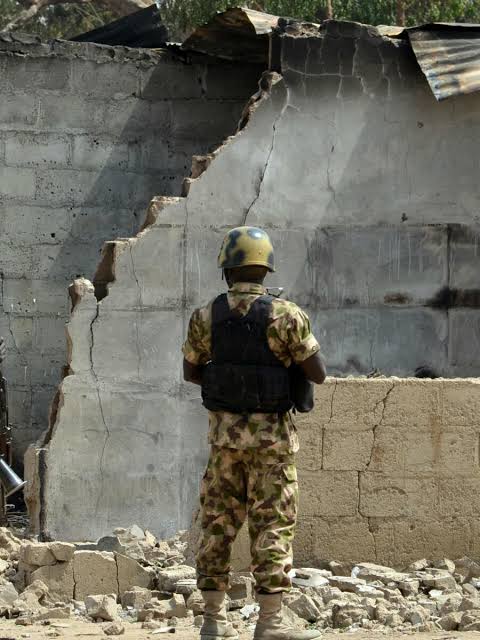
Troops of Operation HADIN KAI (OPHK) have revealed the strategy behind the successful rescue of 360 people abducted by Boko Haram/ISWAP terrorists and held in a remote enclave in southern Borno State.
Most of the rescued victims were women and children kidnapped during the March 3, 2026 attack on Ngoshe community in Gwoza Local Government Area. The terrorists had invaded the community before military forces fought back and neutralised dozens of them.
Providing details of the rescue mission, Acting Media Information Officer of OPHK, Lieutenant Colonel Haruna Sani, said the operation was driven by extensive intelligence gathering and meticulous planning.
“The operation, which was the culmination of weeks of painstaking intelligence preparation, covert reconnaissance, and operational planning, resulted in the safe recovery of men, women, and children who had been held in captivity under harsh conditions after being abducted from several communities, particularly within the Ngoshe axis,” he said.
According to Sani, intelligence reports from multiple sources helped troops identify the exact location of the hostages and exposed the support structures sustaining the terrorist enclave.
Military intelligence units then launched an intensive target development process using HUMINT, SIGINT and ISR capabilities, including drone surveillance and long-range reconnaissance missions.
The intelligence effort enabled commanders to gain detailed knowledge of the terrain, enemy positions, defensive systems, movement patterns and the condition of the captives.
Sani disclosed that a major breakthrough came when intelligence operatives successfully penetrated the insurgent network.
“These assets provided timely and actionable intelligence regarding the exact locations of the abductees, the disposition of insurgent commanders, internal security measures, and planned relocation routes,” he said.
At the same time, OPHK carried out coordinated information and psychological operations that created mistrust and uncertainty among insurgent fighters, disrupting their command and control systems.
With intelligence confirming the target, Special Forces and troops from Sector 1 launched a carefully coordinated assault designed to isolate the area, dominate key terrain and prevent reinforcements or escape.
Supported by live surveillance feeds, assault teams moved into the objective area under darkness while blocking units secured likely withdrawal routes.
“Faced with the speed, precision, and overwhelming combat power of the advancing troops, several insurgents abandoned their positions and fled into surrounding mountainous terrain, while others surrendered,” Sani stated.
The operation led to the rescue of all 360 hostages, although two infants reportedly died from exhaustion caused by the harsh terrain and the prolonged effects of captivity.
The remaining victims were evacuated for medical treatment and humanitarian care.
Commending the troops, the Military High Command described the operation as proof of the effectiveness of intelligence-led missions and inter-agency cooperation.
“The successful rescue of 360 abductees reflects the effectiveness of intelligence-led operations, the growing synergy among security stakeholders, and the unwavering resolve of the Armed Forces of Nigeria to protect innocent citizens and restore lasting peace to affected communities.”
The military further assured the public that clearance and exploitation operations are continuing to eliminate remaining terrorist cells and prevent future attacks.
Africans Angle News