Africa
We Are All Casualties -By Zayd Ibn Isah
Nigeria, as Africa’s largest democracy, operates in a subregion where democratic governance has faced severe strain in recent years. It cannot afford the luxury of an antagonistic posture toward a strategic partner like the United States, and it is reasonable to believe that the U.S. authorities are equally aware of this. There are no winners in a diplomatic standoff between Abuja and Washington, only losses for both nations. What must prevail now is reason.

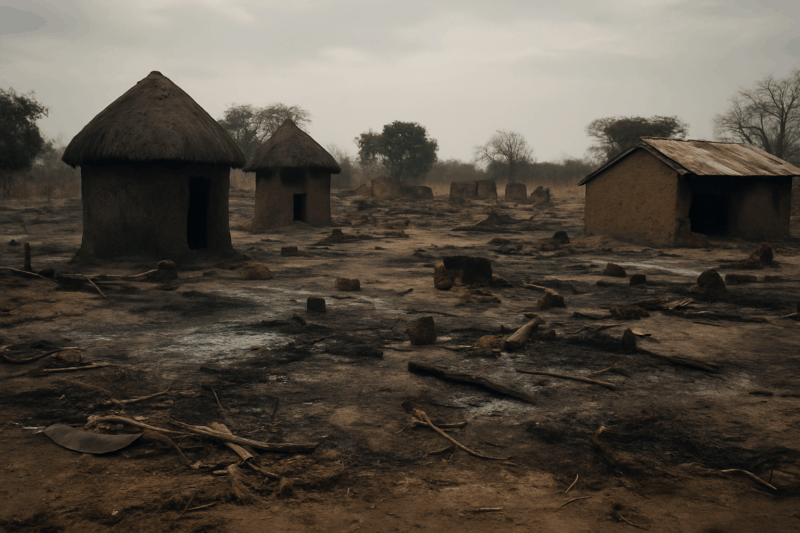
The U.S. President, Donald Trump, has released a statement on what he described as the persecution and genocidal extermination of Christians in Nigeria. In a couple of social media posts, Trump alleged that Christianity is facing an existential threat in Nigeria and not only labeled the country as one of particular concern but also vowed to invade in order to stop the killings of Christians.
He also threatened to cut off aid support to Nigeria, as if we, as a country, are living in internally displaced camps. One would not blame him for threatening to cut off aid to Nigeria, na condition make crayfish bend, as we say in pidgin English. Nigeria once gave aid to other countries; whatever has changed to make us start receiving from Europe and America would be a story for another day. Let me, for now, stick to the kernel of this discussion.
As expected, Trump’s statement has caused controversies. Nigerians are divided in their opinions. Some welcomed the idea of a U.S. Army invasion, if only to put paid to the decades of insecurity in the country. Others are against the idea, citing countries that America has invaded where nothing good came out of it in the end. There are also those who remain neutral and would rather make fun of it. They have dug out an old video of some Nigerians testing what looked like a missile, claiming it demonstrated our military strength. God forbid, if war were to break out between Nigeria and America, the outcome is highly predictable. Nigeria’s battles have always been internal ones; we have not even gone to war with small Ghana to test our military power, how much more America.
The narrative of Christian genocide in Nigeria is laughable. I wonder why Donald Trump would take such a joke from a comedian so seriously. Trump should have listened to voices of reason, like that of U.S. envoy Massad Boulos, who said terrorist attacks in Nigeria cut across religion and ethnicity. He even went as far as describing Nigeria as a disgraceful country while threatening to invade with the U.S. Army. This is not the first time he has used such derogatory words on Nigeria; he once called it a “shithole country” under President Muhammadu Buhari, GCFR. That is why I am amused by those already excited about the prospect of Donald Trump coming to save Nigeria from decades of insecurity, a country he has little or no regard for.
There is more to America’s sudden interest in Nigeria than meets the naked eye. Every right-thinking person knows that the Christian population in Nigeria is not the only casualty of the more than one decade of insecurity in the country. We are all casualties, to borrow from the lines of John Pepper Clark’s poem The Casualties. Christians have been killed as much as Muslims and even traditional worshippers. So, when someone sits in the Oval Office in America and talks about Christian genocide, does it mean that the Muslims and adherents of other religions who have been killed are nameless and faceless?
Who would blame the Muslims and other adherents of other religions if they start an Our-Lives-Matter-Too campaign? Anyway, we all know that their mission is to further divide us and hit up the polity. Sadly, some of us are falling for it. It would shock some of those hailing Donald Trump if, after applying for asylum in America on claims of persecution in Nigeria, they are denied. The truth is that no Nigerian Christian should be happy with the Christian genocide narrative in a country where they are not minorities.
A Reading of President Trump’s Statement on Nigeria
Perhaps comprehension has become a casualty in this debate, but I find it difficult to understand how anyone can claim that President Trump’s recent statement on faith-based violence in Nigeria aligns with the sectarian agenda advanced by certain groups. Two points stand out clearly in his comments. First, he deliberately avoided describing the situation in Nigeria as “genocide,” instead using the phrase “existential threat to Christians.” Secondly, and crucially, he identified radical Islamists, not the Nigerian state, and certainly not Nigerian Muslims—as the perpetrators of violence. These distinctions matter greatly, as they contradict the divisive rhetoric being promoted by those seeking to pit one faith community against another.
This is not the first time President Trump has raised concerns about alleged one-sided violence against Christians. During former President Muhammadu Buhari’s visit to the White House on April 30, 2018, Trump remarked: “We’re deeply concerned by religious violence in Nigeria, including the burning of churches and the killing of Christians.” In response, President Buhari, while framing the violence as indiscriminate, acknowledged the challenge of violent herdsmen and cross-border recruits from Libya and the Sahel, stressing that his government was doing its best to stabilise the situation.
There is a reason that moment remains instructive. Rather than amplifying a narrative of state-sponsored sectarian extermination, the U.S. side identified religious violence as one of several security concerns. The Nigerian side responded by framing the violence as part of complex socio-security dynamics, not as a conspiracy of Muslims against their Christian compatriots.
It also bears reiterating that the claim of “genocide” against Christians in Nigeria does not meet the legal definition established under the 1948 Convention on the Prevention and Punishment of the Crime of Genocide. The Convention defines genocide as acts committed with the intent to destroy, in whole or in part, a national, ethnic, racial, or religious group as such. There is no credible evidence that the Nigerian government is masterminding the destruction of Christians. The origins and dimensions of violence in Nigeria are unmistakable. They are rooted in terrorism, banditry, communal conflicts, resource competition, and, admittedly, weak governance over the years. This does not amount to the state-directed and systematic campaign that the term genocide presupposes.
President Trump’s statement, while emotively focused on Christian victims, does not mirror the propaganda promoted by some far-right commentators who claim that the Nigerian government turns a blind eye to attacks on Christians or that Nigerian Muslims are complicit. On the contrary, he singled out radical extremists. This distinction aligns with the Nigerian government’s own position and reflects the sacrifices of its multi-faith armed forces in confronting terrorism across the Sahel and West Africa.
The line between NGO activism and diplomatic engagement is clear. Activism draws its energy from outrage, while diplomacy thrives on dialogue. In this regard, the response of Nigeria’s Ministry of Foreign Affairs exemplifies the restraint and statesmanship required in such a situation. It acknowledges the concerns raised, reaffirms Nigeria’s commitment to religious freedom, and emphasises partnership with the United States in tackling violent extremism, the central theme of President Trump’s statement.
This is reminiscent of President Cyril Ramaphosa’s masterclass in diplomacy during his Oval Office meeting with Trump, when the latter made claims about alleged killings of white farmers in South Africa. Ramaphosa refused to be provoked and chose to engage with facts. That act of composure shielded South Africa from further reputational harm and potential economic consequences. Such measured diplomacy is not weakness; it is wisdom.
Nigeria, as Africa’s largest democracy, operates in a subregion where democratic governance has faced severe strain in recent years. It cannot afford the luxury of an antagonistic posture toward a strategic partner like the United States, and it is reasonable to believe that the U.S. authorities are equally aware of this. There are no winners in a diplomatic standoff between Abuja and Washington, only losses for both nations. What must prevail now is reason.
Zayd Ibn Isah
lawcadet1@gmail.com