Africa
When Will The Storm Pass? Navigating Nigeria’s Economic Hardships Under Tinubu’s Leadership, by Isaac Asabor
Ostensibly exacerbating the suffering is that the GDP growth rate climbed from 2.51% to 2.98%. But this statistical uptick belies the reality faced by ordinary Nigerians. Their purchasing power dwindled, stifling investment. The removal of petrol subsidies and FX market liberalization left workers struggling to afford basic necessities.

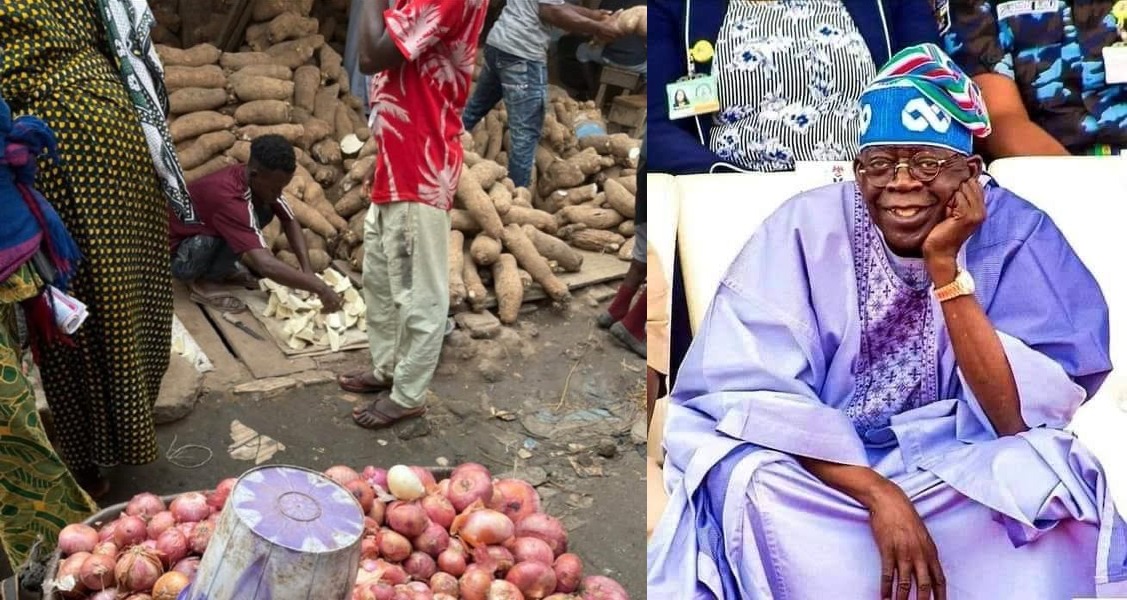
As the winds of economic turmoil continue to buffet Nigeria, not a few people, particularly the masses, find themselves grappling with rising food prices, fuel subsidy removal, and a national grid shutdown. Without a doubt, the Tinubu-led administration has been at the helm during this tempest, and many are wondering when the storm will finally abate.
The foregoing question, no doubt, has become inexplicable as it is obvious that when President Bola Tinubu assumed office that he inherited a nation in disarray. Foreign reserves were depleted, and various sectors were poorly managed. But Tinubu’s administration wasted no time in implementing reforms, including the controversial fuel subsidy removal. While some may find this decision hard to swallow, it is essential to understand the actual truth behind it.
To cushion the impact of reforms, Tinubu’s government swiftly introduced measures. These include a 35,000 naira wage award for workers, 100 billion naira for CNG fuel buses to reduce transportation costs, and financial support for small enterprises. Additionally, 150 billion naira in palliative loans to states aims to mitigate the effects of fuel subsidy removal. The cultivation of hectares of land is also receiving substantial funding. But the question is: “Who and who got the palliatives?”
In fact, with recent disruptions, such as the shutdown of the national grid, not a few people raised eyebrows. Senator George Akume, Secretary to the Government of the Federation, minced no words when he labeled this act as treasonable, alleging that labor’s actions risk undermining the administration’s efforts to rebuild the economy. But does the allegation address the fact that not a few Nigerians going to bed in empty stomach? As Akume aptly put it, “Of what use is that to all of us?”
In fact, setting the minimum wage is no small feat. In 2019, the federal government, in collaboration with organized private sectors and labor, legislated a 30,000 naira minimum wage. It is an exclusive issue on the legislative list, emphasizing the federal government’s role in recommending it to the national assembly.
So, when will this hardship under Tinubu’s leadership come to an end? As we brace against the gales of economic uncertainty, Nigerians yearn for a brighter horizon. Perhaps, like sailors awaiting fair winds, we must hold on and weather the storm, trusting that better days lie ahead.
In fact, as the sun set on May 29, 2023, Nigerians welcomed President Bola Ahmed Tinubu with a mix of anticipation and skepticism. His promises of “Renewed Hope” resonated across the nation, but little did they know that the path ahead would be fraught with challenges and sacrifices.
In fact, his administration wasted no time implementing reforms. The knee-jerk removal of petrol subsidies on his first day in office sent shockwaves through the economy. The naira floated, and draconian policies followed suit. These seismic shifts exerted immense pressure on the polity, leaving Nigerians grappling with economic hardship.
As if the gloomy economic indices are not worse enough, headline inflation surged from 22.41% to a staggering 33.7% within a year. But official figures only tell part of the story. Essential consumables witnessed price hikes of over 100%. A Can of sardines that cost N300 a year ago now demands N1, 200. Peak milk, once N250, now sells for N700. Spaghetti and beans prices have tripled, and frozen fish is now a luxury at N3, 000.
Ostensibly exacerbating the suffering is that the GDP growth rate climbed from 2.51% to 2.98%. But this statistical uptick belies the reality faced by ordinary Nigerians. Their purchasing power dwindled, stifling investment. The removal of petrol subsidies and FX market liberalization left workers struggling to afford basic necessities.
Tinubu acknowledged the hardship in a July 31 address, pleading for patience. His reforms were unavoidable, he argued. Yet, the absence of alternative policies exacerbated the pain. The petrodollar that once sustained Nigeria’s FX market had dwindled, forcing the naira to float. But where were the safety nets for the vulnerable?
Without a doubt, Nigeria stands at a crossroads, even as his administration grapples with the delicate balance between economic revival and human suffering. As the days turn into months, Nigerians hold their breath, hoping that renewed hope will eventually outweigh the unbearable cost of change.
In fact, Nigerians are no doubt bearing the brunt of unprecedented hardships under Tinubu’s administration. As he marked his first year in office some few years ago, Nigerians found, and still finds themselves grappling with the weight of economic reforms that have led to soaring prices and stifled purchasing power.
Given the foregoing backdrop, a closer look at the challenges faced by the masses no doubt reveals that not a few of them are unhappy with the deepening level of sufferings they are passing through.
Worst of all, is the purchasing power woes as there is an unprecedented lowering of the purchasing power of average Nigerian workers, and which is invariably discouraging investment. This is as with the removal of petrol subsidies and FX market liberalization has eroded workers’ earnings making it to remain stagnant. Given the foregoing backdrop, investors now hesitate as consumers cannot afford their products.
In fact, a recent poll by the Africa Poling Institute (API) reveals that hunger, poverty, and dissatisfaction are major concerns under Tinubu’s administration.
In summary, Nigerians are indeed groaning under the weight of unprecedented hardships, hoping for policies that address their daily struggles, and President Tinubu faces the challenge of balancing economic reforms with citizens well-being, the situation is no doubt a delicate task that requires empathy and effective solutions, even as not a few of them are afraid of the future as the president is likely to be in power for the next seven years.
In fact, the question the masses are unanimously asking sounds like, “When Will the Storm of hardship pass under Tinubu’s Leadership?”