Africa
Where Is The “Change” APC Promised Nigerians For Almost A Decade Now?, by Isaac Asabor

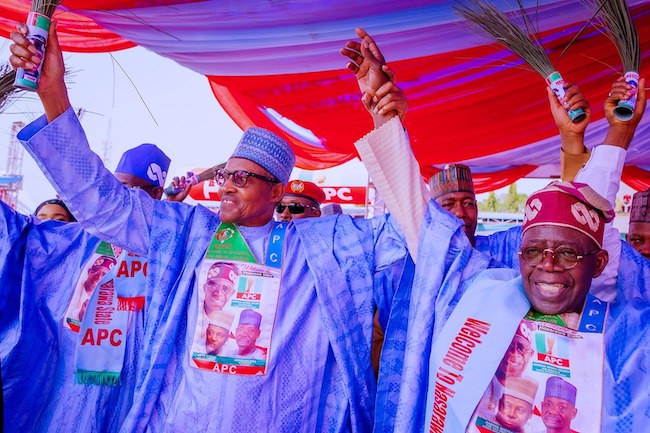
When the All Progressives Congress (APC) took over the reins of power in 2015, the party rode on the back of a powerful slogan: “Change”. Their manifesto promised to end corruption, provide better security, and fix the economy. It was a fresh start that millions of Nigerians had been longing for, after years of perceived mismanagement by the previous administration. But now, nearly a decade later, many Nigerians are left asking, where is the change we were promised?
In the early days of former President Muhammadu Buhari’s administration, Nigerians were optimistic. There was a widespread belief that corruption, which had long crippled the nation’s institutions, would finally be dealt with. The Boko Haram insurgency in the northeast was expected to be stamped out, and citizens anticipated a better life overall with job creation and improved infrastructure. The APC, buoyed by these expectations, was hailed as the party that would lead Nigeria to economic prosperity and security.
The first signs of trouble came when the government struggled to maintain the stability of the economy. Despite being Africa’s largest economy, Nigeria plunged into a recession by 2016, just a year after the APC took power. This was largely due to the crash in global oil prices and the government’s inability to diversify the economy beyond its heavy reliance on crude oil. Inflation rose, job creation lagged behind expectations, and many businesses found it difficult to survive in the increasingly harsh economic climate.
While the government claimed it was taking steps to manage the economic crisis, the suffering of the average Nigerian became more apparent. Unemployment rates skyrocketed, and the cost of living surged as prices of essential goods spiraled out of control. The naira lost significant value, eroding the purchasing power of virtually all Nigerians.
One of the biggest selling points of the APC’s campaign was the promise to fight corruption. Yet, almost a decade later, corruption remains deeply entrenched. High-profile corruption cases have been swept under the rug, with several APC members implicated in scandals but facing no consequences. Meanwhile, whistleblowers and opposition figures are swiftly prosecuted, suggesting a selective approach to anti-corruption efforts.
Despite Buhari’s reputation as a no-nonsense leader, the inability to root out systemic corruption within his own party and government has been one of the most significant disappointments for Nigerians. The situation has only worsened, with reports of looted funds and misappropriation of public resources still making headlines today.
The security situation has arguably become worse under the APC’s watch. While the government initially claimed victories over Boko Haram, the insurgency remains a problem in parts of the northeast, with splinter groups like Islamic State West Africa Province (ISWAP), continuing to wreak havoc. Banditry, kidnapping, and communal clashes have also escalated in other parts of the country, particularly in the northwest and middle-belt regions.
Nigerians who were once hopeful for a safer country are now more vulnerable than ever, with daily reports of attacks on communities, highways, and schools. Even urban areas are not spared, as crime rates in cities like Lagos and Abuja continue to rise.
In 2023, Bola Ahmed Tinubu, a prominent leader within the APC, took office as Nigeria’s president, succeeding Buhari. The APC’s campaign was again filled with promises of renewed hope, economic recovery, and improved security. However, months into his administration, Tinubu is faced with many of the same challenges. Nigerians are once again bracing themselves for what may be another round of disappointment.
His government has introduced some reforms, such as the removal of fuel subsidies and the unification of the naira exchange rate, but these actions have led to further hardship for the poor, as prices of goods, transport, and services continue to rise.
Tinubu’s administration must quickly prove that it is more than just a continuation of the same failed promises if it hopes to regain public trust. Nigerians are looking for tangible improvements, not just rhetoric.
For many Nigerians, the change the APC promised feels more like a mirage. The party’s inability to deliver on its key promises has bred widespread frustration. Protests had broken out in different parts of the country, with citizens demanding action on unemployment, rising food prices, and insecurity. Social media is filled with complaints from young people who feel let down by the system.
Today, millions of Nigerians are grappling with the daily reality of skyrocketing inflation, a lack of basic infrastructure, and an education system in crisis. The healthcare sector is also a shadow of what it should be, with professionals leaving the country in droves due to poor working conditions.
As we look back on the nearly ten years of APC governance, it is clear that the change Nigerians were promised remains elusive. While the party continues to defend its record, claiming that it has laid the groundwork for future prosperity, the everyday Nigerian is left struggling with worsening economic conditions, unchecked corruption, and insecurity.
The APC, which once offered hope, now finds itself at a crossroads. Its leaders must ask themselves tough questions: Will they finally deliver on the promises they made, or will they continue to disappoint the very people who voted them into power? Nigerians are tired of empty promises; they need real, tangible change. And until that happens, the question remains: “Where is the “change” APC promised? “The answer, unfortunately, is still out of reach.