Forgotten Dairies
Who Rules Osun: Wealth Or Words? -By Adeola Ojo
Governance requires the discipline of the ledger to create wealth, and the wisdom of words to communicate purpose, inspire trust, and build a cohesive community. In AMBO, the state finds both: a financial mind tested in boardrooms and a public servant who understands the pulse of Ijesaland, Iwoland, Ifeland, Osogboland, even Edeland.

As the harmattan haze clears and the heat of political maneuvering gives way to the countdown towards August 15, 2026, the political atmosphere across Osun State thickens with familiar anxieties.
From the bustling corridors of power in Osogbo to the quiet agrarian settlements stretching across Ijesaland and beyond, the air is pregnant with expectation. Yet, beneath the standard cacophony of campaign jingles, party flags, and roadside rallies, a profound question is being whispered in market stalls, motor parks, and quiet academic common rooms:
When the votes are finally cast, what will truly determine the soul of Osun? Is it the cold, disciplined architecture of wealth – manifested as fiscal prudence, institutional background, and structural capability – or is it the magnetic, populist performance of words, carried by the fluid grace of rhetoric and mass emotional connection?
This dilemma is not theoretical; it is the central drama defining the current political cycle. Osun has always been a paradox. It is a land steeped in intellectualism, cultural pride, and historical consciousness, yet it is also a place where the immediate realities of daily survival dictate the rhythm of public judgment.
When ordinary citizens gather under the shade of neem trees or trade goods across bustling community markets, their evaluations of leadership rarely rely on macro-economic jargon. They look at the road leading to their farms, the security of their neighborhoods, the reliability of public utilities, and the dignity of the common worker.
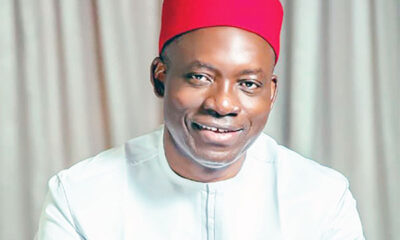
In every democratic contest, two archetypes vie for the mandate. On one side stands the technocrat – the custodian of the ledger, the man of figures, balance sheets, and administrative systems. Figures like Asiwaju Munirudeen Bola Oyebamiji (AMBO), whose career roots are embedded in the disciplined world of finance, banking, and public resource management, represent this school of thought. Yet those who have watched him closely know he is no stranger to the marketplace or the town hall, where he speaks plainly in the language of the people.
To proponents of this tradition, governance is the serious business of institutional engineering. It is about growing internal revenues without strangling the populace, balancing budgets, managing infrastructural deficits, and ensuring that the machinery of state functions with predictable precision.
The argument for the technocrat is built on the premise that raw charisma alone cannot patch a leaking roof or service a state’s debt profile. Proponents point to financial audits, revenue optimization, and institutional stability as the ultimate metrics of progress. In a developing economy grappling with structural shifts, the accountant’s approach promises safety, predictability and long-term viability. It tells the electorate: do not merely look at how sweetly a promise is spoken; look at the track record of how public wealth has been guarded and multiplied.
Yet, human beings are rarely governed by spreadsheets alone. Politics, particularly in a vibrant and culturally expressive society like ours, is a deeply emotional enterprise. This brings us to the power of words – the populist art of communication, performance, and shared emotional resonance. Words can heal collective fatigue, mobilize despondent youths, and forge an immediate bond between the leader and the led. A well-crafted phrase, a familiar song, a culturally attuned dance step, or an accessible populist message can bridge the psychological distance between the governed and the government faster than any balance sheet ever could.
To the average market woman or artisan, the technocrat’s ledger can sometimes feel cold and distant – a sterile instrument wielded by men who live behind high walls and air-conditioned offices, far removed from the daily struggle for three square meals. Against this backdrop, the politician who speaks the language of the streets, who mirrors the joy, the pain and the rhythm of the common people through powerful, evocative words, wields an intoxicating kind of power.
Words create hope. Words offer validation. In the theatre of mass democracy, the person who commands the crowd with compelling oratory often holds an electoral advantage that pure logic struggles to pierce. So, how do these two forces collide in the unfolding 2026 race?
The contemporary Osun voter is sophisticated, having evolved through decades of political experimentation, broken promises, and hard-earned lessons. The electorate has seen administrations driven by austere intellectualism and those defined by populist exuberance. They know that neither wealth nor words can independently sustain a modern state.
An excess of technocratic coldness often leads to administrative alienation, where the government operates like a corporate boardroom detached from the heartbeat of the people. Conversely, an excess of populist rhetoric without institutional depth or financial discipline frequently results in theatrical governance where the applause fades once economic reality sets in.
As the state edges closer to the ballot box, the real challenge for leadership seekers is finding the synthesis between the two. The modern leader cannot afford to be an unfeeling calculator, sequestered from the emotional pulse of the masses. Neither can they afford to be a mere merchant of empty rhetoric, skilled in speech but bankrupt in administrative capacity.
Governance requires the discipline of the ledger to create wealth, and the wisdom of words to communicate purpose, inspire trust, and build a cohesive community. In AMBO, the state finds both: a financial mind tested in boardrooms and a public servant who understands the pulse of Ijesaland, Iwoland, Ifeland, Osogboland, even Edeland.
On a final note, the choice before the people of Osun is an invitation to look past the noise of partisan warfare. Wealth provides the tools of transformation, but words provide the soul and the vision. As citizens weigh their options and deliberate under the afternoon sun, the question remains whether they will entrust their collective destiny to the steady hand that balances the books, or to the resonant voice that stirs the heart.
Whichever path the electorate chooses on August 15, the outcome will not just decide an election – it will redefine the standard of leadership in the State of the Living Spring for generations to come.
▪Ojo wrote from Ijebu-Jesa, Osun State.