
Africa
Why Mass Communication Is Not A Prerequisite For Becoming A Journalist -By Isaac Asabor
Without resort to reiteration of facts in this context, it is germane to opine once again that journalism is a cross-disciplinary profession as it must welcome and nurture talent from diverse academic backgrounds if it is to remain vibrant, credible, and responsive to society’s needs. The question should never be what did you study? But rather, can you report accurately, fairly, and insightfully?


In recent times, a rather contentious argument has resurfaced within both professional and academic circles: the claim that only graduates of Mass Communication or Journalism are qualified to practice as journalists. While this idea may appear appealing to those seeking to professionalize the field further, it is not only deeply flawed but also undermines the dynamic, inclusive, and evolving nature of journalism.
At the heart of journalism lies the ability to observe, inquire, investigate, verify, and communicate. These are skills, not degrees. Yes, Mass Communication courses offer training and foundational knowledge about media ethics, communication theories, news writing, and broadcasting techniques. But it would be misleading to assert that these academic elements are the sole gateway into journalism. To do so would be akin to claiming that only political science graduates can be politicians, or that only those who studied agriculture can be successful farmers, or proverbially put that only those who have tribal marks on their cheeks are qualified to be called the indigenes of a community which the tribal mark is peculiar to. History, and even present realities, say otherwise.

Lere Olayinka
Without a doubt, journalism is about competence, not credentials. This is as it is a practice-oriented profession. It rewards curiosity, critical thinking, a nose for news, and the ability to communicate complex issues in simple terms. A person equipped with these qualities, regardless of their academic background, can excel in the field. In fact, some of the most impactful and respected journalists across the world did not study journalism or mass communication.
Take the example of a former colleague of mine, who was covering the Brand and Marketing beat with enviable mastery. He holds an engineering degree, yet his bylines in major publications were consistently insightful, well-researched, and authoritative. His grasp of branding, consumer behavior, and marketing dynamics was not a function of his university major, but a result of years of exposure, research, professional development, and passion. His story is not unique. In fact, many journalists covering finance, technology, legal issues, science, health, and education did not start their careers with journalism degrees. Yet they are valued for their subject-matter expertise.
Again, those who think practicing Journalism is an exclusive preserve of graduates of mass communication and journalism should perish their thoughts as beats demand subject matter knowledge. So, a finance graduate would no doubt advantageously cover Capital Market, Banking and Finance, and even Insurance and Pension beats more professionally if he or she understands the nitty-gritty of new reporting.
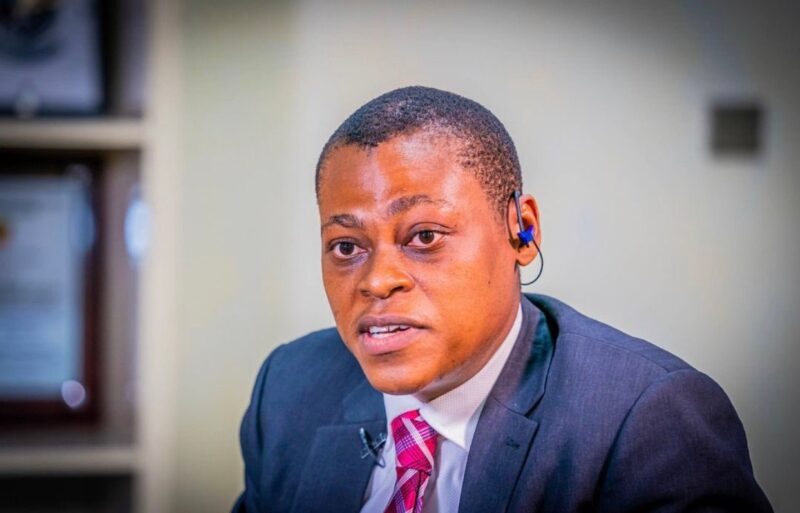
Oseni Rufai
In fact, modern journalism is structured around specialization, also known as “beats.” Whether it is politics, economics, science, health, law, sports, or consumer protection, journalists often need deeper domain knowledge to offer credible, analytical, and contextual coverage. While Mass Communication programmes may teach the mechanics of news gathering and writing, they cannot provide deep training in all these fields.
This is where cross-disciplinary backgrounds become invaluable. A science graduate reporting on climate change or a finance graduate covering monetary policy is often better positioned to understand the nuances of their subject matter. They bring an insider’s understanding that enhances the richness and accuracy of their reporting.
Moreover, the reality of today’s newsroom is one that thrives on diversity of thought and background. Editors now value writers and reporters who can blend subject expertise with journalistic ethics and storytelling skills. Some of this may be acquired through newsroom mentorship, online journalism courses, or industry workshops, none of which require a Mass Communication degree.
Globally, some of the best investigative journalists came from backgrounds in literature and English, history, philosophy, law, and even medicine. Their success came not from their course of study but from their ability to adapt, learn the craft, and apply rigorous standards of truth-seeking. In the Nigerian media space, many editors, columnists, and beat correspondents have backgrounds in English, Sociology, Political Science, Law, and more. Their work speaks volumes.
Nigeria’s economic and social reality also plays a part in shaping who becomes a journalist. With high youth unemployment and underemployment, many talented graduates from other disciplines find their calling in journalism either by passion or by circumstance. What they often lack in formal media training, they make up for in raw talent, dedication, and on-the-job learning. To now invalidate their work or question their credibility on the grounds of not studying Mass Communication is elitist and unjustifiable.
Insisting that only Mass Communication graduates can practice journalism is a form of gatekeeping that serves no real purpose. In fact, it limits the growth of the profession. Journalism, like democracy, thrives best when it is inclusive. Ideas should come from everywhere; perspectives should be diverse. It is this openness that allows journalism to remain relevant in a rapidly changing world.
Also, the increasing convergence of media and technology means that digital skills, data analysis, multimedia production, and social media savvy are as important, if not more, as traditional news writing. These skills are often learned outside the four walls of a Mass Communication department.
Rather than argue over who should be allowed to enter the field, we should shift the conversation to continuous professional development. Whether one studied Mass Communication or not, journalism requires ethical grounding, training in fact-checking, responsible reporting, media law, and editorial judgment. These can be learned through short courses, workshops, newsroom mentorships, and professional bodies. Encouraging all journalists to pursue these would elevate standards more meaningfully than excluding people based on academic history.
The Nigeria Union of Journalists (NUJ), Guild of Editors, and journalism training institutes can play a greater role in standardizing training opportunities without restricting entry based on academic background. The focus should be on competency, not credentials.
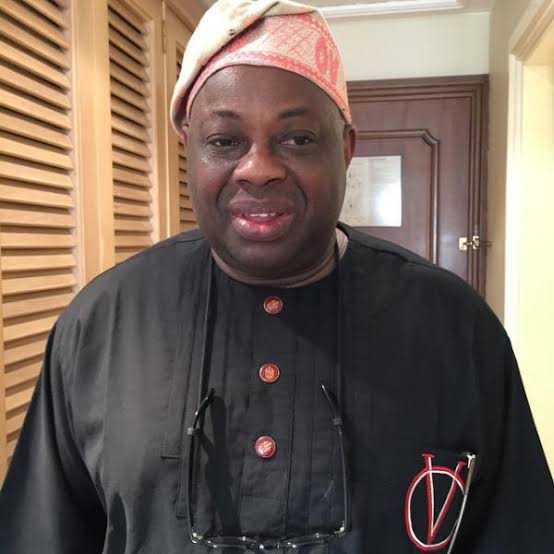
Dele Momodu
Journalism is not a closed shop reserved for the privileged few who passed through Mass Communication departments. It is an open field that rewards talent, integrity, discipline, and intellectual curiosity. Nigeria, and indeed the world, needs journalists from all walks of life: scientists who can decode pandemics, economists who can explain budgets, tech-savvy individuals who can investigate cybersecurity threats, and yes, even engineers who can simplify complex industrial developments for the layman.
Without resort to reiteration of facts in this context, it is germane to opine once again that journalism is a cross-disciplinary profession as it must welcome and nurture talent from diverse academic backgrounds if it is to remain vibrant, credible, and responsive to society’s needs. The question should never be what did you study? But rather, can you report accurately, fairly, and insightfully?
Let’s stop creating walls where bridges are needed. Journalism should be about what you bring to the table, not what is printed on your degree.














![Israeli Prime Minister Benjamin Netanyahu holds a press conference in Tel Aviv , Israel [File: Abir Sultan/Pool via Reuters]](https://www.africansangle.com/wp-content/uploads/2023/10/Israeli-Prime-Minister-Benjamin-Netanyahu.webp)