Connect with us

Breaking News

Cardoso’s CBN Reset Compared to Past Governors as Banking Reforms Are Revisited

Nigeria’s CBN under Cardoso is regaining stability, with renewed focus on past reforms by Soludo, Sanusi, and Emefiele.

Published

on

YEMI CARDOSO - CBN

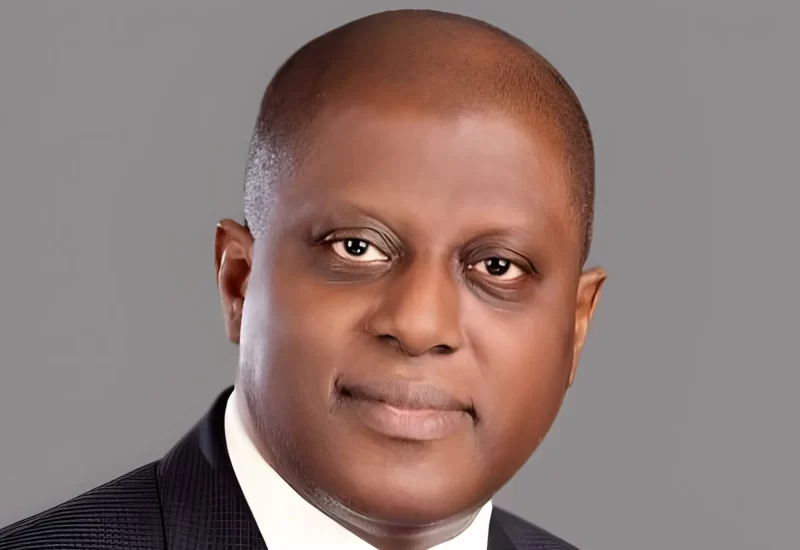
Amid ongoing economic pressures, analysts suggest that Yemi Cardoso, Governor of the Central Bank of Nigeria (CBN), is gradually restoring institutional credibility and stability to the apex bank.

Since 1999, the CBN has been led by Joseph Sanusi, Charles Soludo, Sanusi Lamido Sanusi, and Godwin Emefiele, each leaving distinct policy legacies on Nigeria’s monetary system.

The two Sanusis are often described as technocrats who prioritised policy discipline over political alignment, particularly in defending monetary independence.

However, the tenures of Soludo and Emefiele are frequently criticised in retrospective assessments for contributing to structural weaknesses in the financial system.

Soludo’s leadership, though initially celebrated for reformist ambition, is often debated for its execution risks and long-term outcomes.

Advertisement

As one cited reflection puts it:

“the bigger they come, the harder they fall.”

His rise began with the NEEDS economic blueprint, a wide-ranging development strategy that projected rapid GDP growth and Nigeria’s emergence as a top-20 economy by 2020. Critics later argued that:

“It is a salad bowl of illusions, long on theory, short on practical experience and it will never be implemented.”

A defining policy of his tenure was the banking consolidation exercise, which reduced Nigeria’s fragmented banking system by enforcing a N25 billion capital threshold within a strict deadline.

While initially praised as transformative, the reforms later came under scrutiny following the 2008 global financial crisis, which exposed vulnerabilities in the restructured banking sector.

Soludo’s later initiatives included attempts at currency redesign and the Financial System Strategy (FSS) 2020, including a proposed redenomination of the naira:

Advertisement

“N1000, N500, N200 and N100 would change to N100, N50, N20 and N10 respectively.”

The proposal was ultimately abandoned amid political resistance and approval challenges.

Following his exit in 2009, Sanusi Lamido Sanusi inherited what was widely described as a fragile banking system requiring urgent stabilisation.

Today, comparisons between past reforms and current CBN leadership continue to shape debates around institutional direction and monetary policy credibility in Nigeria.

Africans Angle News


Advertisement
Continue Reading
Advertisement
Click to comment

Leave a Reply

Your email address will not be published. Required fields are marked *

Trending Contents

Topical Issues

Aliyu Baba Mohammed Aliyu Baba Mohammed
National Issues6 hours ago

The Counterfeit Drug Economy: How Fake Antimalarials And Regulatory Chaos Are Undermining Nigeria’s Malaria Fight -By Aliyu Baba Mohammed

The ₦1.2 billion worth of fake antimalarials seized in Lagos represents just one intercepted shipment. How many others make it...

BOLA AHMED TINUBU BOLA AHMED TINUBU
Forgotten Dairies6 hours ago

Nigeria’s Agricultural Transformation Under Tinubu: Success In Markets, Struggles On Farms -By Aliyu Baba Mohammed

Achievement in this endeavour will determine whether Nigeria's current agricultural reforms represent temporary price reduction or the foundation for lasting...

Tinubu and Jonathan Tinubu and Jonathan
Politics14 hours ago

Jonathan’s Enduring Legacy Deserves a Dignified Path Forward -By Ebikila Kwokwo

Nigerians deserve leaders who inspire through transparency, not whispers in hotel suites. Those of us familiar with his era recall...

APC APC
Forgotten Dairies14 hours ago

APC Primaries: The Unravelling of Direct Primaries -By John Kokome

More than just choosing candidates, the recent APC primaries have revealed the structural flaws in direct primaries in Nigeria's existing...

Leo Igwe Leo Igwe
National Issues14 hours ago

Mathias Ezeaku: Rejection of Christianity, and Politics in Southern Nigeria -By Leo Igwe

The Constitution of Nigeria guarantees the right of all Nigerians to freedom of religion or belief, including the freedom to...

Oluwafemi Popoola Oluwafemi Popoola
Forgotten Dairies21 hours ago

A Toast to Michael Oyedokun and Hurrah for the Next Victim -By Oluwafemi Popoola

A Yoruba proverb warns: Bi a kò bá gbọ́ ìkìlọ̀ òní, a ó gbọ́ ìró ìjà ní ọ̀la. It means...

Forgotten Dairies21 hours ago

Ghana’s President, African Leaders to attend Russia-Africa summit -By Kestér Kenn Klomegâh

Officials specifically emphasized the need to prepare an economic agenda for the Summit with a practical focus. The Organizing Committee...

Leonard Karshima Shilgba Leonard Karshima Shilgba
Forgotten Dairies24 hours ago

The Watershed Of A New Development Politics In Benue And Nigeria: Why Governance Must Defeat Professional Politics -By Prof. Leonard Karshima Shilgba

And Nigerians must increasingly learn to evaluate leaders not merely by rhetoric, sentiment, or coalition-building capacity, but by developmental intelligence,...

Daniel Nduka Okonkwo Daniel Nduka Okonkwo
Forgotten Dairies1 day ago

The Debt Trap and Danger of Over-Leveraging a Nation in Hyperinflation: How Nigeria’s Borrowing Spiral Is Deepening the National Crisis -By Daniel Nduka Okonkwo

Nigeria remains one of Africa’s most strategically significant countries, with vast natural resources, a large entrepreneurial base, and a young...

Ekiti Ekiti
Forgotten Dairies1 day ago

Ekiti: The Quiet Fountain -By Adeola Babajide

Ekiti must ultimately transcend its historical limitations as a primary civil service state. The true measure of the BAO phenomenon...