
Education
The Student Loan Scheme: A Lifeline Or A Temporary Fix? -By Hajja Kaka Faradin
For students like Amina Ibrahim, the programme represents hope—the chance to remain in school and build a better future. If managed with transparency, accountability and sustained political commitment, the student loan scheme could become a lasting investment in Nigeria’s human capital. But without broader reforms in the education sector, it risks becoming only a temporary solution to a much deeper problem.

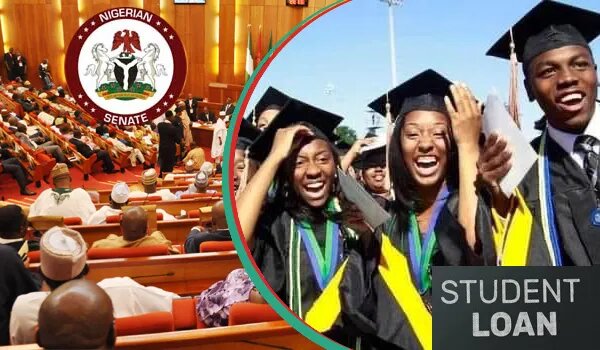
As the morning sun rises over Maiduguri, 22-year-old Amina Ibrahim gathers her books and prepares for another day of lectures. Just a year ago, the prospect of completing her university education seemed increasingly remote after her father’s small business collapsed under the strain of Nigeria’s economic downturn. Mounting tuition fees and the rising cost of living had pushed her to the brink of abandoning her studies.
Today, Amina remains in school, sustained by hope that Nigeria’s student loan scheme will ease the financial burden threatening her education. Like thousands of students across the country, she sees the programme as a chance to pursue her academic ambitions. Yet a broader national debate persists: Is the student loan scheme a sustainable solution to widening access to higher education, or merely a temporary response to deeper structural challenges?
Access to higher education has become increasingly difficult for many Nigerian families. Persistent inflation, declining household incomes and rising educational expenses have placed university education beyond the reach of many qualified students, forcing some to defer or abandon their studies.
In response, the Federal Government established the Nigerian Education Loan Fund (NELFUND) under the Student Loans (Access to Higher Education) Act to provide interest-free loans to eligible students enrolled in public tertiary institutions. The initiative seeks to ensure that no qualified Nigerian is denied higher education because of financial hardship.
The programme has expanded rapidly since its launch. According to NELFUND, more than 1.04 million students across Nigeria’s 36 states and the Federal Capital Territory have benefited from the scheme, with over ₦184 billiondisbursed through tuition payments and upkeep allowances to students in more than 300 public tertiary institutions. The figures highlight the growing demand for financial support among students.
The growing demand for the scheme reflects Nigeria’s wider economic realities. According to the National Bureau of Statistics (NBS), persistent inflation has continued to erode household purchasing power, making it increasingly difficult for families to finance higher education. As a result, more students now depend on financial assistance to remain in school.
Education experts say well-managed student loan schemes have improved access to higher education in many countries, particularly for students from low-income families. They argue that, if properly managed, Nigeria’s programme could produce similar results.
However, experts caution that student loans alone cannot solve Nigeria’s education crisis. Poor funding, inadequate infrastructure, graduate unemployment and recurring industrial disputes remain major obstacles requiring broader reforms.
Graduate employability also remains a significant concern. Student loan systems are most effective where graduates can secure stable employment and repay their loans without undue hardship. In Nigeria, where youth unemployment remains high, many observers question how sustainable loan repayment will be without stronger job creation.
Transparency and accountability will ultimately determine public confidence in the scheme. A fair application process, prompt disbursement, clear eligibility criteria and effective monitoring are essential for the programme’s long-term success.
Students have welcomed the initiative with cautious optimism, describing it as a lifeline during Nigeria’s current economic hardship. Many say the NELFUND loan has enabled them to remain in school and meet essential academic expenses that would otherwise have been beyond their families’ means. While expressing appreciation for the programme, they also urge the government to ensure faster disbursement, greater transparency and wider awareness of the application process so that more eligible students can benefit.
Analysts also recommend complementary investments in university infrastructure, research, scholarships and graduate employment to maximise the programme’s long-term impact.
For students like Amina Ibrahim, the programme represents hope—the chance to remain in school and build a better future. If managed with transparency, accountability and sustained political commitment, the student loan scheme could become a lasting investment in Nigeria’s human capital. But without broader reforms in the education sector, it risks becoming only a temporary solution to a much deeper problem.




























You must be logged in to post a comment Login