
Forgotten Dairies
Need for Urgent Action Against the Alarming Rate of Road Traffic Crashes in Nigeria -By Tochukwu Jimo Obi
To strengthen road safety enforcement, the Federal Road Safety Corps should be granted greater statutory powers to deal decisively with all vehicle owners who violate safety regulations, including owners of government vehicles. Road safety enforcement must be fair, impartial and comprehensive. No individual or institution should be exempt from compliance with traffic laws simply because of status or official position. Stronger enforcement will encourage greater compliance and significantly reduce preventable crashes.

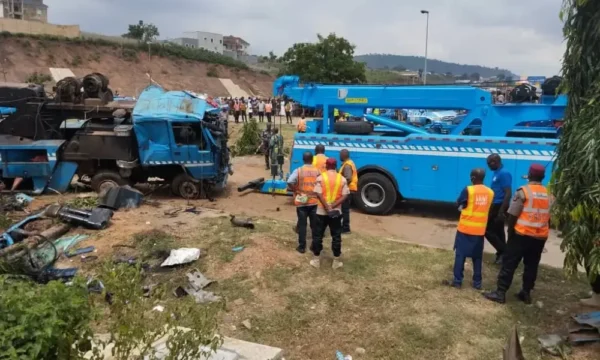
The rising rate of road traffic crashes in Nigeria has become a national emergency that demands immediate and decisive action. Hardly a week passes without reports of devastating crashes claiming dozens of lives and leaving many families in mourning. These tragedies are not mere statistics. They represent the painful loss of breadwinners, parents, children and productive citizens whose lives are cut short by incidents that are largely preventable.
The latest incidents further underscore the gravity of the situation. No fewer than 32 people were killed, while several others sustained varying degrees of injuries in separate road crashes across Kwara, Kogi and Ogun States. The crashes, which occurred between Sunday and Monday, once again exposed the dangerous state of road safety in the country. According to the Federal Road Safety Corps (FRSC), the crashes were caused by driver fatigue, excessive speeding, wrongful overtaking and other traffic violations. This is one crash too many, and it is deeply unfortunate that such avoidable incidents continue to occur.
Despite the reforms, strategic policies and nationwide campaigns being implemented by the Federal Road Safety Corps under the leadership of the Corps Marshal, Shehu Mohammed, many motorists continue to disregard established road traffic rules and regulations. While the FRSC has remained committed to reducing crashes and fatalities through enforcement, public education and stakeholder engagement, the efforts of the Corps can only succeed when road users also embrace responsible driving habits.
Among the leading causes of road traffic crashes in Nigeria are excessive speed, the use of expired and substandard tyres, reckless overtaking and dangerous night journeys. These factors continue to contribute significantly to the high number of fatalities recorded on Nigerian roads each year. Every driver must understand that traffic regulations are not obstacles to movement but safeguards designed to preserve human lives.
Equally disturbing is the attitude of many fleet operators who own a substantial percentage of commercial and articulated vehicles operating across the country. Many have refused to renew their fleets by replacing ageing vehicles, while others are unwilling to grant the FRSC access to inspect their vehicles or provide regular safety training for their drivers. This lack of cooperation weakens efforts aimed at ensuring that only roadworthy vehicles and competent drivers operate on Nigerian highways.
There is an urgent need for the recertification of fleet operators across the country. Many commercial vehicles currently transporting passengers and goods have exceeded their useful lifespan and no longer meet acceptable safety standards. Allowing such vehicles to remain in operation places both their occupants and other road users at unnecessary risk. A comprehensive recertification exercise would help eliminate unsafe vehicles from the roads and promote higher safety standards within the transport sector.
Poor vehicle maintenance, largely attributed to the country’s difficult economic conditions, has also become a major contributor to road crashes. Many vehicle owners postpone essential repairs and continue to operate mechanically defective vehicles because of financial constraints. While these economic realities are understandable, they should never justify exposing innocent lives to danger. In many developed countries, periodic vehicle inspections are mandatory, and any vehicle that fails the inspection is either repaired immediately or withdrawn from the road until it meets the required safety standards.
To strengthen road safety enforcement, the Federal Road Safety Corps should be granted greater statutory powers to deal decisively with all vehicle owners who violate safety regulations, including owners of government vehicles. Road safety enforcement must be fair, impartial and comprehensive. No individual or institution should be exempt from compliance with traffic laws simply because of status or official position. Stronger enforcement will encourage greater compliance and significantly reduce preventable crashes.
No nation can achieve sustainable development while losing more than 5,000 citizens annually to road traffic crashes. The time has come for all hands to be on deck. Government agencies, transport unions, fleet operators, vehicle owners, drivers and the general public must work together to support the Federal Road Safety Corps and other road traffic management agencies in their collective effort to end these avoidable deaths and injuries. Saving lives on our roads is a shared responsibility, and every Nigerian has a role to play in making our highways safer for all.
Tochukwu Jimo Obi, Obosi Anambra state.




























You must be logged in to post a comment Login