
Global Issues
Lavrov Praises Africa for its Concern Towards Russia-Ukraine Crisis -By Kestér Kenn Klomegâh
Several reports have shown that Africa continues to collaborate with Ukraine through its unwavering support of its territorial integrity at the UN General Assembly against Russia’s military invasion, that was joint approved by the State Duma and the Federation Council. Russia refers to its action in the neighbouring Ukraine as ‘special military operation’ which it began late February 2022. Soviet republics, including Ukraine, became a sovereign and independent after Soviet’s collapse in 1991.

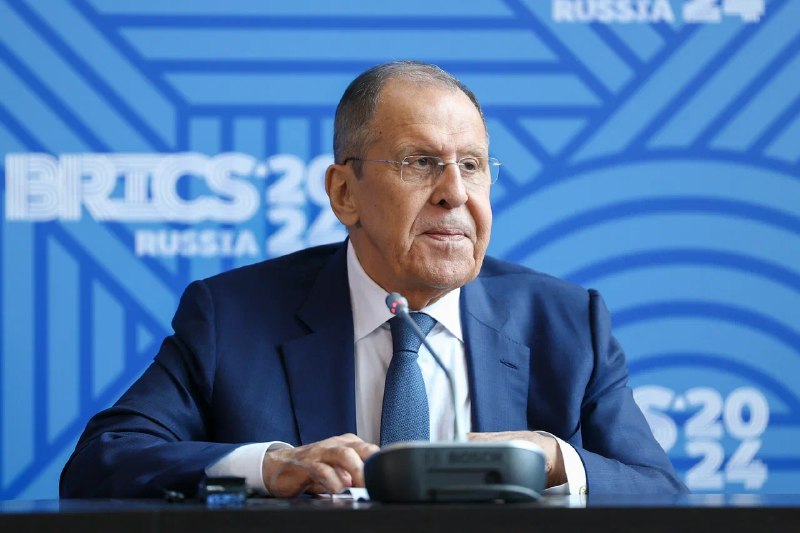
Russian Foreign Minister, Sergey Lavrov, has praised African leaders’ actions taken toward Russia-Ukraine crisis, indicating the level of concern and interest in creating a peaceful world. It also shows the degree of their envisioned role in global affairs, especially steps taken by African countries towards resolution of the disputes and crisis in the Eurasia region.
Lavrov made the remarks to an Africa-related question, during the Ambassadorial Roundtable discussion, Ukraine Crisis: The West’s True Goals and Role, held on June 23, 2026. The Roundtable was exclusively organized by the Russian Foreign Ministry and, attended by foreign Ambassadors and Senior Diplomats, accredited in the Russian Federation.
Lavrov, however, noted that “African countries have been demonstrating their interest in assisting this process from the very start of the special military operation,” and placed a special emphasis on efforts by President of the Republic of South Africa Cyril Ramaphosa. Following the 2nd Russia-Africa Summit in 2023, he arrived at a meeting with President Vladimir Putin as part of a group of African countries, about ten of them, to discuss ways to contribute to settling the conflict. They were receptive to Moscow’s assessments, including the story on how the initiative to sign a deal in Istanbul in April 2022 fell apart.
President of South Africa Cyril Ramaphosa and his team made a special point on trying to understand what can be done to address this situation in terms of its humanitarian aspects. Following this discussion, South Africa’s then Foreign Minister Naledi Pandor and Lavrov worked together to coordinate a final statement. It focused on certain specific steps, which were designed to make mechanisms dealing with prisoner exchanges, locating missing person, etc. more effective. This group has remained proactive after that.
“There have been no specific proposals lately, but we do know that South Africa and several other African countries are part of the Friends of Peace group in Ukraine as established by the People’s Republic of China and Brazil. They hold regular meetings at the United Nations at the level of their respective permanent representatives. This may seem quite odd, but apart from the countries of the Global South, representatives of France and Switzerland have been invited to take part in these meetings. It can be argued that having the French and the Swiss hear the voice of the Global Majority could be quite useful. The Republic of South Africa and other African countries are taking part in this initiative,” Lavrov told the Ambassadorial Roundtable meeting.
“We have never rejected any initiatives coming from any region of the world. We have always given them a chance while expressing our readiness to assist these efforts and take the corresponding steps. Today, we are focusing on achieving the objectives of the special military operation with an understanding that all the Western approaches and all the hopes we had that the West could act as an honest broker–all these hopes have long been dashed. Taking them seriously has simply become pointless,” Lavrov concluded.
African Peace Initiative’s Background
South African President Cyril Ramaphosa, despite multitude of persistent conflicts across Africa, headed an African Peace Initiative to Kyiv and Moscow. That was followed by Brazil, China, India, and a number of other countries who have attempted finding a peaceful resolution to the crisis between Russia and Ukraine. Full of assertive optimism and energy, Ramaphosa engaged in diplomatic negotiations after previous stark attempts in May 2023, which Russian officials in the Kremlin and at the Foreign Affairs Ministry argued that the ten-point steps were not formulated on paper, and could not be implemented. “The peace initiative proposed by African countries is very difficult to implement, difficult to compare positions,” Kremlin spokesman, Dmitry Peskov said, local Russian media reported.
Ramaphosa’s African Peace Initiative group visited and hosted peace talks with President Volodymyr Zelenskyy in Kyiv, Ukraine and thereafter with Vladimir Putin in St. Petersburg, Russia. In principle, Ramaphosa made the proposal hoping to convince Russia and Ukraine to opt for dialogue, find a peaceful solution to the crisis. “We would like to propose that this war must be settled through negotiations and through diplomatic means. The war cannot go on forever. All wars have to be settled and come to an end at some stage. And we are here to communicate this very clear message because the war is having a negative impact on the African continent, and indeed on many other countries around the world,” emphasized Ramaphosa, and further underlined that Russia has primarily violated Ukraine’s territorial integrity and its political sovereignty, which it attained in 1991, after the collapse of the Soviet Union.
That delegation was made up of the following: President of South Africa, Cyril Ramaphosa; the then Chairperson of the African Union and Comoros president, Ghazali Othman; then President of Senegal, Macky Sall; President of Zambia, Hakainde Hichilema and Prime Minister of Egypt, Mostafa Madbouly arrived in St. Petersburg to discuss the African peace initiative. In addition, it included representatives of Uganda and Congo.
Russia is a staunch member of BRICS (Brazil, India, China and South Africa). The members have consistently declared at various summits and conferences that BRICS would continue to pursue “a lasting peace to end the Ukrainian crisis.” Further to that, BRICS members have been active with talks and negotiations, but without any practical results, and without any visible signs for establishing relative peace and/or anytime soon would be realized.
Putin’s Reaction and Explanation
In that mid-June 2023, talking to leaders of seven African countries in St. Petersburg, Putin interrupted the presentations to explain the concept and the reasons behind the special military action in Ukraine. Putin explained that Russia initially would not “occupy” the territory of Ukraine. On the other side, Russia wanted to protect its Russian-language speaking population in Eastern Ukraine. But in the end, Russia has taken “full control” over the southern region as well as the Eastern Donbas region off Ukraine.
How Ukraine Lost Four Regions
On 23rd-27th September 2022, the republics of Donetsk and Lugansk (DPR and LPR) as well as the Kherson region and the liberated territories of the Zaporozhye Region, held referendum to join Russia. In all of these four autonomous regions, the overwhelming majority of voters favoured becoming part of the Russian Federation. These regions have been a thorny question these past several years, and with the accusation against Kiev for committing the highest level of human rights including intimidation, discrimination and maltreatment of Russian-speaking population in the Eastern Ukraine.
“In accordance with the generally recognized principles and norms of international law, recognizing and confirming the principle of equal rights and self-determination of peoples enshrined in the United Nations Charter, and taking into consideration the will expressed by the people of the Kherson region at the referendum held on September 27, I hereby order that the state sovereignty and independence of the Kherson region be recognized,” the president’s decree on recognition of the Kherson region said, and made available on its the official Kremlin’s website.
In his sparkling speech in the Kremlin, Putin said Moscow would protect the newly incorporated regions by “all available means” and vehemently insisted that the question of handing them back would never be discussed and renegotiated. “History has called us to a battlefield to fight for our people, for the grand historic Russia, for future generations,” Putin reiterated in his speech.
BRICS has called for resolving the issue through dialogue and negotiations. The question forms a significant aspect during summits, and has reflected in its joint communiques and declarations. The continental organization, the African Union (AU) and African States have also advocated for peace resolution for Russia-Ukraine crisis, and possibly, through dialogue.
Ukraine, despite the obstacles and roadblocks, to a large extent, has prioritized Africa in its foreign policy. This has been widely acknowledged by Africa leaders and the African Union. Ukrainian President, Volodymyr Zelenskyy, held discussion during the special meeting of Ukraine-African Union. Ukrainian media quoted Zelenskyy as saying that Ukraine was interested in a strategic partnership with African nations. “This should happen in the cultural field, the economic field and in the field of respect between people, without breaching legitimate rights, political liberty and territorial sovereignty. We respect any country that respects us,” Zelenskyy said, quoted both in local and foreign media.
Several reports have shown that Africa continues to collaborate with Ukraine through its unwavering support of its territorial integrity at the UN General Assembly against Russia’s military invasion, that was joint approved by the State Duma and the Federation Council. Russia refers to its action in the neighbouring Ukraine as ‘special military operation’ which it began late February 2022. Soviet republics, including Ukraine, became a sovereign and independent after Soviet’s collapse in 1991.



















You must be logged in to post a comment Login