
National Issues
The Triangle of National Progress -By Tony Agbonasevbaefe
This piece would not be complete if the real owners of the nation are left out of the discuss. The real owners of the country are the people. They own the country- the over 200 million people. Nigeria belongs to we the people and not just the President and 109 Senators, 360 Reps, 36 State Governors and 991 House of Assembly members, or the 774 council chairmen and 9,809 councillors. Add up federal ministers, state commissioners and other political appointees, and it is not up to 100,000 people in power.

The media space has been buzzing recently for negative reasons due to the very retrogressive comments made by a cleric, Sheikh Yahya Jingir, during a political event in Kano, Nigeria. His vituperations, which many describe as religious incitement and hate speech is of grave concern. It brings again to the front burner the misuse of religion for pecuniary political narratives and gains. More worrisome was the presence of the Kano State Governor, Abba Kabir Yusuf. The Governor could be seen giggling at some point as the cleric spoke. Also present was Jigawa State Governor, Umar Namadi.
The sulphuric remarks by Jingir (a senior muslim leader) are another reminder of the divisive politics played in these parts. Religion is a personal matter and must not be used to whip regional and ethnic sentiments. Our politics must move beyond low-level rhetoric of this nature to elevating the critical issues affecting ordinary Nigerians – food, housing, cost of living, electricity, road infrastructure, railway, science and innovation, healthcare and other sundry indices of national development. Mr Jingir and his ilk should be taught a lesson according to the law. A society disintegrates gradually when wrongdoing is not punished. His comments cannot just be swept under the carpet. Allowing him to get away with this serious infraction will provide ‘free cinema tickets’ to others in the hood. This must not be allowed to fester.
The building of a virile society is not just about currency or having natural endowment. It goes beyond that. Nations thrive and reach their full potential quicker when values are entrenched and hit the roof. At that point, the ripple effect trickles down in more ways than can be imagined. The prevailing moral decadence in our clime today can be attributed to a number of factors. High on the list is the lack of a moral barometer among the older generation, and sadly, the younger ones too. Role models have become extinct. The avalanche of so-called celebrities and influencers on our national space has not helped. Have 500,000 followers or less on Social Media, and you become an instant celebrity irrespective of the content you unleash to impressionable minds. The reasons for the moral collapse are legion.
First is the glorification of wealth acquired without industry. Ayn Rand, the famous Russian-born American novelist and philosopher, in her best-selling book, Atlas Shrugged, wrote about How To Tell A Society Is Doomed. She penned the classic words: “When you see that to produce, you need to obtain permission from men who produce nothing. When you see that money is flowing to those who deal, not in goods, but in favours. When you see that men get richer by graft and by pull than by work, and your laws don’t protect you against them, but protect them against you. When you see corruption being rewarded and honesty becoming a self-sacrifice, you may know that your society is doomed”. Some real food for thought, no doubt, when juxtaposed with our current realities.
Second, and aligned with the aforementioned, is the get-rich-quick syndrome prevalent in our society today. As a young, budding student at Edokpolo Grammar School, Benin City, in the late 1980s, the motto engraved on our school uniform badge was the Latin words: `labour omnia vincit`. It means “Work conquers all” or “Hard work overcomes everything.” It emphasises that dedication, persistence, and continuous effort can achieve any goal or overcome any hardship. Today, honest labour is now scorned while filthy lucre is adorned with flowery garlands. The source of overnight wealth is no longer questioned. Institutions meant to check illicit acquisition of wealth are compromised. The Police Force, supposedly the bastion of the law and ethical behaviour, openly solicits and, in many cases, takes bribes and even extorts innocent members of the public in full glare of everyone. Other agencies do the same.
Criminal elements in society are no longer perturbed about the consequences of wrongdoing. They bubble and shuffle (to borrow the words of pop star Alex O) with the confidence that no matter the infraction, they can escape the law via a simple phone call or by financial inducements of law enforcement agencies. These are hard truths which many will find uncomfortable; but it is the truth and present reality.
In developed countries, the law is a living organism. The maxim is, ‘if you do the crime. you do the time’. There are repercussions for wrongdoing, and it serves as a deterrent for others. No citizen should be above the law. Everyone should be subject to the law. Those in the temple of justice (lawyers, prosecutors, judges, etc) should do their jobs and be allowed to do it without fear or favour. Such a scenario creates a harmonious, just society where everyone is protected by the law. There are no circumventions. No society can develop without Justice. To think otherwise is but a mirage.
Thirdly, a proverb often said in my Benin dialect says emphatically, ‘uhun aramwen ere na gua le aro ehe` (It is on the animal`s head you look for the eyes). The role of leadership in the Nigerian progress equation is sacrosanct. For many, it is always the President of Nigeria who is at fault. In March 2021, I wrote an article titled, The Pedagogy of the Last Presidents in Nigeria. It was widely read and received with mixed reactions across the divide. Please hold brief, dear reader, as I am not patronising anyone. Only saying my truth. In that article, I stated unequivocally in the 4th and 5th paragraphs: “The question in the mind of analysts has always been how and why former Presidents are often praised to the high heavens two or three years after they leave office. As we speak, the `Otuoke Prince` and former President Goodluck Ebele Jonathan, who was heavily vilified while in office, is now the darling and toast of many Nigerians. President Muhammadu Buhari was in charge at this point.
Many were even sounding out former President Jonathan then to stage a comeback in the 2023 elections. What a turnaround in fortunes! The story was the same with President Obasanjo, who received `fire and brimstone` and was described as an `Imperial Lord` while in Aso Rock. President Obasanjo also became a shining armour for being a firm and strong leader when Goodluck Jonathan was overseeing the affairs of the nation. President Jonathan was viewed as too weak and not assertive enough to lead the nation.
Dr Mahdi Shehu, a stalwart of the ruling All Progressives Congress (APC) at that time, stated inter alia: “I am happy that Buhari got to be president. Had he not become president and died, he would have been elevated to Islamic sainthood, and his grave would have become a pilgrimage site”. In that article in 2021, I actually wrote: “…as abysmal as the incumbent President, Muhammadu Buhari, has performed, don’t be surprised if his praise-singing begins in 2025, barely two years after he leaves office”. Your guess was as good as mine.
The persistent shout by Nigerians of `our last President is better` has remained a recurring decimal. Growing up in the 1970s, I heard the loud cries and complaints on the streets about Gen. Yakubu Gowon; Gen. Murtala Mohammed was in briefly. General Olusegun followed. The volume got louder when President Shehu Shagari was there. Later, Gen. Buhari came in. The gap-toothed self-styled military President, Gen Ibrahim Babangida, was next. Gen. Abacha was next after pushing out the Interim National Government of Chief Ernest Shonekan.
Then came Gen. Abdulsalami Abubakar, after which Chief Olusegun staged a comeback in civilian garb in 1999, when we returned to democratic rule. The sequence continued with Presidents Shehu Musa Yar Adua (of blessed memory), Goodluck Jonathan, and Muhammadu Buhari. Now we have in the saddle incumbent President Bola Ahmed Tinubu. What is it about our Presidents? Again, please understand that I am not in any way holding brief for any of them. Just putting out my truth. This is where we dovetail into the real meat of this piece.
At independence in 1960, Nigeria had 3 regions (North, South and West). It grew to 4 in 1963 when the Midwest was carved out from the Western region. It increased to 12 States (North-Western, North-Eastern, Kano, North-Central (Kaduna), Kwara, Benue-Plateau, Lagos, Western, Mid-Western, East-Central, Rivers and South-Eastern States) in 1967.
It grew to 19 on February 3rd, 1976, with the creation of seven new states: Anambra, carved out of the former East-Central State; Bauchi from the former North-Eastern State; and Benue, Plateau, formed from the former Benue-Plateau State; Borno came out of the former North-Eastern State; Imo out of the former East-Central State, Niger out of the former North-Western State, Ogun, Ondo and Oyo States out of the former Western State while Sokoto was carved out of the former North-Western State. The Midwestern State was later renamed Bendel State (weaved from Benin and Delta) on March 17th, 1976.
On September 23, 1987, two new states (Akwa Ibom and Katsina) were created, bringing the total to 21. On August 27, 1991, nine additional states (Abia, Edo, Delta, Enugu, Jigawa, Kebbi, Kogi, Osun, Taraba, and Yobe) were created, bringing the total to 30. On October 1, 1996, six new states (Bayelsa, Ebonyi, Ekiti, Gombe, Nasarawa, and Zamfara) were added, bringing Nigeria to its present total of 36 states plus the FCT (Federal Capital Territory) that was carved out earlier in 1976.
How many Nigerians actually take their State Governors to task? Like Presidents, many Governors have come and gone. However, they are mostly hidden under the veil, while Nigerians lambast whoever the President is. In my estimation, considering the humongous revenue and internally generated revenue (IGR) accruing to the sub-national governments (36 States & FCT), Nigeria ought to be better than it is currently. The majority of State Governors in Nigeria have become demigods. Some have created fiefdoms in their states, basically doing nothing but carrying on like a circus show, answering ‘Your Excellency’ that is not excellent all over the place.
The 774 local government areas’ chairmen and councillors are not left out. They have become mere rubber stamps for state governors. Grassroots governance has been annihilated by most state governors on the altar of pecuniary gains and political control. A society that wants to grow cannot be reduced to a mere 4-year cycle of elections. Everything should not just be about elections.
The United Kingdom has 382 local councils with a national government at the top. These councils are the engines of development. The United States has 50 states, a national government and 3,143 counties and county-equivalents. This structure helps bring governance closer to the people at the grassroots. The Nigerian federal system must be truly federal in name and function. If not done that way, it wouldn’t matter who the President is; the same problems will persist. The country needs to be decentralised, and those leading must understand they are to serve and not to be served. The saying that ‘statesmen plan for the next generation, but politicians plan for the next election’ has become our motto. This has to stop.
This piece would not be complete if the real owners of the nation are left out of the discuss. The real owners of the country are the people. They own the country- the over 200 million people. Nigeria belongs to we the people and not just the President and 109 Senators, 360 Reps, 36 State Governors and 991 House of Assembly members, or the 774 council chairmen and 9,809 councillors. Add up federal ministers, state commissioners and other political appointees, and it is not up to 100,000 people in power. The Nigerian people must therefore brace up and be involved in the governance process. It is not enough to complain and do nothing. People should organise from local government ward levels, join the political parties and get in the mix. Lasting change in society does not happen by chance. It comes about by painstaking strategic moves.
After all, said and done, be you a Christian, Muslim, African Traditionalist or any faith you believe in, know this for free: political power is obtained by numbers, not magic or wishful thinking. It is not prayed; it is worked. Prayer is a support. Remember the Biblical admonition, “Faith without works is dead” (James 2:17). Forget all that myth of `votes don’t count`. It does o!!! (emphasis mine). Politics and governance are not for the faint-hearted. No one should be under the illusion that they can get political power on a plate. It is hard graft, grind and full of intrigue. Power is never given for free. It is a contest. Like the lottery, you have to be in it to win it. Let these words resonate: ‘When the straight line of good leadership meets with the straight line of good citizenship, then a triangle of national progress is formed’.
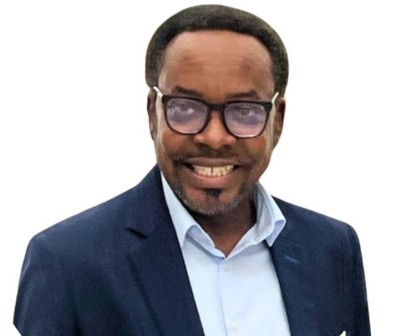
Tony Agbons, an Associate Professor, blogs at Twin2.Org
















You must be logged in to post a comment Login