
Economy
Generator/Solar Economy: How Nigeria’s Power Shortage Is Quietly Killing Small and Medium Businesses –By Gambo Zilkifilu Mohammed
If Nigeria is serious about creating jobs, strengthening its private sector and reducing poverty, then reliable electricity must move from political promise to national priority. The future of millions of small businesses and the livelihoods they support depends on it.

For many Nigerians, the workday does not begin when the shop opens. It begins with a familiar question: Has the light come? If the answer is no, another decision quickly follows: Should I switch on the generator/solar or wait a little longer? That decision, repeated every day in markets, workshops and business districts across the country, has become one of the defining realities of doing business in Nigeria.
Small and Medium-sized Enterprises (SMEs) remains backbone and engine of Nigeria’s Economy. According to the Small and Medium Enterprises Development Agency of Nigeria (SMEDAN) and the National Bureau of Statistics (NBS), they account for the overwhelming majority of businesses in the country and provide employment for millions of Nigerians. They support families, sustain local communities, and contribute significantly to economic growth.
Most of the businesses are: roadside artisans, fashion designers, food vendors, welders, printers, small-scale manufacturers etc, these enterprises keep local economies alive and sustain countless families. Yet many of these businesses operate under one of the harshest electricity condition or environment that no business plan can comfortably accommodate.
From the tailor in Kano who cannot power an industrial sewing machine, to the barber in Abuja waiting for electricity before attending to customers, to the frozen-food seller in Port Harcourt hoping the freezer stays cold long enough, unreliable electricity has become more than an inconvenience. It is steadily eroding livelihoods, shrinking profits and discouraging entrepreneurship.
For barbers, welders, tailors, cold-room operators, restaurants, pharmacies, cybercafés, and small manufacturers, every power outage translates directly into financial losses. many of these businesses now spend a substantial portion of their operating expenses simply to keep the lights on.
For decades, Nigerians have joked about “NEPA taking light.” What once sounded like harmless humour has evolved into one of the country’s most serious economic challenges. Today, the electricity crisis is not simply about darkness; it is about opportunity lost, businesses delayed and dreams deferred.
In many neighbourhoods, the steady hum of generators has become the soundtrack of economic survival. The challenge extends beyond inconvenience. The World Bank’s Enterprise Surveys consistently identify unreliable electricity as one of the biggest obstacles facing businesses in Nigeria. Frequent power interruptions reduce productivity, disrupt production schedules and increase operating costs, particularly for micro and small enterprises with limited financial reserves.
Power shortages: The invisible tax paid daily by every Nigerian.
Reliable electricity which is the most basic requirement for modern commerce has become one of the most expensive inputs for running a business. Instead of investing profits in expansion, new equipment or additional employees, entrepreneurs often divert scarce resources to fuel, generator maintenance, solar installations and replacement parts.
A baker cannot meet customer orders if the ovens cannot run consistently. A welder cannot complete fabrication jobs without power. A cybercafé loses customers when computers suddenly shut down. Pharmacies struggle to preserve temperature-sensitive medicines, while cold-room operators risk losing perishable goods during prolonged outages.
For service providers, every blackout is also a customer-service problem. Delayed deliveries, cancelled appointments and interrupted production weaken customer confidence and reduce repeat business. In a highly competitive economy, reliability often determines survival.
Nigeria’s electricity challenges have become even more pronounced amid rising energy prices and broader economic pressures. Higher fuel costs have significantly increased the expense of operating petrol and diesel generators, leaving many businesses with difficult choices: increase prices, reduce operating hours or absorb losses.
Many have responded by shortening business hours or using generators only when absolutely necessary. Others have formed informal cooperatives, with neighbouring shops contributing money to fuel a shared generator. While this reduces individual costs, it also means that one mechanical fault or an inability to buy fuel can disrupt several businesses simultaneously.
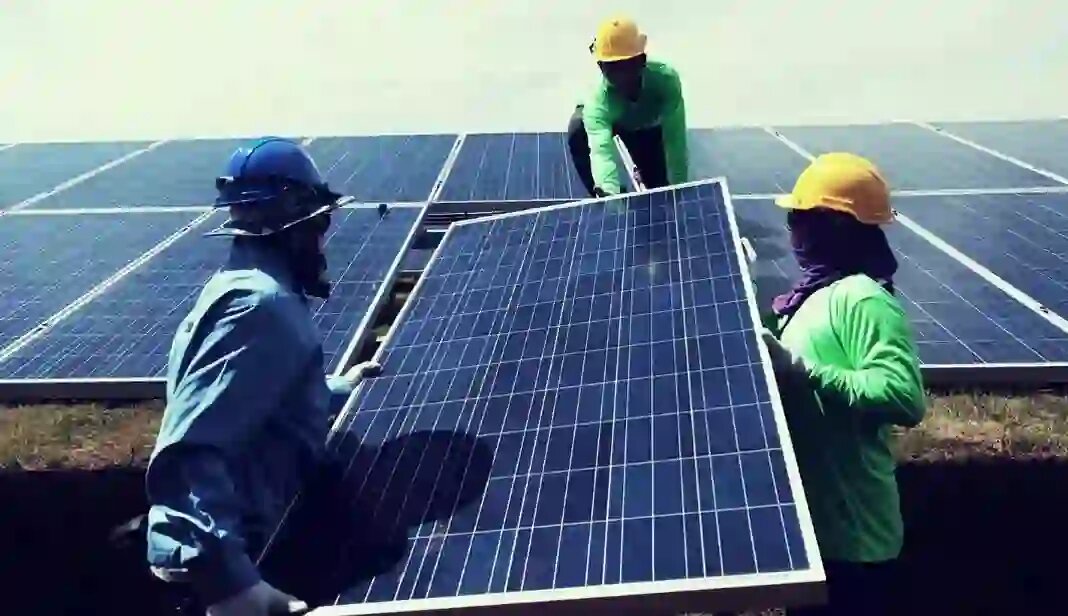
Across Nigeria, solar energy is gradually changing the narrative. From village clinics and schools to urban supermarkets, fashion studios, ICT hubs, pharmacies, and small manufacturing workshops, more entrepreneurs are replacing generators with solar power systems. What once seemed like an expensive luxury is increasingly becoming a practical business investment.
Although the initial installation cost might be high, many business owners say the long-term benefits outweigh the expense. Solar systems significantly reduce dependence on petrol and diesel. They lower monthly operating costs, provide cleaner and quieter energy, reduce equipment damage caused by erratic power supply, and allow businesses to operate with greater confidence. For many entrepreneurs, solar power is not merely about environmental sustainability, it is about staying alive in business.
The environmental benefits are equally important. Nigeria remains heavily dependent on millions of small petrol and diesel generators, which contribute to air pollution, greenhouse gas emissions, and serious health risks. Transitioning to renewable energy not only strengthens businesses but also creates healthier communities. Without dependable power, businesses cannot grow. Without thriving businesses, jobs disappear. Without jobs, poverty deepens. And without economic opportunities, national development remains elusive. Imagine what they could achieve if they were no longer forced to spend a significant portion of their income simply trying to keep the lights on.
The conversation about electricity should no longer focus solely on surviving today’s outage. It should focus on building tomorrow’s energy future. Solar power is not a magic solution to every challenge confronting Nigeria’s electricity sector. But it has emerged as one of the most practical pathways towards energy security for thousands of small businesses.
Every solar panel installed on a shop roof represents more than renewable energy.It represents uninterrupted productivity,reduced operating costs, jobs protected and hope restored. Above all, it represents the possibility that one day, Nigerian entrepreneurs will spend less time worrying about darkness and more time building businesses capable of transforming the nation’s economy.
Areas where government intervention becomes essential:
Nigeria needs bold and deliberate policies that encourage renewable energy adoption among SMEs. These should include low-interest financing schemes, tax incentives for renewable energy equipment, reduced import duties on quality solar components, support for local manufacturing, and expanded public-private partnerships to make clean energy more accessible.
Nigeria’s aspiration to become a diversified and industrialised economy cannot be achieved if millions of small businesses remain trapped in what has become a generator economy. No country builds a globally competitive manufacturing sector on expensive self-generated electricity.
Electricity is more than a utility; it is the foundation upon which commerce, innovation and industrial growth depend. Every successful economy understands this reality.
Reliable power lowers production costs, attracts investment, encourages innovation and creates employment. Unreliable power does the opposite.
Financial institutions have a role to play by designing flexible repayment plans that enable entrepreneurs to spread installation costs over several years.
Equally important is consumer education. Many business owners still lack accurate information about solar technology, maintenance requirements, and financing opportunities. Awareness campaigns can help bridge this knowledge gap.
The unquestionable resilience of Nigerian small and medium entrepreneurs:
Nigeria’s entrepreneurs have demonstrated extraordinary resilience. Despite inflation, insecurity, rising operating costs, unstable exchange rates, and inconsistent electricity, they continue to innovate, create employment, and contribute to national growth.
The resilience of Nigerian entrepreneurs is beyond question. Every day, they improvise, adapt and persevere despite circumstances that would discourage many others. They have learned to budget for fuel before profit, to plan around blackouts and to treat generators as essential business assets rather than emergency backups.
But resilience should never become an excuse for inadequate infrastructure.
The true cost of Nigeria’s electricity crisis cannot be calculated only by the number of hours without power or the frequency of grid disturbances. It is reflected in businesses that never expand, factories that operate below capacity, investments that never materialise and young entrepreneurs who abandon promising ideas because the cost of keeping the lights on has become unbearable.
If Nigeria is serious about creating jobs, strengthening its private sector and reducing poverty, then reliable electricity must move from political promise to national priority. The future of millions of small businesses and the livelihoods they support depends on it.
Until that happens, countless entrepreneurs will continue beginning each business day with the same anxious question: Has the light comes?



















You must be logged in to post a comment Login