
Education
How UniAbuja Brought Candidates Nationwide For A 1-Hour AI-Generated Recruitment Test -By Aliyu Baba Mohammed
The applicants have appealed to the university management and/or relevant authorities to cancel the test and conduct a fresh one based on candidates’ respective areas of specialisation.

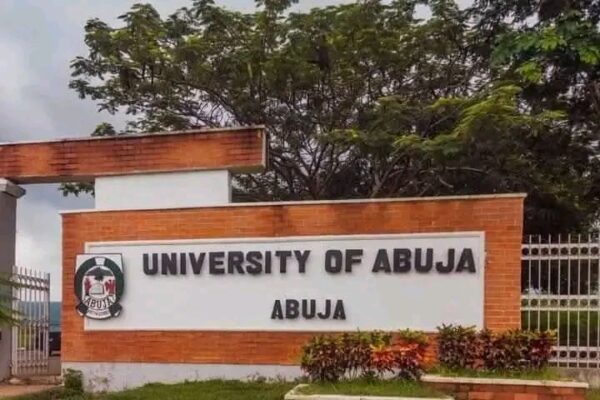
They borrowed transport fare, traveled dangerous roads, and sat for 1 hour. But the AI-generated questions were so tough, even the people who made them couldn’t answer them on their own.
For hundreds of lecturer applicants who converged on the University of Abuja from across the country, the recruitment test raised serious questions about fairness, cost, and what the university truly expects from its future lecturers.
On 16th June, 2026, the University of Abuja sent an email notification and a FastTopUp message to inform its shortlisted applicants for the 2026 academic and non-academic positions.
The test was scheduled to take place on Saturday, 20th June, 2026. One major part of the message asked shortlisted candidates to fill in a form indicating their current state of residence. Part of the message read:
“To ensure a seamless testing experience and to help our logistics team allocate the most appropriate testing center facilities, please click the link below to confirm your current state of residence.”
Based on this message, applicants filled the form through the link provided and assumed the university would use or allocate CBT centres in major cities across the country to ease the transport costs and risks of travelling long distances to Abuja, since some federal universities — such as Ahmadu Bello University, Zaria, and the University of Jos, among others, have organised recruitment aptitude tests without inviting applicants to their campuses. These institutions made use of their ICT capacity, and it was a success. This is commendable, considering the current economic situation and insecurity in the country.
However, on the 17th and 19th June, 2026 — a few days before the scheduled test date — the university sent another email and FastTopUp message to inform applicants that the test had been postponed to enable it to conclude final preparatory activities. Part of the email read:
“We wish to inform you that the Aptitude Test previously scheduled for Saturday, 20 June 2026, has been postponed.
“This decision was taken to enable the University to conclude final preparatory activities and complete all necessary administrative and logistical arrangements required to ensure a seamless, fair, and efficient assessment experience for all shortlisted candidates.
“A new test date, together with detailed instructions and updated guidelines for the exercise, will be communicated to you through your registered email address in due course.”
Then, on 28th July, 2026, the university sent another email and FastTopUp message announcing the new date to applicants. The test was scheduled to begin on 10th August, 2026. Sadly, however, the expectations of more than 90% of applicants residing outside Abuja were dashed when the information required them to travel to Abuja regardless of their state of residence.
All the applicants — far and near — were invited to travel to Abuja to take the one-hour aptitude test at “ITMS, ITMS (ICT), Zenith Bank Building, Main Campus, University of Abuja.” What was even more pathetic was that accommodation was not provided for these applicants, some of whom had never even been to Abuja before.
But the major problem with the entire arrangement was that the university used AI-generated questions to test all applicants generally, irrespective of their area of specialisation. For instance, someone billed to teach in the Faculty of Communication and Media Studies was given quantitative questions to answer, without a single question from Mass Communication, Journalism, or related fields. This was the case for all applicants across the different areas of specialty.
The University of Abuja management made innocent applicants travel to Abuja from across the 36 states of the federation to answer 55 very difficult AI-generated questions in fields that were not theirs. They named it the “General Aptitude Computer-Based Test.” This has been described by many as unprofessional conduct. If there are not many positions available for the applicants, there is no need to waste their resources, energy, and time. Many Nigerians without connections have come to terms with the sharing of federal appointment slots among a few privileged individuals or elites.
Meanwhile, some of the applicants who sat for the test were interviewed about their experience, and about whether it was true that the questions were mostly AI-generated. Below are their responses:
“They used AI-generated questions that were so difficult even the creators could not answer them in one hour given. To be fair, the University should test applicants based on their specific fields. Many candidates spent a lot of money, borrowed for transport, and risked safety on bad roads to attend. Given the difficulty, even 10% should count as a pass. I hope the future lecturer recruitments will be field-based and pray for success for everyone who took the test,” said Rabil Nuhu Ishaq.
For Silas Hassan said, “after 2:1 in political science and an excellent result in masters degree with 10yrs teaching experience, scoring 35% at University of Abuja attitude test clearly implies the questions are not just hard but extremely difficult.”
Another commenter, Habibu Maaruf Abdu, said, “The exam was not testing our subject or specialty knowledge. It was testing speed, logic and stress management. 25% in this test is like 50% in a normal test. Scoring 22 can put you at average, the university knows this. Your real value can’t be seen in this 1hr random test.”
“55 questions, 55 minutes: How can you use one minute and answer “quantitative “reasoning?” Micah K. Lamar asked.
According to Muhammad Al-Amin, “you can never prepare enough for this test, because the questions were from machine, not human brain.”
The applicants have appealed to the university management and/or relevant authorities to cancel the test and conduct a fresh one based on candidates’ respective areas of specialisation.
Aliyu Baba Mohammed, writes from Kaduna, Nigeria.
He can be reached via: aliyu0380@gmail.com


























You must be logged in to post a comment Login