
Breaking News
NGX Market Rally: 24 Stocks Hold Nearly 75% of Nigeria’s Market Value
Nigeria’s NGX market capitalisation rises 57.5% to N156.5tn as 24 companies, led by Dangote Cement, control 74.8% of total market value.

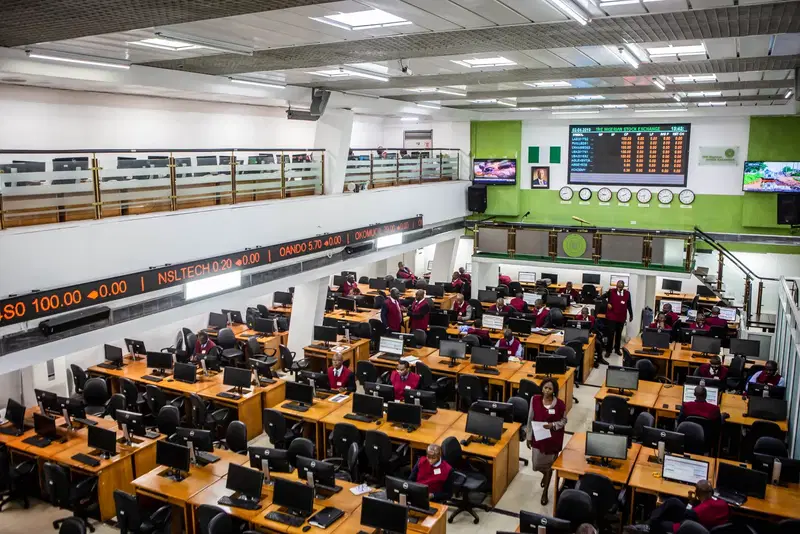
Nigeria’s stock market has become increasingly concentrated, with 24 companies accounting for 74.8 per cent of the total market capitalisation of the Nigerian Exchange Limited (NGX) as of August 17, 2026.
The companies, dominated by major players in banking, consumer goods, industrial goods and energy, were valued at a combined N117.01 trillion.
Their dominance comes as the NGX continues its strong 2026 run. Total market capitalisation has climbed by N57.141 trillion, or 57.5 per cent year-to-date, from N99.376 trillion on December 31, 2025, to N156.517 trillion.
The sharp rise has been driven by strong performances among several large-cap stocks. Analysts, however, have cautioned that such concentration means movements in a handful of major companies can significantly influence the overall market index.
Dangote Cement has now overtaken MTN Nigeria as the company with the highest market capitalisation on the NGX.
The group of top-valued companies comprises banks, consumer goods manufacturers, industrial companies, energy firms, a consumer services company and a telecommunications company.
The companies include Dangote Cement, MTN Nigeria, BUA Foods, BUA Cement, Aradel Holdings, First Holdco, HBM Nigeria, Zenith Bank, GTCO, Stanbic IBTC Holdings, Transcorp Hotels, Presco, Nestle Nigeria, Nigerian Breweries, Geregu Power, UBA, International Breweries, Transcorp Power, Access Holdings, Fidelity Bank, Okomu Oil Palm, Ecobank Transnational Incorporated and Wema Bank.
Banking stocks maintain strong position
First Holdco was the highest-valued bank at N6.37 trillion, ahead of Zenith Bank at N5.04 trillion and GTCO at N4.70 trillion.
Stanbic IBTC Holdings was valued at N2.56 trillion, followed by UBA at N1.99 trillion.
Access Holdings had a market capitalisation of N1.45 trillion, while Fidelity Bank stood at N1.38 trillion.
Ecobank Transnational Incorporated and Wema Bank recorded N1.27 trillion and N1.16 trillion respectively.
The strong performance of banking stocks has been linked to the repricing of financial institutions following the sector’s recapitalisation exercise and increased investor confidence in the industry.
BUA Foods dominates consumer goods
BUA Foods was the largest consumer goods company in the ranking, with a market capitalisation of N13.69 trillion.
Presco followed at N2.40 trillion, while Nestle Nigeria was valued at N2.22 trillion.
Nigerian Breweries recorded N2.10 trillion, while International Breweries had N1.79 trillion.
Although some consumer stocks have benefited from expectations of better operating conditions, the sector continues to face pressure from inflation, rising production expenses and reduced consumer purchasing power.
Dangote Cement leads industrial sector
Dangote Cement emerged as the most capitalised industrial company at N17.15 trillion.
BUA Cement followed with N13.69 trillion, while HBM Nigeria recorded N5.38 trillion.
Their performance highlights the significant contribution of large-cap industrial companies to the NGX’s market expansion.
Energy stocks also post strong valuations
Seplat Energy and Aradel Holdings were both reported at N6.72 trillion in market capitalisation.
Geregu Power followed with N2.06 trillion, while Transcorp Power recorded N1.65 trillion.
Analysts give mixed ratings
The strong market rally has not resulted in a uniform outlook for all listed companies.
Analysts assessed 32 stocks out of the 138 companies listed on the NGX, assigning Buy or Strong Buy ratings to 17 stocks, Sell or Strong Sell ratings to 12 and Neutral ratings to three.
Among the Buy or Strong Buy stocks were Aradel Holdings, Access Holdings, Dangote Cement, Dangote Sugar, FCMB, GTCO, Guinness Nigeria, HBM Nigeria, Honeywell Flour Mills, Nigerian Breweries, Nestle Nigeria, UACN, Transcorp Corporation, UBA, Zenith Bank and Cadbury Nigeria.
Stocks receiving Sell or Strong Sell ratings included BUA Cement, BUA Foods, Conoil, First Holdco, International Breweries, Julius Berger, Okomu Oil, Presco, PZ Cussons, Stanbic IBTC, TotalEnergies Marketing and Unilever Nigeria.
Fidelity Bank, Ecobank Transnational Incorporated and NASCON Allied Industries received Neutral ratings.
Zichis Agro leads YtD gainers
The market’s impressive year-to-date performance has been accompanied by extraordinary gains in some smaller companies.
Zichis Agro Allied Industries recorded the biggest increase, soaring 1,744.22 per cent to N18.35 per share.
SCOA Nigeria gained 365.49 per cent to N33.05, while Infinity Trust Mortgage Bank advanced 221.43 per cent to N11.25.
Berger Paints Nigeria climbed 207.50 per cent to N147.60, while Premier Paints rose 204 per cent to N30.40.
First Holdco gained 198.51 per cent to N140, Vitafoam Nigeria rose 153.04 per cent to N194 and HBM Nigeria appreciated 149.25 per cent to N334.
Not every stock benefited from the rally
Several companies recorded steep declines despite the broader market gains.
Sovereign Trust Insurance suffered the biggest fall, declining 50.39 per cent to N1.89 per share.
Guinea Insurance fell 43.37 per cent to N0.76, while Ellah Lakes dropped 41.52 per cent to N8.10.
SUNU Assurances Nigeria declined 39.64 per cent to N3.32, while Austin Laz lost 39.06 per cent to N2.84.
Royal Exchange fell 37.43 per cent, Triple Gee & Company dropped 34.84 per cent and Champion Breweries declined 33.44 per cent.
Universal Insurance lost 29.59 per cent, while Transcorp Power fell 28.45 per cent to N219.60 per share.
Asset rankings differ from market-value rankings
When companies are ranked by total assets, the picture changes significantly.
Ecobank Transnational Incorporated had the largest asset base in Q2’26 at N49.15 trillion, followed by First Holdco with N30.65 trillion.
Aradel Holdings recorded N10.88 trillion in assets, while FCMB had N8.36 trillion and Oando N7.89 trillion.
Dangote Cement recorded N6.62 trillion in assets, followed by MTN Nigeria at N5.97 trillion and Sterling Holdings at N4.67 trillion.
BUA Cement and BUA Foods recorded N1.92 trillion and N1.67 trillion respectively.
Analysts stressed that asset size alone is not a measure of profitability or shareholder value because companies can have large assets financed substantially through liabilities.
Negative equity puts some companies under scrutiny
The Q2’26 balance-sheet data showed positive equity for several major companies.
Ecobank Transnational Incorporated recorded N3.17 trillion in equity, while First Holdco had N3.63 trillion.
MTN Nigeria reported positive equity of N930.61 billion, while Sterling Holdings had N547.67 billion.
Dangote Cement had approximately N3.17 trillion in positive equity. Jaiz Bank and United Capital recorded positive equity of N93.6 billion and N187.09 billion respectively.
Aradel Holdings, however, posted negative equity of N2.16 trillion despite having N10.88 trillion in total assets.
Oando also recorded negative equity of N530.45 billion against total assets of N7.89 trillion.
Analysts urge caution amid market boom
David Adonri, Chief Executive Officer of Highcap Securities Limited, said the concentration of market capitalisation showed why investors should look beyond the overall market index.
“The 70.5 per cent concentration is significant because it shows that the headline market performance is being driven by a relatively small number of large companies. Investors, therefore need to look beyond the All-Share Index and examine individual stocks, earnings and valuations.”
He warned investors against assuming that major share-price gains automatically reflected stronger fundamentals.
“Some companies have recorded extraordinary share-price appreciation without necessarily having the same level of improvement in fundamentals. That is why investors should be careful about chasing stocks simply because they have delivered high YtD returns,” Adonri said.
An analyst at InvestData Consulting Limited described negative shareholders’ equity as a warning sign that requires closer examination.
“Negative shareholders’ equity is a red flag, although the circumstances differ from company to company. Investors should examine whether the negative position is temporary, whether there is a credible recapitalisation or restructuring plan, and whether the underlying business is generating sufficient cash to meet its obligations,” the analyst said.
Another market analyst said the contrasting Buy and Sell ratings showed that investors needed to be more selective.
“The fact that 17 stocks are rated Buy or Strong Buy while 12 are rated Sell or Strong Sell tells you that the market is becoming more selective. A rising market does not mean every stock is cheap. Some companies may have already priced in future earnings growth, while others may still offer value,” the analyst said.
Investors were advised to assess earnings growth, dividend potential, debt, cash flows and return on equity rather than relying solely on headline market gains.
Africans Angle News
























You must be logged in to post a comment Login