
Forgotten Dairies
At 66, Is Nigeria Still Carelessly Holding A Gun? -By Prince Charles Dickson Ph.D
We are more connected, digital, entrepreneurial and globally visible than we were in 2011. Our music travels without visas. Nollywood speaks beyond our borders. Nigerian technology, banking and creative talent compete internationally. Civilian rule has endured.

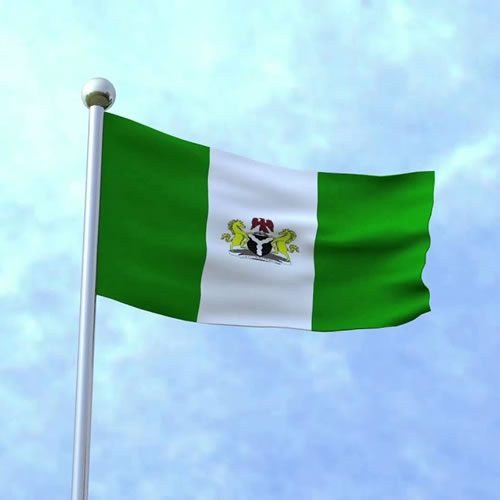
A kì í mú ìbọn tẹ́tẹ́rẹ́.
One does not hold a gun carelessly.
Fifteen years ago, when Nigeria turned 51, I borrowed that Yoruba warning to describe a country dangerously casual with the loaded weapon of nationhood. The gun itself was not necessarily the problem. The problem was the hand holding it.
Then, I asked whether Nigeria could recover the character and strength to hold her head up. I wrote about corruption, failing schools, epileptic electricity, insecurity, unemployment, maternal deaths, institutional decay and, perhaps most worrying, our fading capacity for outrage.
Today Nigeria is 66. The gun is still in our hands. Has our grip become steadier?
That question deserves something better than the annual Independence Day quarrel between two familiar Nigerian clubs: the Association of Everything Is Bad and the Association of Stop Demarketing Nigeria. Both usually arrive armed with statistics, insults and enough data bundles to prosecute a small civil war.
The truth is less comfortable: Nigeria has made progress, and Nigeria is still in trouble.
Start with democracy. Nigeria has completed 27 uninterrupted years of civilian rule, the longest stretch in our history. A Nigerian under 27 has never personally experienced military government. Courts still hear political disputes, civil society still speaks and the press remains difficult to silence completely.
Technology has redrawn the country. In July 2026, the Nigerian Communications Commission recorded more than 124 million broadband subscriptions. Nigerians move money from phones, build businesses online and somehow receive prayer points, fake news, burial announcements and political propaganda in the same WhatsApp group before breakfast.
The economy also refuses a simple story. Real GDP grew 4.43 percent year-on-year in the second quarter of 2026, with services accounting for 56.62 percent of output. Yet growth on a spreadsheet and relief in a household are not the same thing.
The World Bank estimates that in 2025 about 69.6 percent of Nigerians lived below the lower-middle-income poverty line of $4.20 a day, while 50.8 percent lived in extreme poverty. It also notes stronger macroeconomic and external conditions, but household incomes have not fully recovered.
This is the contradiction of Nigeria at 66: the economy may be stabilising while the kitchen is still protesting.
GDP does not buy garri.
Foreign reserves do not pay school fees.
Citizens experience economics through food, transport, rent, medicine and school fees, not PowerPoint slides.
Electricity tells a similar story. World Bank data puts access at 62.5 percent of the population in 2024. That is progress, but access is not reliability. The Nigerian entrepreneur remains taxpayer, generator owner, water supplier, security officer and sometimes road repairer. Government creates the “enabling environment”; the citizen often supplies the environment.
Education may be the more dangerous chamber. Public education then still carried a civic promise.
Today, UNICEF reports that more than 10 million primary-school-age children are out of school and only one in four children can read at a basic level. A nation cannot indefinitely export the education of its elite while neglecting its majority.
Ọmọ tí a kò kọ́ ni yóò gbé ilé tí a kọ́ tà–The child we refuse to train may eventually sell the house we struggled to build.
Health is equally sobering. In 2011, I cited a maternal mortality estimate of 840 deaths per 100,000 live births. The latest WHO-led estimate for 2023 is about 993, although the estimate carries a wide uncertainty interval.
Sixty-six years after independence, pregnancy remains too dangerous for too many Nigerian women.
Some statistics should not be rushed past.
Then comes corruption, our stubborn dinner guest who no longer waits to be invited.
In 2011, Nigeria ranked 134 out of 178 countries in Transparency International’s Corruption Perceptions Index. Today, Transparency International gives Nigeria a score of 26 out of 100 and ranks it 142 out of 182. Methodology and country coverage have changed, so the rankings should not be read mechanically. But corruption has plainly not become a museum exhibit.
Insecurity has mutated too.
Fifteen years ago, Boko Haram dominated the national imagination. Today the vocabulary includes banditry, kidnapping, communal violence, farmer-herder conflict, separatist violence and organised criminal networks. UNICEF’s 2026 humanitarian appeal says more than 3.7 million people are displaced, while 8.4 million need humanitarian assistance in the northeast, northwest and north-central regions.
Yet perhaps Nigeria’s most dangerous problem at 66 is not any single statistic.
It is normalisation.
Bad road? Adjust.
No light? Buy inverter.
No water? Drill borehole.
Police cannot protect you? Hire security.
Public school inadequate? Find a private one.
Hospital failing? If you can afford it, travel.
Government service unavailable? Know somebody.
We have turned resilience, one of our greatest virtues, into an unofficial substitute for governance. There is a difference between a resilient people and a people permanently compelled to improvise around institutional failure.
Fifteen years ago, I worried that Nigeria had lost its rage. At 66, perhaps rage itself is no longer enough. We have marched, protested, hashtagged, “japa-ed,” stayed, prayed, cursed and laughed at our pain.
Nigerian humour has become the ambulance that arrives when many other ambulances do not.
What we need is harder: outrage translated into citizenship, hope tied to accountability, criticism separated from hatred, and patriotism separated from propaganda.
This does not erase what Nigeria has achieved.
We are more connected, digital, entrepreneurial and globally visible than we were in 2011. Our music travels without visas. Nollywood speaks beyond our borders. Nigerian technology, banking and creative talent compete internationally. Civilian rule has endured.
They count.
But so does this: UNDP’s 2025 Human Development Report places Nigeria 164th, with an HDI value of 0.560. For a country of such human capital, natural resources, cultural reach and entrepreneurial energy, that number is not destiny.
It is a mirror.
And so, fifteen years later, I return to the warning: A kì í mú ìbọn tẹ́tẹ́rẹ́.
You do not hold a gun carelessly.
Nationhood is that gun. Our diversity is loaded into it, alongside more than 200 million ambitions, injuries, languages, memories, grievances and dreams.
At 51, I asked whether Nigeria would still exist 49 years later. Fifteen of those years have passed.
Nigeria remains.
But survival cannot forever be our highest national achievement.
At 66, the more serious question is whether Nigeria can work well enough that geography does not determine a child’s destiny; childbirth is not a wager; electricity becomes infrastructure rather than prayer point; public office becomes service rather than settlement; and citizenship means more than connections and survival strategies.
The gun is still in our hands.
Perhaps we hold it somewhat better than we did at 51.
But Nigeria is now old enough to know that we cannot forever blame the weapon. Eventually, we must examine the hands—May Nigeria win.

















You must be logged in to post a comment Login