
Forgotten Dairies
Nnamdi Kanu Must Not Become a Campaign Narrative: An Investigative Audit of Atiku’s Human Rights Advocacy and El-Rufai’s Detention, by Daniel Nduka Okonkwo
The 2027 math is therefore visible in the background, but the evidence does not yet provide a mathematical formula for Atiku’s intentions. What can be demonstrated is that a presidential candidate has brought multiple unresolved rights and detention controversies into one national political frame at a moment of opposition realignment. Whether that frame is principally an expression of conviction, a vehicle for coalition-building, or both is a question the continuing record of the 2027 campaign will have to answer.

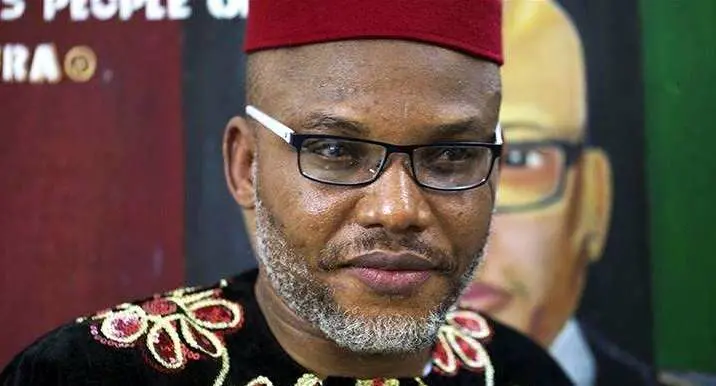
The timing is impossible to ignore: why did former Vice President Atiku Abubakar choose Nigeria’s 66th Independence Anniversary address to place Nnamdi Kanu’s case once again at the centre of his political message, at a moment when Nigeria is facing a much wider and deeply troubling landscape of political detentions, prolonged incarceration, disputed arrests, alleged unlawful imprisonment, and unresolved violations of fundamental rights? Kanu’s case is too consequential to be reduced to a campaign instrument, just as the constitutional questions surrounding his conviction and appeal are too serious to be treated merely as electoral rhetoric. Across Nigeria, other citizens remain in detention or prison under circumstances that have generated questions about due process, fair hearing, unlawful detention, and the proper limits of state power. The issue, therefore, is not whether Atiku was entitled to speak about Kanu. He was. The harder question is why Kanu was selected for particular emphasis at this particular political moment, what that emphasis means within the emerging 2027 opposition architecture, and whether the intervention represents a consistent defence of constitutional rights or a politically strategic deployment of one of Nigeria’s most sensitive human-rights cases. If the rule of law is the principle at stake, then Kanu cannot be the beginning and end of the conversation: Nigeria’s prisons, detention facilities, and courtrooms contain many other cases demanding urgent scrutiny, and any credible defence of human rights must ultimately be measured by whether the same constitutional standard is applied beyond the politically prominent and electorally consequential.
On October 1, 2026, as Nigeria marked its 66th Independence Anniversary, former Vice President Atiku Abubakar used his Independence Day address to place three politically and geographically distinct detention cases under the same national spotlight. Speaking at the African Democratic Congress (ADC) headquarters in Abuja, where he is the party’s presidential candidate for 2027, Atiku called on President Bola Tinubu’s administration to address grievances surrounding the convicted Indigenous People of Biafra (IPOB) leader Mazi Nnamdi Kanu and questioned the continued detention of former Kaduna State Governor Nasir Ahmad El-Rufai and Islamic scholar Sheikh Sani Khalifa Zaria.
Atiku also demanded the release of five young Nigerians arrested in Borno State after wearing “Tinubu Must Go” T-shirts, arguing that a political slogan on a shirt should not become a basis for imprisonment. He framed the broader intervention around the rule of law, saying, according to the report of his address, that “the rule of law” should be applied fairly in every case and that Kanu’s right to a lawful appeal must be respected.
The first line of inquiry is timing. Atiku is no longer operating within the political configuration of the 2023 presidential election. He is now the ADC’s presidential candidate for 2027, while the opposition party has assembled a campaign structure that includes El-Rufai as a senior figure. On September 25, 2026, the ADC announced its campaign council with El-Rufai named deputy chairman. That development is significant because one of the people whose continued detention Atiku addressed on October 1 was now formally embedded in the structure seeking to return him to the presidency.
El-Rufai’s legal situation is itself politically significant. He has been involved in criminal proceedings over allegations including abuse of office, financial impropriety, and money laundering, allegations he has denied. In a separate case involving the alleged interception of communications linked to National Security Adviser Nuhu Ribadu, he pleaded not guilty. The Federal High Court subsequently scheduled October 26, 2026, to rule on his no-case submission. These are allegations and ongoing proceedings, not convictions.
But the chronology requires an important correction to any simplistic argument that Atiku suddenly discovered Kanu because of the 2027 election. The public record shows that Atiku’s political campaign addressed Kanu’s situation during the 2023 presidential race. In January 2023, his campaign director in Anambra State, Obiora Okonkwo, said Atiku would respect a Court of Appeal judgment concerning Kanu if elected president. Other reports at the time also carried claims by Atiku’s campaign concerning Kanu’s release. IPOB subsequently accused presidential candidates of attempting to use Kanu’s detention as an electoral bargaining chip.
Timing, by itself, does not establish an illicit motive. It does, however, reveal a discernible correlation between the judicial calendars of the figures involved and the formalisation of a new political structure. The more precise question, therefore, is not whether the timing proves political intent, but why Nnamdi Kanu has once again been incorporated into a broader rule-of-law narrative at the very point when Atiku has moved to a new political platform, helped consolidate a wider opposition structure, and brought Nasir El-Rufai into his campaign leadership. These developments do not, on their own, establish causation or motive. They do, however, create a significant sequence of events that warrants closer investigation.
The 2023 presidential election radically altered the political arithmetic of the South-East. Peter Obi of the Labour Party won all five South-Eastern states, while Atiku’s PDP performed substantially below the level of its traditional regional strength. Obi secured 327,095 votes in Abia against Atiku’s 22,676; 584,621 in Anambra against 9,036; 259,738 in Ebonyi against 13,503; 428,640 in Enugu against 15,749; and 360,495 in Imo against 30,234.
Those figures do not establish how voters will behave in 2027, nor do they establish why Atiku has spoken about Kanu. They do, however, demonstrate the electoral importance of the South-East and the scale of the political shift that occurred in 2023. Kanu remains a politically significant figure within a long-running South-Eastern grievance concerning the treatment of IPOB and the broader question of federal relations with the region.
Kanu’s legal position has also materially changed since the 2023 election. He is no longer an accused person awaiting trial. On November 20, 2025, Justice James Omotosho convicted him and sentenced him to life imprisonment on several counts, alongside additional concurrent terms. On February 4, 2026, Kanu appealed the conviction and sentences, challenging aspects of the trial, including questions relating to jurisdiction, fair hearing, and the application of terrorism law.
That distinction is central to understanding Atiku’s October intervention. Calling for Kanu’s right to appeal to be respected is legally different from asking the President to overturn a conviction. An appeal is a judicial process. Atiku’s wider call for the grievances surrounding Kanu to be addressed is political advocacy. The two should not be conflated.
The second major case in Atiku’s address was El-Rufai. Unlike Kanu, El-Rufai has not been convicted in the proceedings discussed above. He remains involved in ongoing legal proceedings, and his lawyers have challenged the prosecution’s case. His detention has therefore raised a different set of questions from Kanu’s post-conviction appeal.
The political dimension becomes more pronounced because El-Rufai is not simply another detainee in Atiku’s public intervention. He is now part of the opposition campaign structure. When Atiku placed El-Rufai’s detention alongside Kanu’s grievances only days after the ADC campaign council was announced, the chronology created an obvious political connection between the legal issue and the emerging campaign architecture.
The third case, Sheikh Sani Khalifa Zaria, is different again. Reports in January 2026 said the prominent Zaria-based Islamic scholar had been detained over an alleged link to a purported coup plot against President Tinubu. The Federal Government denied that there was an actual plan to overthrow the President. Reports also said Khalifa had been taken into custody after travelling from Zaria to Abuja in circumstances connected to concerns over a frozen bank account.
Khalifa’s case has less publicly developed judicial detail than either Kanu’s conviction and appeal or El-Rufai’s ongoing prosecution. That distinction must remain clear. Allegations surrounding his detention should therefore be attributed to the reports and authorities making them, rather than presented as facts.
Yet Atiku rhetorically placed these different cases within a common constitutional framework. He argued that the continued detention of Khalifa and El-Rufai raised questions of due process that the authorities should answer, while separately insisting that Kanu’s right to a lawful appeal be respected. The legal circumstances differ, but Atiku’s political language brings them into one national rule-of-law narrative.
That creates the second line of inquiry: proportionality and geopolitical equidistance. Kanu’s case carries substantial resonance in the South-East. El-Rufai has an established political network in the North, particularly in Kaduna. Khalifa’s public profile is associated with Northern Islamic scholarship and religious constituencies. The cases, therefore, reach across different geographical and social constituencies.
This does not mean every South-Easterner identifies with Kanu, every Northern voter supports El-Rufai, or every Muslim constituency identifies with Khalifa. Such assumptions would be both analytically unsound and journalistically indefensible. The relevant point is narrower: the symbolic reach of the three cases extends across different constituencies that a national opposition candidate must address.
Atiku’s formulation, therefore, allows him to present what might otherwise appear to be separate regional controversies as manifestations of one institutional problem: whether the government is applying the rule of law, due process, and constitutional protections consistently. The South-East grievance surrounding Kanu, the Northern political implications of El-Rufai’s detention, and the religious and civil-liberties dimensions of Khalifa’s case are rhetorically brought into the same national frame.
That framing has political utility. But political utility is not proof of political motive. A politician may sincerely believe that a constitutional principle should apply to everyone while also understanding that defending that principle may resonate with important constituencies. The two possibilities are not mutually exclusive.
The inclusion of the five Borno youths adds another dimension. They were reportedly arrested after wearing “Tinubu Must Go” T-shirts, and Atiku argued that a political slogan on a shirt should not be a sufficient reason to imprison a Nigerian. If accurately quoted from the original report, the statement moves the intervention beyond prominent political or religious figures and toward the broader question of political expression.
This is important to the architecture of Atiku’s argument. Kanu represents a long-running separatist grievance; El-Rufai represents an opposition political figure facing criminal proceedings; Khalifa represents a detained religious scholar; and the Borno youths represent ordinary citizens accused in connection with political expression. Atiku’s common interpretation is that constitutional rights and the rule of law should protect them regardless of political identity.
That creates the third line of inquiry: the judicial paradox. A presidential candidate can legitimately campaign on constitutional rights and due process. The more difficult question arises when an executive office-holder is asked to intervene in a matter already before the courts or involving a judicial decision.
The distinction is crucial. If political advocacy asks the executive branch to comply with constitutional rights, prevent unlawful detention, or respect an individual’s lawful appeal, that is different from directing the executive to dictate a judicial outcome. Courts determine criminal liability and hear appeals. The executive is not constitutionally entitled to substitute political preference for judicial judgment.
Atiku’s wording on Kanu is therefore significant because he expressly referred to the right of appeal rather than simply demanding that the conviction be overturned. Nevertheless, his broader call for the government to address grievances and detention cases raises legitimate questions about where political advocacy ends and improper executive interference would begin.
The answer must be considered on a case-by-case basis. Kanu’s conviction is a judicial fact unless and until it is overturned on appeal. El-Rufai’s allegations remain allegations while his proceedings continue. Khalifa’s detention requires careful examination of the legal basis publicly disclosed by the authorities. The five Borno youths’ circumstances likewise require verification of the precise charges and legal process involved.
Atiku’s political rhetoric has nevertheless placed these legally distinct cases into a single narrative. The courts have not done so. That distinction is one of the most important findings of the investigation.
The controversy over Kanu also predates the current campaign. In 2023, IPOB warned presidential candidates against using Kanu’s detention as an electoral bargaining chip. That accusation was itself a political claim by IPOB and should not be treated as proof that Atiku’s position was motivated by electoral calculation. Its importance is that it demonstrates how politically sensitive Kanu’s detention was even before the current ADC configuration emerged.
The evidence, therefore, points in two directions at once. On one side is a documented history of Atiku’s concern about Kanu that reaches back to the 2023 campaign. On the other is a new political configuration in which Atiku is contesting the presidency under the ADC banner, El-Rufai occupies a senior campaign position, and the opposition is attempting to assemble support across regional and political constituencies.
The question is not whether these two realities can coexist. They clearly can. The investigative question is whether the second reality has altered the political use, prominence, or framing of the first.
Critics of Atiku have offered their own interpretation. Government and political figures have accused him at various times of political desperation or of using controversial issues for political advantage. Such statements are political commentary and should be attributed as such.
Atiku’s supporters can make the opposite argument: that political leaders should speak when constitutional rights are threatened, particularly when the affected individuals are unpopular or politically inconvenient. That argument also cannot by itself establish the factual correctness of every claim surrounding the cases.
The stronger journalistic approach is therefore to examine the record rather than adopt either political narrative. What did Atiku say? When did he say it? What had he said previously? Who had recently joined his campaign structure? Which cases did he choose to mention? Which did he omit? And is there evidence that the campaign was targeting particular constituencies through these issues?
There is also evidence that the October 1 address was broader than the three detention cases. Atiku discussed issues including electoral transparency, the independence of the Independent National Electoral Commission, vote buying, and the publication of polling-unit results. That broader agenda provides evidence for an alternative interpretation: that the detention cases formed part of a wider opposition platform centred on governance, constitutionalism, and democratic institutions.
The 2023 history of Atiku’s Kanu position reinforces that interpretation to some degree. If his campaign had already publicly addressed Kanu before the current ADC coalition existed, the claim that Kanu was introduced solely for the 2027 electoral cycle becomes difficult to sustain without additional evidence.
But the El-Rufai factor introduces a new variable. The September 25 announcement formally placed a major political figure who was himself facing detention and prosecution within Atiku’s campaign structure. Days later, Atiku publicly addressed El-Rufai’s continued detention alongside Kanu and Khalifa. That sequence does not prove that the address was designed as a campaign strategy, but it is politically relevant and warrants scrutiny.
The critical questions, therefore, become more specific. Did Atiku’s position on El-Rufai’s detention precede his formal integration into the campaign? Did the language intensify after the appointment? Did the ADC campaign adopt a systematic policy on political detainees? Did campaign research identify Kanu, El-Rufai, or Khalifa as issues with measurable electoral resonance?
This is where the so-called “2027 math” becomes relevant. Electoral arithmetic matters because a presidential candidate must build support across a country divided by geography, ethnicity, religion, class, and political history. The 2023 results demonstrate the scale of the South-East’s shift toward Obi, while the emergence of the ADC coalition introduces a new opposition configuration involving figures with political bases across different parts of Nigeria.
Yet electoral necessity is not synonymous with electoral motive. A politician may advocate for a cause because it is constitutionally defensible, because constituents demand it, because the politician personally believes in it, because it offers political advantage, or because several of these considerations operate simultaneously. Establishing which explanation best accounts for a particular intervention requires evidence beyond the fact that the intervention may be politically useful.
The same caution applies to the three principal cases. Kanu, El-Rufai, and Khalifa should not be treated as legally interchangeable simply because Atiku discussed them together. Kanu has been convicted and has appealed. El-Rufai faces ongoing proceedings and denies the allegations against him. Khalifa’s detention has been reported in connection with an alleged security matter whose publicly available legal details are less developed.
Atiku has rhetorically brought them together. The judicial system has not. That difference should remain at the centre of any serious assessment of his rule-of-law argument.
There is also a broader constitutional question beneath the politics. If the rule of law is to have meaning, it cannot apply only to people with whom a political party agrees. Nor can political opposition automatically transform an accused person’s case into evidence of persecution. The relevant questions are whether lawful procedures were followed, whether constitutional rights were respected, whether evidence supports the allegations, and whether courts remain free to determine the cases independently.
That standard applies equally to Atiku’s political allies and opponents. It also applies to the government whose conduct he is criticising. An investigative examination of his intervention should therefore subject both his claims and the government’s responses to the same evidentiary standard.
The most important fact emerging from the chronology is that the political architecture around Atiku has changed. In 2023, he contested under the PDP and publicly addressed Kanu’s situation. In 2026, he is contesting under the ADC, while the party’s campaign structure includes El-Rufai. At the same time, Kanu’s case has moved from trial to conviction and appeal, while separate detention and prosecution controversies involving El-Rufai, Khalifa, and the Borno youths have created additional rights-related issues.
That combination creates a new political narrative even though individual components of it are not new. The question is whether Atiku is simply continuing a longstanding position on constitutional rights or whether the new coalition has given that position a broader strategic purpose.
At present, the public evidence establishes the chronology and the political geography more clearly than it establishes private intent. There is evidence of longstanding concern about Kanu. There is evidence of a consequential new campaign structure. There is evidence that Atiku grouped cases involving people from different regions and political constituencies under a common rule-of-law framework. There is not, on the evidence presently identified, public proof that the intervention was conceived principally as a vote-winning strategy.
That distinction matters because journalism should not convert political possibility into factual certainty. The existence of an electoral benefit does not prove that the benefit was the reason for the action. Conversely, a politician’s invocation of human rights does not automatically remove the possibility that political calculations also informed the timing or presentation.
The investigation, therefore, arrives at a more difficult conclusion than either political camp may prefer. Atiku’s October 1 intervention can simultaneously be understood as advocacy for constitutional rights and as an intervention with obvious political utility. Those propositions do not cancel each other out. What remains unresolved is the weight of each consideration in the decision to make the intervention when and how it was made.
What is new is not necessarily Atiku’s concern about Kanu. What is new is the architecture in which Kanu’s appeal now sits alongside El-Rufai’s detention and political role within the ADC, Khalifa’s reported detention, the arrest of the Borno youths, and a broader opposition campaign focused on democratic institutions. That is not merely a collection of unrelated names. It is a political narrative.
Whether that narrative ultimately represents principled statesmanship, strategic coalition-building, or a combination of both should not be decided by rhetoric alone. The evidence that would answer the question lies in what Atiku and the ADC do with these issues as the 2027 campaign develops: whether positions remain consistent, whether particular constituencies receive targeted political messaging, whether campaign documents reveal strategic calculations, and whether the same rule-of-law standard is applied across cases involving allies and opponents.
For now, the record establishes three things. First, the timing is politically consequential, even though timing alone cannot establish motive. Second, the proportionality of Atiku’s intervention across geographically and socially different constituencies gives it clear national political utility, although that does not prove electoral intent. Third, the judicial paradox is real: political leaders may advocate constitutional rights, but judicial independence requires that criminal liability and appeals remain matters for the courts.
The harder question is therefore not whether Atiku’s intervention is political. Every public intervention by a presidential candidate during an election cycle exists within a political environment. The harder question is whether electoral consequences were merely an incidental benefit, one consideration among several, or a principal reason for the intervention. That question remains open to evidence.
For an investigative journalist, that is where the story should remain. The record can establish chronology. Electoral results can establish political geography. Court records can establish legal status. Public statements can establish what politicians said. Campaign documents and communications, if obtained and authenticated, could establish a strategy. But motive should not be invented where the evidence has not yet been established.
The 2027 math is therefore visible in the background, but the evidence does not yet provide a mathematical formula for Atiku’s intentions. What can be demonstrated is that a presidential candidate has brought multiple unresolved rights and detention controversies into one national political frame at a moment of opposition realignment. Whether that frame is principally an expression of conviction, a vehicle for coalition-building, or both is a question the continuing record of the 2027 campaign will have to answer.
Daniel Nduka Okonkwo is an investigative journalist, human rights advocate, and policy analyst based in Nigeria. He is the founder and publisher of Profiles International Human Rights Advocate (PIHRA), a platform documenting the courage of human rights defenders and examining issues of governance, accountability, security, and fundamental rights.
His reporting on Nigerian governance, security-sector accountability, public finance, and human rights has appeared in Sahara Reporters, Vanguard, Daily Trust, African Defence Forum, Opinion Nigeria, and Daily Intel.
Read more of his work on the PIHRA website:
https://www.profilesinternationalhumanrightsadvocate.com.ng/
For tips, feedback, or collaboration, contact him at dan.okonkwo.73@gmail.com.




















You must be logged in to post a comment Login