
National Issues
Are We Truly Independent?, by Miracle Seriki
If you one day find yourself in a position of authority, remember that your position is temporary. Your power is temporary. Your wealth is temporary. But the consequences of your decisions may outlive you.

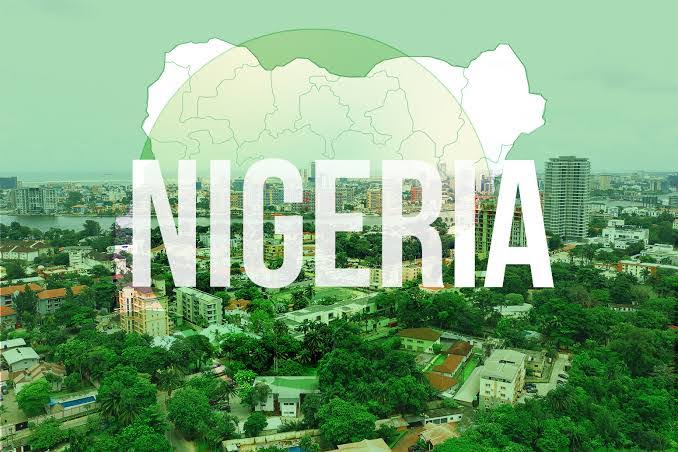
As Nigeria celebrates Independence Day today, it is worth asking a question that goes beyond the celebrations, speeches and patriotic messages: Are we truly independent from the ideas and attitudes that colonialism left behind?
Nigeria gained political independence in 1960, but independence is not only about who controls political power. It is also about the values, mindset and institutions that shape how a society governs itself and treats its people.
Colonial rule left a complicated legacy. Colonial authorities often exploited existing divisions and interests among communities and worked with local actors to establish systems that served colonial objectives. In some cases, local interests were placed above the collective interests of the people. The lesson from this history is important: when individuals are willing to sacrifice the interests of their own people for personal gain, a society becomes vulnerable to exploitation.
More than six decades after independence, that lesson remains relevant.
One of Nigeria’s major challenges is the relationship between leadership and personal interest. Too often, political leadership can be viewed as a pathway to power, influence, privilege and financial opportunity rather than primarily as an opportunity to serve.
When public office becomes a means of pursuing personal interests, the consequences are felt by ordinary citizens. Resources that could improve education, healthcare, infrastructure, security and economic opportunities may not produce the impact they should.
But this is not simply a problem for politicians.
It is a leadership problem, and it is also a societal problem.
We cannot demand selfless leadership from those in government while refusing to examine our own attitudes towards responsibility and public service. We cannot condemn corruption while looking for opportunities to benefit unfairly when given the chance. We cannot demand accountability from our leaders while refusing to practise accountability in our businesses, workplaces, communities and personal lives.
The Nigeria we want will not be built simply by changing the people occupying political offices. It will also require a change in the values that people carry into positions of responsibility.
Leadership should be understood as a responsibility, not merely a privilege. Public office should be viewed as stewardship, not personal ownership. Power should be understood as a trust, not an opportunity for personal enrichment.
This is why character matters.
A selfless leader is not necessarily someone without personal ambitions. Rather, selflessness means having the ability to place the legitimate interests of others above personal gain when responsibility requires it.
It means understanding that public resources do not belong to those who temporarily control them. It means recognising that political power is temporary, but the consequences of political decisions can affect generations.
This responsibility does not belong only to those in government.
Every Nigerian has some form of influence. A business owner influences employees and customers. A teacher influences students. A parent influences children. A religious leader influences members of a congregation. A civil servant influences the people who depend on public institutions. A community leader influences those around them.
And one day, some of those people will become the country’s future leaders.
The next president of Nigeria could be reading this article today.
But before that person acquires political power, there is something more important to develop: character.
Power does not make a selfish person selfless. It simply gives that person’s character greater influence.
This is why leadership development must go beyond teaching people how to acquire positions. It must also teach them how to exercise authority responsibly.
Nigeria needs leaders who understand that leadership is not about being above the people but being accountable to them. We need citizens who understand that nation-building is not the responsibility of government alone. We need a culture that values integrity, competence, responsibility, service and sacrifice alongside achievement and success.
Our independence should therefore remind us of more than the events of October 1, 1960. It should also challenge us to consider the kind of nation we are building and the kind of citizens we are becoming.
Political independence was an important beginning, but nation-building is an ongoing responsibility.
Perhaps one of the most important questions we can ask ourselves today is not simply, “What is wrong with Nigeria?”
It is also, “What kind of Nigerian am I becoming?”
If we want better leaders tomorrow, we must begin cultivating better values today.
If we want leaders who will put the public interest above personal gain, we must begin by learning to practise that principle in our own spheres of influence.
If you one day find yourself in a position of authority, remember that your position is temporary. Your power is temporary. Your wealth is temporary. But the consequences of your decisions may outlive you.
So, as we celebrate Independence Day, let us reflect not only on our freedom from colonial rule but also on the responsibility that comes with freedom.
Let us learn to lead with integrity.
Let us learn to serve rather than exploit.
Let us learn to place the common good above personal gain when the two come into conflict.
And, above all, let us learn to be selfless, not selfish.
The future of Nigeria will not be determined by politicians alone. It will also be shaped by the values of the millions of Nigerians who will lead, work, build, serve and make decisions every day.
Happy Independence Day, Nigeria.















You must be logged in to post a comment Login