
Forgotten Dairies
Burundi’s Mining Sovereignty Cannot Run on Presidential Anger, by Fransiscus Nanga Roka
The deeper accountability question is not just for foreign companies. Who negotiated the disputed bargains? Who monitored performance? Who pointing to the public interest, amend officials must explain if fails oversight?

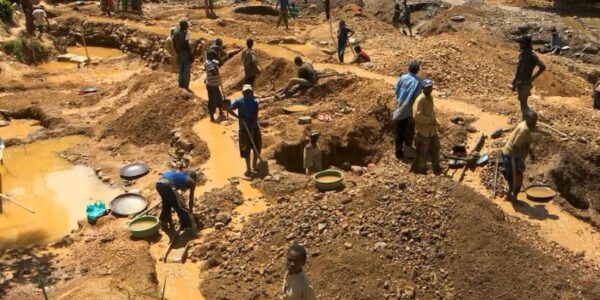
This means that a country might silently refuse an unjust mining deal whilst still botching its alternative. These incidents ring all too true in our current fight over DP 7 cause political promises to reclaim mineral bounty can turn from a plank to a liability when governments replace reform with intervention.141
The background matters. In July 2021, the state suspended activities of several mining companies in order to renegotiate contracts deemed unfavorable to Burundi. In a key correction to assertions that all foreign concessions were merely voided, a French Treasury assessment distinguishes those suspensions from revocation of exploitation licenses.
Both concessions disputes are now awaiting arbitration at the International Centre for Settlement of Investment Disputes. The application for Ntega Holding Burundi, ARB(AF)/26/1 was filed on January 6, 2026; while the Tanganyika Gold case (ARB(AF)/26/2) was months later on February 5. They invoke contracts and follow ICSID’s Additional Facility Arbitration Rules.
The tribunals were made up of the same three people appointed on 7 July President Jean-Christophe Honlet and Anne Hoffmann, chosen by claimants among permanent members of IGOs and Walid Ben Hamida (Burundi). On 5 August, Burundi objected to both claims as “evidently unfounded in law”; the claimants replied on 17 September. In neither case has there been a publicly recorded standalone merits award declaring illegal appropriation.
The key questions are about consent, contract and the legality of government action and for loss that is easily provable. Citing a suspension of activities as “nationalization” doesn’t make those problems go away. An ICSID registration does not establish an investor right to compensation either.
Burundi’s ambition deserves serious consideration. You should see mineral extraction be public revenues, domestic capacity, and physical results. Governments should challenge exploitative arrangements. However, an assertion about a contract being unconscionable must be backed up with facts: production logs, audited revenues, taxes paid, expenses and binding legal commitments.
Without it, resource nationalism threatens to be little more than political theater with an arbitration bill stapled in.
Investors are equally uncomfortable with the obligation. Contractual protections do not obscure environmental obligations, wronged communities or unmet investment commitments. Every claim for compensation must be scrutinized, on causation, business performance, and any mitigation and valuation assumptions. We are not automatically able to recover profit from future mineral potential.
Five immediate reforms for Burundi.
Publish concession agreements and related information such as amendments, beneficial ownership and fiscal terms. When the original bargain is itself opaque, citizens cannot know whether renegotiation ultimately serves them.
Second, commission an independent audit of the financial and environmental aspects. Any suggestion of imbalance between test has to be decided separately; it cannot be presumed from the other.
Thirdly, put clear rules in place for enforcement (notice(s), reason(s), proportionality etc.) and opportunities to remedy breaches where appropriate. This cries for deadlines and good-faith mediation, instead of endless suspension.
Fourth, improve the state arbitration capability through legal advice for special operations in both valuation and witness coordination Unproven claims should not be treated as conceded debts but used to inform budgeting regarding fiscal exposure.
B. Fifth and finally, ensure enforceable protection of workers and mining communities throughout restructuring: wage guarantees, compensation mechanisms, environmental monitoring and meaningful engagement in decisions that impact their land.
The deeper accountability question is not just for foreign companies. Who negotiated the disputed bargains? Who monitored performance? Who pointing to the public interest, amend officials must explain if fails oversight?
Just adding more nominal ownership by the state and Burundi can only export so much tea and coffee will not provide prosperity for that struggling nation. Competent institutions and accountable spending are necessary for public benefit.
Mineral sovereignty comes true when may assume a peek at the bargain and regulators administer it fairly and courts the test against the proof. Presidential rage may kill a mine. It can not create a fair mining economy.
Fransiscus Nanga Roka
Faculty of Law University 17 August 1945 Surabaya and Managing Partner Law Firm Victorious Indonesia

















You must be logged in to post a comment Login