
Forgotten Dairies
Africa: Questioning the ‘Dark Continent’ Narrative, by Ejuchegahi Angwaomaodoko
To think of Africa as dark in the current century can only be another way to miss the opportunity to turn the branch of the human family spread across the world into a new kind of global family. It is, by necessity, worth adding that, in the eyes of the wider world, Africa remains underrepresented, with no permanent seat despite its 54 states, on the United Nations Security Council. The unsuspected truth is that the veil of darkness attributed to Africa exists only in the eyes of its beholders.


In spite of the stream of scientific evidence from Africa, the concept of Black inferiority continues to thrive in many people’s minds. The persistent perception that the Black man or woman is of lesser human status, and that the African continent is inferior, is built on a multitude of myths and stereotypes fashioned by Europeans of yesteryears and others who have failed to discard such prejudice. Reductive narratives and misleading accounts have both contributed to the perpetuation of derogatory remarks about Africans at home and abroad. Although imposed, this badge of primitiveness does not mirror the continent’s dynamic identity.
Africans have been described in utterances beyond the pale of reason and in ways unbecoming of a world scarred by decades of colonial domination and servitude. Selected works by some forebears have portrayed Africans as “mysterious, savage, strange, barbarous and subhuman creatures.” Greek historian Herodotus, despite his commendable attempts to document the evolution of history as a field of study, sowed seeds of racial prejudice that shaped Black-white perceptions for centuries. His stereotypical description of Africans as “barbarians” and his characterisation of the ancestral tongue of the Libyans as resembling “the shrieking of a bat rather than the language of men” show how deep-rooted perceptions of Africans and the continent have long been.
In more recent works, the devaluation of Africa, as opposed to the continent’s apparent development, has not ceased. Both prejudicial narratives about Africa and explicitly racist statements, particularly those propagated through the Western literature and media, remain a contentious concern. To think, if at all, of Africa as “sick and deranged” is to embrace a distorted portrayal of the potential and promising strides of the 1,592,090,690 people on the continent. Such media’s tactics – selecting stories, choosing language, using demeaning images and relying on sources that only promote narrative-driven accounts – are the main contributors to the negative reporting, incomplete, decontextualised and stereotypical depiction of African people.
Acknowledged that issues of social consequence, such as poverty, disease, humanitarian crises, war, instability, elections and governance concerns, are indeed challenges, they exist only within the wider reality of the continent. And specifically, one need to only look at Africa through the Nigerian lens, as a geography graced by providence. Nigeria’s coastline, along the Gulf of Guinea in the Atlantic Ocean, is intersected by a network of creeks and rivers and by the Great Niger Delta. Across much of its length, the country has sandy beaches, hilly ranges, scattered hills, formations of granite and sandstone, summer rains along its northern frontier, the River Niger, the River Benue, swamp forests and other favourable climatic variables that lend it its own distinction.
While it is true that Nigeria grapples with several interrelated challenges – unemployment and underemployment, poverty and inequality, insecurity and various forms of violent crime, poor infrastructure and unreliable electricity, challenges in educational access and quality, corruption and weak institutional accountability – these issues tell only one chapter of the Nigerian story. In no particular order, there are more threads of what can be called the Nigerian civilisation, which is by no way ‘dark’.
The influence of the African continent on the world, grounding the point in the Nigerian experience, cannot be too obvious to escape notice. From the dated 1500 BC Nok culture, which tells the skillful story of the pre-colonial people of Southern Kaduna, it is patently unjust and prejudicial to refer to African inhabitants as uncivilised. The Nok terracotta sculptures, which archaeologists say demonstrate well-honed creativity, depicting imageries such as riverine trade routes and other figurative arts, confirms the long-dated ingenuity of Africans. It is little wonder that the success of Nollywood in the 20th century was a venture destined to yield fruits. With an estimated 2,500 annual film productions, the industry’s output and consumption reflect how relatable themes are of interest to its home-based and diaspora audiences.
On the global chart, the Nigerian music has earned a reputation of undebatable significance. Blockbusters and box-office record-breakers, particularly in music genres such as Afrobeats and street-hop, have continued to reach record highs. Nigeria, in Western Africa, is the birthplace of juju, fuji, Naija pop, highlife and other enduring music jams and genres. It is, in all candour, unquestionable that African art, disprove neo-colonial narrative, dominates the airwaves and dance floors across the world.
In the realm of technology, the African continent has the world’s oldest record of human technological achievement. While the history of science and technology points to East Africa as the site of some of the oldest surviving tools, other regions within the continent have been scientifically identified as important excavation grounds of the age-long civilisation within the continent. The scientific calculation of dates by the ancient Egyptians that produced a 365-day, 12-month calendar, ahead of the European invasion, was both remarkable and indicative of the wealth of knowledge that existed on the continent.
While geometrical thinking has been an African practice since the hunter-gatherer days, several African technology developers to date have made more contributions to applied science. In areas such as biotechnology, artificial intelligence, robotics, renewable energy and software development, Africans have shown no signs of unwillingness or incapacity to contribute fair share. Kenya’s Elly Savata, who invented Terp 360; Togolese inventor Sam Kodo, who developed FarmBot; Kenya’s Pollen Patrollers; and Uganda’s Neonest have all shown what African men and women can do, even when they are not in the spotlight of Western journalism.
In 2025, Forbes Africa reported that Lagos ranked as the world’s number-one rising star in technology, according to the Global Tech Ecosystem Index published by the intelligence platform Dealroom. From Yaba district, often dubbed Nigeria’s Silicon Valley, to technology centres in Ibadan, Enugu, Jos, Kaduna and Abuja, Africans have learned how to contribute to research and development, entrepreneurship, digital skills, technology-based businesses and reduce dependence on imported technology for its own advantage.
Africa, in another modest yet significant way, is reshaping its perceived identity through the recovery, preservation, revival and re-assertion of its cultural identity, traditions, history, values and practices that have been suppressed, marginalised and distorted, particularly through colonialism, slavery, cultural assimilation and the influence of modernisation. With language a typical victim of the African encounter with European colonial expansion, deliberate efforts – through digital preservation, entertainment or educational initiatives, promotion of mother tongue and creation of language proficiency institutes – are strategies currently employed to revive and reclaim the communicative heritage of the continent. To this very day and as a conscious effort to assert its right to dignity and equal standing, Africans are reclaiming as much as possible of stolen cultural artefacts, dressing, African history and even traditional names. In most African traditions, a name is more than a collection of letters or a label. It was, and is, a prayer, prophecy, link to an important story or event, and sometimes a geographical place name.
Amid the undeniable complexities of political life in Africa, democracy and leadership are also showing signs of a discernible, upward trajectory. A fact of inestimable worth is that nation-building and people-first leadership are products of participatory citizenship. It follows, then, that youth-led movements and civic actions, such as the Y’en a Marre anti-bad-governance protests against the Senegalese ruling class, Le Balai Citoyen grassroots action in Burkina Faso, the anti-police-brutality #EndSARS demonstrations in Nigeria and the #FixTheCountry civic campaign in Ghana, are more than fleeting signs of a continent home to people of conscience and action. Also at its own pace, although constrained by circumstances, peaceful transfers of political power such as in Senegal and Botswana, respect for institutional restraints and the deployment of digital technology for election monitoring, are among ways in which the continent’s political landscape keeps evolving.
For the umpteenth time, a single story cannot tell the whole tale of Africa, Nigeria, or its shipped-out relatives. Nigerian award-winning author Chimamanda Adichie in her viral 2009 TEDtalk delivery ‘The Danger of a Single Story’ said the consequence of a single story, in the grand scheme, robs people of dignity. While critics may argue that myths and stereotypes are only peripheral concerns in African history or its contemporary fate, they are potentially not. Propagated clauses such as ‘tribal wars,’ the ‘inability of Africans to govern themselves,’ and ‘excessive corruption in Africa’ are perceptions capable of consciously or unconsciously influencing Africa’s true reality in a negative way. Africa’s enormous size, diversity and multiple causations, much of which stems from an oppressed past and gross derogation, are only part of the African narrative. Other life beats – history, politics, music, commerce, art, invention, resistance, culture, education, and values – are parts and distinct undercurrents of the African identity.
Perhaps the real subject of ‘darkness’ is not in the continent of Africa, but in the world around it. Today, the 195 countries of the United Nations are confronted by obstacles to peace, finance, medicine, food, movement, technology, clean water, knowledge and infrastructure. Across the world, the uphill battle for these necessities continues to destroy lives and communities, despite the presence of an international community that possesses more tools than ever before to facilitate dialogue. Or is it not dark, in the language of Eurocentric minds, that climate crisis, for instance, persists despite the extent to which science has been clear and workable solutions are at the disposal of the world? It is, to put it mildly, failure, not to turn what the world knows in this age and time into what must be done.
To think of Africa as dark in the current century can only be another way to miss the opportunity to turn the branch of the human family spread across the world into a new kind of global family. It is, by necessity, worth adding that, in the eyes of the wider world, Africa remains underrepresented, with no permanent seat despite its 54 states, on the United Nations Security Council. The unsuspected truth is that the veil of darkness attributed to Africa exists only in the eyes of its beholders.
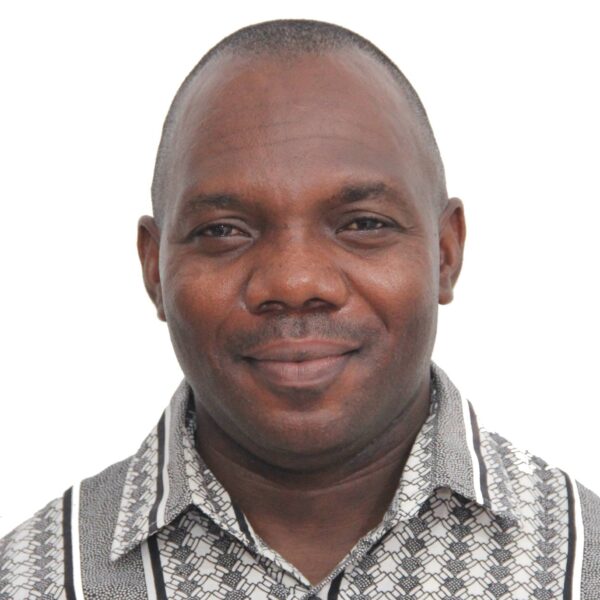
Angwaomaodoko, the founder of Ejuchegahi Angwa Foundation, and a scholar at Kean University, writes via ejuchegahi.angwaomaodoko@gmail.com











You must be logged in to post a comment Login