
Politics
Nigeria’s Missing Loaf: Who Took the Bread From the Table?, by Oluwafemi Popoola
At 66, Nigeria does not need another election in 2027, She needs a renewed conversation about the country she can still become. And it’s only a matter of time whether the next political generation can recover the intellectual courage to imagine beyond the familiar arithmetic of scarcity — a bigger loaf, a longer table, a fairer share and fewer citizens condemned to fight over crumbs.


There is an old African wisdom that says when a child eats from a communal pot and grows thin, the elders should not be too quick to blame the child for not eating enough. They must investigate the distance between the pot and the child’s bowl, asking what happened to the food that was supposed to reach him. A hungry child is not always evidence that there was no food; sometimes, it is evidence that somewhere between the pot and the child’s bowl, somebody took more than his share.
The wisdom goes deeper than hunger. It carries the weight of an entire philosophy of governance. It is an indictment of a society that measures the size of its harvest while refusing to examine the hands that distribute it.
Nigeria turned 66 a few days ago. Sixty-six. That is not an insignificant number. It is an age at which a person is expected to have acquired wisdom, perspective and some understanding of the consequences of earlier choices. Nations, too, should mature.
For six and a half decades, Nigeria has accumulated presidents, elections, coups, reforms, economic programmes, abandoned projects, new slogans and old problems. We have changed almost everything except some of the fundamental questions that have followed us since independence. What kind of country do we want to be? What do we owe the generation yet unborn? And perhaps most painfully: what happened to the country we once believed we could become?
A country can survive bad roads, weak institutions and even terrible leadership for a while. What becomes dangerous is when a people begin to lose the ability to imagine anything better.
I was reminded of this while reading a friend’s reflection built around a simple illustration: “imagine a community of 10 people producing 10 loaves of bread. Four people take two loaves each, leaving only two loaves for the remaining six”. The mathematics is as simple as it appears. The problem is not that the community produces nothing. The problem is that what it produces is distributed in a way that leaves the majority fighting over what remains.
I could not verify a reliable original source for that exact formulation. But its intellectual spirit reminds me of the late Malawian development economist, Thandika Mkandawire, whose famous observation was that Africans do not live by bread alone, but that bread matters. Mkandawire spent his life asking precisely the questions we seem increasingly reluctant to ask: how does Africa develop, who controls development, and what happens when institutions serve elites rather than citizens? He died in Stockholm in March 2020 after a life spent building African intellectual institutions and challenging conventional explanations of the continent’s poverty. He led CODESRIA, headed UNRISD and became the first Chair of African Development at the London School of Economics.
His legacy matters to Nigeria today because development is more than about producing more loaves. It is about building a society in which the loaves do not disappear into the hands of a few while everybody else is told to be patient.
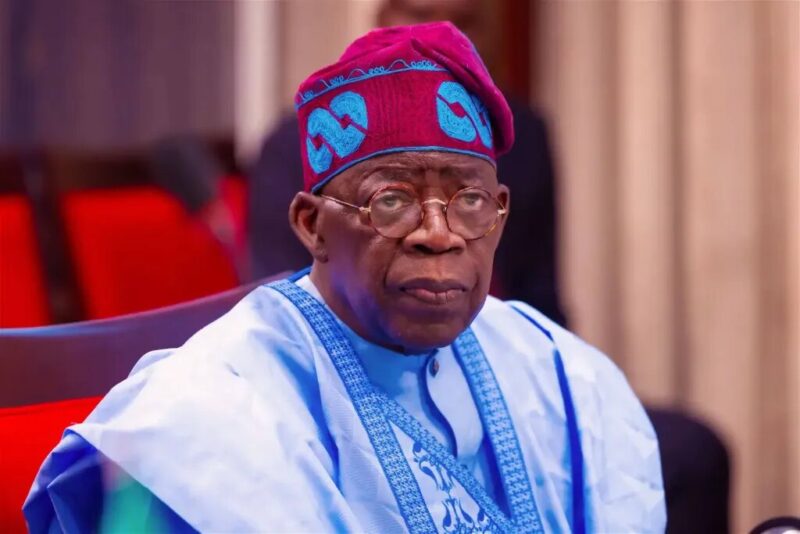
This explains why President Bola Tinubu’s 2026 Independence broadcast deserves more scrutiny than the usual patriotic applause. The President titled the speech “From Reform to Prosperity” and argued that Nigeria had passed through its painful economic treatment and was now entering an “age of prosperity.” He compared the country he inherited in 2023 to a cancer patient who had to choose painful treatment rather than morphine. He defended subsidy removal and other reforms, citing economic growth, falling inflation, stronger reserves, increased non-oil exports and a more stable foreign exchange market.
For the Nigerian who leaves home every morning to spend a frightening portion of his income on transportation, the argument about macroeconomic stability can sound distant. Also for the trader whose customers have reduced what they buy because food prices remain painfully high, GDP figures do not fill the cooking pot. For the civil servant calculating transport, school fees, rent and food against a ₦70,000 minimum wage, the language of a “Promised Land” can feel like a destination printed on a map without a road leading there.
Nigeria’s headline inflation did fall to 15.39 per cent in August 2026 from 23.14 per cent a year earlier, while food inflation also slowed. That is important and should not be dismissed. But the same NBS data showed that consumer prices were still rising. Disinflation means prices are rising more slowly; it does not mean Nigerians have suddenly recovered the purchasing power lost during the years of steep price increases.
Then there is petrol.
By late September, petrol prices had climbed to around ₦1,400 per litre in Lagos and Abuja, with higher prices reported in parts of northern Nigeria. By October 1, NNPCL outlets in Lagos were selling around ₦1,360 and in Abuja around ₦1,370 after a modest reduction. The relief was therefore measured in tens of naira, not a transformation of household economics.
And this was the context in which workers were waiting for something more concrete.
The President’s speech spoke about direct support, education loans, consumer credit, salaries and pensions, and programmes designed to assist vulnerable Nigerians. But there was no specific commitment in the address to a wage award for workers and no timetable announced for a fresh national minimum-wage review. That omission mattered because organised labour had already been demanding action over fuel prices, wages and purchasing power.
This is where the Independence speech becomes a question of political language versus lived experience.
Tinubu says the cancer has been excised. Nigerians are now asking: what exactly does recovery look like in the kitchen, at the filling station, in the classroom and in the marketplace?
Perhaps the most honest way to measure the distance we have travelled is to look back at where we once stood. Nigeria’s past was hardly a golden age, but it was a period when political rivalry could coexist with grand ideas about schools, roads, industries and the welfare of ordinary citizens. That history matters because it reminds us that national development was once imagined as something citizens could actually see, touch and experience.
Between 1957 and 1966, Nigeria had leaders with fierce political disagreements but substantial intellectual ambitions. The leaders of that era were more than holders of certificates. They were men and women shaped by conviction, sharpened by reading and enlarged by ideas. They knew history, read literature, reflected on philosophy and embodied the arithmetic of development and progress.
Awolowo’s Western Region pursued free primary education, infrastructure and social programmes. Balewa presided over the early federal development programme. Azikiwe represented a different tradition of nationalism, education and industrial development. The regions competed politically, sometimes bitterly, but development itself was part of the competition. The Western Region’s development plans, for instance, placed infrastructure and social services at the centre of government policy.
That era was hardly perfect. The First Republic suffered political crises, disputed elections, regional tensions and ultimately military intervention. We should not romanticise it.
But there was something unmistakable: an argument about what Nigeria could become.
Today, our political conversation often seems consumed by who gets what appointment, which faction controls which structure, who defected to which party and who can assemble the larger coalition. The intellectual question of what kind of country we are deliberately constructing sometimes disappears beneath the machinery of power.
That is the real danger before 2027.
I do not know what Nigerians will decide at the ballot box. That decision belongs to Nigerians. But I know what the electorate will be forced to confront: whether political programmes can translate economic growth into household prosperity; whether workers can earn wages that retain purchasing power; whether fuel prices can coexist with productive wages and affordable transportation; whether government can make citizens feel that national wealth belongs to the nation rather than merely passing through it.
Our founding leaders were not saints. They made mistakes. They fought one another. But they understood something that seems to have become endangered: politics without a philosophy eventually becomes a contest over possession.
A nation of 10 people producing 10 loaves cannot call itself prosperous simply because the bakery is working. Prosperity begins when the people can ask who owns the bakery, who gets the bread, how more bread can be produced and why six people should permanently survive on crumbs.
At 66, Nigeria does not need another election in 2027, She needs a renewed conversation about the country she can still become. And it’s only a matter of time whether the next political generation can recover the intellectual courage to imagine beyond the familiar arithmetic of scarcity — a bigger loaf, a longer table, a fairer share and fewer citizens condemned to fight over crumbs.
That, perhaps, is the Independence promise we have postponed for far too long.
Oluwafemi Popoola is a Nigerian journalist, media strategist, and columnist. He can be reached via bromeo2013@gmail.com














You must be logged in to post a comment Login