
Education
Why Do They Seem to Get It Wrong All the Time? -By Kator Ifyalem
Household-level costs and incentives: uniforms, levies, transport, and the opportunity cost of a child’s labour, which push especially poorer and rural families to withdraw children regardless of how schools are administered.
The retention of girls specifically, given early marriage and safety concerns are well documented as disproportionate drivers of female dropout at the JSS-to-SSS transition.

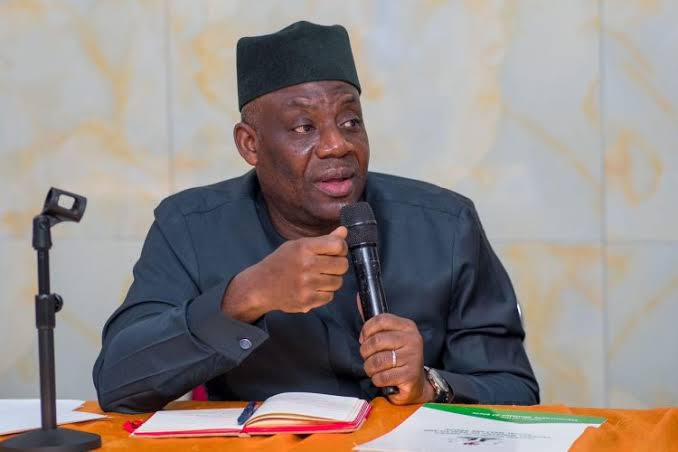
That’s the question a lot of Nigerians will ask on seeing the latest announcement: the Federal Government wants to scrap the separation between Junior Secondary Schools (JSS) and Senior Secondary Schools (SSS), citing a staggering 20 million pupils lost in the transition. It’s a fair question. Nigeria has spent decades announcing education reforms, and each one arrives with the same urgency, the same statistics of crisis, and often the same thin follow-through.
What was actually announced
Education Minister Dr. Tunji Alausa disclosed the plan in Abuja at the inauguration of the UBEC Ministerial Implementation and Monitoring Committee. His argument: the “disarticulation policy,” which forces JSS and SSS to run as separate institutions with different principals and facilities, has failed. Alausa put a number on the damage, over 20 million children move from primary school into JSS and never make it to senior secondary. He also flagged a structural mismatch: roughly 80,000 public primary schools feed into only about 15,000 junior secondary schools, an eight-to-one ratio that guarantees a bottleneck. The plan, he said, is to present a proposal scrapping the separation at the next National Council on Education meeting, Nigeria’s apex education policy body.
It is worth noting immediately: this is a proposal, not a signed policy. The ministry’s own press office has previously had to clarify that Alausa’s remarks were a position to be tabled for review, not an executed decision. That distinction matters, because it is part of the pattern people are reacting to, announcements that sound final on a podium but are, in practice, still several bureaucratic steps from becoming reality.
Where the reasoning is genuinely sound
Give credit where due. The 80,000-to-15,000 school ratio is a real and measurable infrastructure gap, and it is plausible that forcing every child to physically relocate, often to a different compound, under a different principal, sometimes in a different community, at exactly the age when dropout risk peaks is bad design. Merging administration and infrastructure so a school can carry a child from JSS1 through SSS3 without a disruptive handover is a reasonable fix on paper. Reducing duplicate principal and admin positions to redirect resources toward classrooms is also, in isolation, defensible.
Where the reform starts to wobble
The diagnosis does not match the number cited. The Minister used the 20million figure to justify ending JSS to SSS separation, but that figure describes dropout before or at the JSS stage, the primary to JSS transition, not the JSS-to-SSS one. The most recent widely cited figures from UNICEF puts Nigeria’s out-of-school population at roughly 18.3 million, split into about 10.2 million of primary-school age and 8.1 million of junior-secondary age. The crisis, in other words, is concentrated in getting children into and through the early years of secondary education, a problem of school availability, distance, insecurity and cost, not primarily a problem of children finishing JSS and being deterred by walking to a different SSS building. Merging JSS and SSS administratively does very little for a child who never reached JSS in the first place.
It treats a financing and access crisis as a structural one. UNICEF has pointed to a bundle of underlying obstacles: inadequate evidence-based planning, thin budget allocation, teacher and classroom shortages, poor infrastructure, insecurity, and household economics that pull children, especially girls, into labour or early marriage instead of school. None of that is solved by removing a line between JSS and SSS administration. If a community has no junior secondary school within reach, merging governance structures does not build the missing school; it just changes who signs the paperwork.
Insecurity is barely addressed. A meaningful share of the out-of-school population sits in the North-East and North-West, where school attacks, abductions, and displacement have shut down hundreds of schools. Reorganising administrative tiers does nothing for a family in Borno or Zamfara weighing the physical safety of sending a child to school at all.
”Overcrowded JSS, empty SSS” is a resourcing problem being solved with a reorganising. The Minister’s own framing, junior secondary schools bursting at the seams while senior secondary schools sit underused, is really an argument for building more junior secondary capacity, not for dissolving the distinction between the two tiers. There is a real risk that merging them without adding classrooms or teachers simply exports the JSS overcrowding into a bigger, still-underfunded combined school.
Implementation history invites skepticism. The federal structure in Nigeria means education is a concurrent responsibility between federal, state and local government. Past reforms from the 6-3-3-4 system itself to earlier UBE interventions have repeatedly stalled at the point where federal policy meets state-level execution, funding release, and local capacity. A National Council on Education resolution is not self-executing; it depends on 36 states and the FCT choosing to align their own school structures, budgets and staffing to match.
The areas that actually need the weight of this reform
Physical access at the primary-to-JSS chokepoint: closing the 80,000-to-15,000 school gap with actual new junior secondary buildings, not just administrative mergers.
Teacher supply and classroom quality: UNICEF has flagged severe shortages of qualified teachers alongside the enrolment numbers; a merged administrative structure with the same teacher shortfall changes little.
Security of the school environment: particularly across the North-East and North-West, where attacks and closures are a direct driver of dropout.
Household-level costs and incentives: uniforms, levies, transport, and the opportunity cost of a child’s labour, which push especially poorer and rural families to withdraw children regardless of how schools are administered.
The retention of girls specifically, given early marriage and safety concerns are well documented as disproportionate drivers of female dropout at the JSS-to-SSS transition.
The honest answer to the opening question
They do not always “get it wrong.” The diagnosis of a broken transition is real, and the 80,000-versus-15,000 school ratio is a legitimate structural flaw worth fixing. What repeatedly goes wrong is the habit of announcing a governance fix as though it were a resource fix, treating an administrative merger as a substitute for building schools, hiring and paying teachers, securing communities, and covering the real costs that push a family to pull a child out. Until a reform is costed, resourced, and tied to a state-level implementation plan with a timeline the public can track, it will keep sounding, to a tired public, like the same announcement in a new outfit.




























You must be logged in to post a comment Login