
Forgotten Dairies
Wanted: More Julius Malemas In South Africa To Champion Pan-Africanism Over Afrophobia -By Isaac Asabor
Imagine if every act of Afrophobic incitement was met by an equally forceful defence of African solidarity. Such leadership would not merely reduce violence. It would strengthen South Africa’s moral authority, reinforce continental integration and restore the country’s standing as a beacon of African hope.

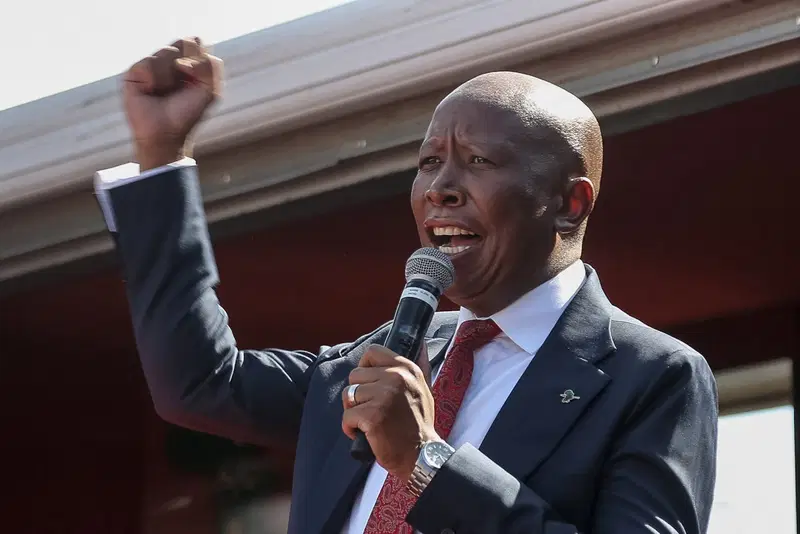
South Africa has no shortage of political leaders. It has a president, provincial premiers, cabinet ministers, members of Parliament, mayors, councilors, traditional rulers, religious leaders and community influencers spread across the length and breadth of the country. Yet, when it comes to consistently defending the ideals of Pan-Africanism and speaking unequivocally against Afrophobia, the country needs far more leaders in the mould of Julius Malema.
This is not to suggest that every South African politician should subscribe to the broader political ideology of the leader of the Economic Freedom Fighters (EFF). Nor is it to ignore the controversies that have surrounded his political career. Rather, it is to acknowledge that on one issue of profound importance to Africa’s future, Pan-African solidarity, Malema has demonstrated a consistency, courage and moral clarity that many in positions of authority have either failed or refused to exhibit.
At a time when xenophobic attacks continue to claim lives, destroy businesses, displace families and stain South Africa’s image across the continent, leaders at every level of governance should be speaking with the same conviction that Malema has repeatedly demonstrated: no African should be treated as a foreign enemy on African soil.
Given the foregoing view, it is germane to opine at this juncture that Afrophobia is a specific form of racism targeting Africans and people of African descent, while xenophobia is a broader hostility toward foreigners or strangers in general. The key difference is that Afrophobia is racially and culturally specific, whereas xenophobia can apply to any perceived outsider regardless of race.
From President Cyril Ramaphosa to provincial premiers, cabinet ministers, legislators, local government officials and grassroots leaders, the message ought to be unmistakable. South Africa’s greatest challenge is not the presence of fellow Africans seeking opportunities within its borders. Its real enemies are unemployment, poverty, inequality, corruption, poor governance and slow economic transformation.
Unfortunately, that message has too often been drowned out by populist narratives that conveniently portray immigrants as the cause of South Africa’s socio-economic woes. Malema has consistently rejected that narrative.
Whenever xenophobic violence erupts, he has reminded South Africans that ordinary Africans, whether they come from Nigeria, Zimbabwe, Ghana, Ethiopia, Somalia, Malawi, Mozambique or the Democratic Republic of the Congo, are not responsible for South Africa’s economic challenges. Rather, they are fellow Africans striving, like millions of South Africans themselves, for dignity, security and economic opportunity. That distinction is critical.
Blaming migrants for unemployment and crime may provide convenient political talking points, but it does little to address the structural problems that have plagued South Africa for decades. Economic stagnation, policy failures, corruption, widening inequality and inadequate job creation cannot be solved by attacking vulnerable shop owners, traders, artisans or workers from neighbouring countries.
If anything, such violence merely shifts public attention away from those truly responsible for addressing these challenges. Perhaps the strongest foundation for Malema’s Pan-African position lies in history.
South Africa did not defeat apartheid alone. When the apartheid regime sought to isolate and suppress the liberation struggle, many African countries stood firmly behind South Africans. Nations such as Nigeria, Ghana, Zambia, Tanzania, Angola, Mozambique and Zimbabwe opened their borders to exiles, hosted liberation movements, trained freedom fighters, provided scholarships, mobilized diplomatic pressure and contributed financial resources to sustain the struggle.
Those acts of solidarity were not performed because those countries expected economic rewards. They acted because they regarded apartheid as an assault on the dignity of every African. That shared history imposes a moral obligation on today’s South African leaders.
They owe it to history to remind every generation that the freedom their country enjoys today was nurtured by the sacrifices of fellow Africans. This is why leadership on Afrophobia cannot be reactive. It cannot consist merely of issuing statements after lives have been lost or businesses have been looted.
President Ramaphosa should make Pan-African solidarity a central pillar of his national message. Cabinet ministers should consistently educate citizens about South Africa’s indebtedness to the continent. Provincial governments should invest in programmes that promote African unity. Local government officials should challenge misinformation that fuels hostility towards migrants. Religious leaders should preach brotherhood across national boundaries. Traditional rulers should use their influence to foster peaceful coexistence. Community leaders should discourage inflammatory rhetoric before it degenerates into violence.
In short, every leader along South Africa’s governance chain should become a Julius Malema in defending Africa’s collective dignity.
Malema’s oft-repeated declaration that “Africa belongs to Africans” captures one of the enduring principles of Pan-Africanism. It echoes the dreams of African visionaries such as Kwame Nkrumah, Patrice Lumumba, Thomas Sankara and Nelson Mandela, who envisioned a continent united not by colonial boundaries but by common purpose, shared prosperity and mutual respect. That vision has become even more relevant today.
Africa is moving towards greater continental integration through the African Continental Free Trade Area. Governments are investing in cross-border infrastructure, regional trade, digital innovation and economic cooperation. None of these aspirations can flourish in an environment where Africans are persecuted simply because they crossed colonial-era borders in search of opportunity.
Afrophobia is therefore more than a social problem. It is an economic liability, a diplomatic embarrassment and a direct assault on Africa’s integration agenda.
Each Afrophobic attack damages South Africa’s reputation across the continent. Each incident weakens trust between African nations. Each act of violence undermines decades of efforts to build a united Africa capable of competing in an increasingly interconnected world. South Africa should be leading that continental project, not compromising it.
The country’s liberation credentials place upon it a unique responsibility. Having benefited immensely from African solidarity during apartheid, South Africa is expected to exemplify African brotherhood rather than African exclusion.
That expectation cannot be fulfilled through silence. It requires leaders willing to speak uncomfortable truths, even when such truths may not align with popular sentiment. It requires leaders who refuse to exploit economic frustrations by directing public anger towards vulnerable migrants. Above all, it requires leaders who recognize that patriotism and Pan-Africanism are not mutually exclusive.
Indeed, a truly patriotic South Africa should be one that honours its liberation history by extending to fellow Africans the same solidarity once extended to its own people.
This is why the country urgently needs more Julius Malemas, not necessarily in their political ideology, but in their unwavering commitment to Pan-Africanism.
Imagine the impact if every governor, every mayor, every councilor, every traditional ruler, every pastor, every imam, every teacher and every community leader consistently reminded South Africans that Nigerians, Zimbabweans, Ghanaians, Congolese, Ethiopians, Somalis and other Africans are not intruders but partners in the shared project of building a stronger continent.
Imagine if every act of Afrophobic incitement was met by an equally forceful defence of African solidarity. Such leadership would not merely reduce violence. It would strengthen South Africa’s moral authority, reinforce continental integration and restore the country’s standing as a beacon of African hope.
Whether one agrees with Julius Malema on every political issue is beside the point. On the question of Pan-Africanism, his message has remained remarkably consistent: Africans should never become enemies of fellow Africans.
That conviction deserves to be echoed far beyond the ranks of the EFF. It should resonate from the Union Buildings to provincial capitals, from municipal chambers to village councils, from churches and mosques to classrooms and marketplaces.
South Africa needs more leaders who will speak with that same moral clarity. It needs more Julius Malemas, not as partisan politicians, but as uncompromising champions of African unity over African division.
Only then can the nation truly honour its liberation history and reclaim its rightful place as a leader of a united, prosperous and peaceful Africa.















You must be logged in to post a comment Login