
Breaking News
Nigeria’s Development Hindered by Primitive Leadership Recruitment, Jonathan Warns
Former President Goodluck Jonathan says Nigeria cannot progress without ending religious and ethnic bias in leadership selection and prioritising competence and merit.

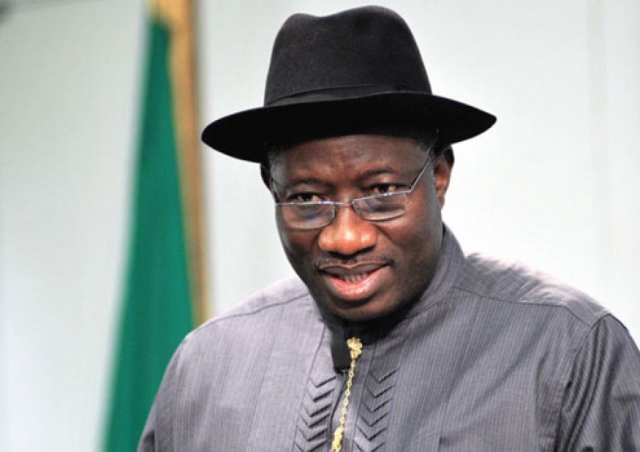
Former President Goodluck Jonathan has said Nigeria cannot achieve meaningful development until it moves away from what he called primitive methods of selecting political leaders based on religious beliefs, ethnicity, language and other sectional interests.
He argued that leadership appointments and electoral choices should be determined by competence and merit rather than religious or ethnic considerations, warning that the country would remain stagnant if such practices continued.
Jonathan made the submission on Saturday while speaking at the Herbert Macaulay Colloquium in Lagos, held in honour of the nationalist leader on the occasion of his 162nd birth anniversary.
Herbert Macaulay, born on November 14, 1864, is recognised as one of the pioneers of Nigerian nationalism.
At the gathering, the former president expressed concern over the extent to which religious affiliations influence political leadership selection in parts of the country.
“We are still suffering from political leaders being recruited based on religion, language and all kinds of things. Sometimes it is even beyond Muslim or Christian. I know of a particular state in southern Nigeria that 99.9 per cent of them are Christians. But if you don’t belong to one particular denomination, you cannot be the governor of the state,” Jonathan said.
He added: “That is the kind of thing we do. So no matter how good you are, until we move away from these primitive ways of recruiting political leaders, this country cannot go.”
Jonathan listed several challenges holding Nigeria back, including ineffective leadership, institutional deficiencies, corruption, policy inconsistency, poor infrastructure and insecurity.
He called for a comprehensive overhaul of the country’s democratic structure, which he described as “opaque and amorphous”.
He maintained that democratic reforms must promote genuine citizen participation, respect for human rights, adherence to the rule of law, judicial independence, accountability, political pluralism and a strong civil society.
On education, Jonathan called for greater investment in functional learning and research-oriented universities that could support technological innovation and national development.
He pointed to India, Singapore and South Korea as examples of countries that had transformed their economies through deliberate investments in education.
“You can’t go anywhere with weak educational institutions,” the former president declared.
He maintained that Nigeria must invest in its intellectual resources and develop world-class universities if it hopes to remain competitive in the global community.
Jonathan also paid tribute to Herbert Macaulay and other nationalists who contributed to the country’s struggle for independence and nationhood.
He said the most meaningful way to honour their legacies was to move beyond commemorations and build a nation that upholds the ideals and values they sacrificed to defend.





















You must be logged in to post a comment Login