
Breaking News
Midterm Setback: Trump Eyes Asia Tour to Reassert US Global Influence
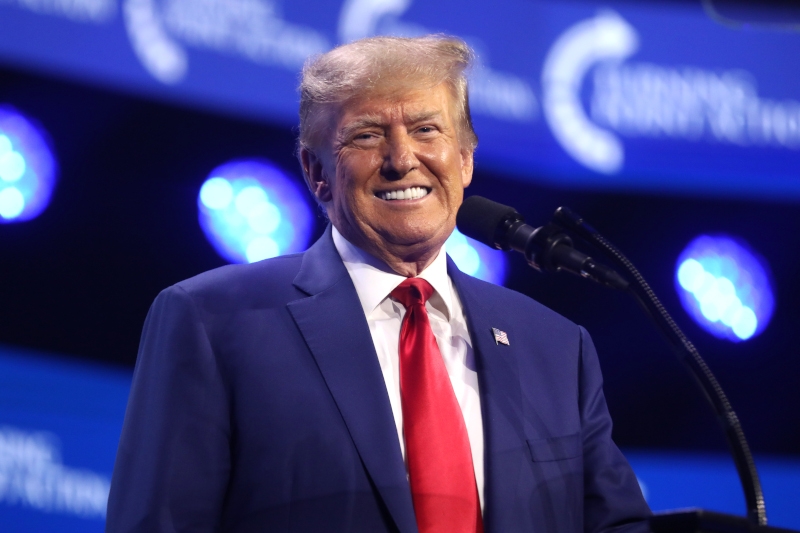
Donald Trump heads to Asia after Republican midterm losses, with meetings involving Xi Jinping, Vladimir Putin, Iran and North Korea expected to shape his foreign policy agenda.


President Donald Trump is preparing to use his upcoming Asian diplomatic engagements to reinforce his position as America’s leading foreign policy figure after Republicans suffered a major defeat in the US midterm elections.
The electoral setback has weakened Trump’s domestic political standing, raising questions about how much influence he will retain during the final two years of his presidency and how foreign governments might respond to the new political reality in Washington.
The 80-year-old Republican is expected to attend the ASEAN summit in the Philippines and the APEC summit in China at a time when Democrats have taken control of both the House of Representatives and the Senate.
With the Constitution preventing him from contesting another presidential election in 2028, Trump could increasingly turn his attention to international affairs as he seeks to shape his political legacy.
“After bad midterms, this is how presidents reset,” Edgard Kagan, an expert at the Center for Strategic and International Studies (CSIS), said at a news briefing.
Asian leaders watch Washington’s political shift
Trump’s visit to Asia comes amid growing international interest in how the Democrats’ congressional victories could influence American foreign policy, particularly on Iran, China and international trade.
China has played down the significance of the elections, describing them as an “internal affair” while expressing its “willingness to continue working” with the United States following the Republican losses.
Nevertheless, Asian leaders are expected to closely monitor the implications of the political changes in Washington.
Joshua Kurlantzick, an expert in Southeast Asia and South Asia at the Council on Foreign Relations, said several regional leaders were privately encouraged by the outcome.
“In private, many (Asian) leaders are relieved,” he wrote in an article this month.
According to Kurlantzick, the conflict involving Iran has placed considerable strain on America’s relationships with its Asian allies and partners, prompting hopes that Trump’s approach to the crisis will become more consistent.
“The Iran war has been particularly challenging for the United States’ Asian partners and allies, and they hope that after the midterm results US President Donald Trump’s decision-making on the issue will become more predictable.”
Trump has since indicated on several occasions that another round of fighting between Washington and Tehran is unlikely.
The Democratic takeover of Congress could also lead to increased pressure on China, with Kurlantzick suggesting lawmakers may move away from the Trump administration’s “soft approach” towards Beijing.
Such a shift could address concerns among America’s Asian allies about Washington’s current China policy.
Trade is another major concern for countries across Asia, where export-dependent economies have been significantly affected by Trump’s tariffs on trading partners.
Democratic House leader Hakeem Jeffries has called for Congress to restore its authority over US trade policy.
However, Trump is unlikely to surrender his trade powers without a fight. The president retains considerable authority in the area and can veto congressional legislation, a move he has already threatened to make.
Trump seeks diplomatic spotlight
Beyond policy discussions, Trump may use the Asian tour to stage major diplomatic encounters that reinforce his image as an influential global leader.
The president has repeatedly shown an appetite for high-profile international meetings, particularly with Chinese President Xi Jinping and Russian President Vladimir Putin.
Trump told reporters this week that he expected to meet both leaders at the APEC summit in Shenzhen, China, scheduled for November 18-19.
He said “denuclearization” and ending the war in Iran would feature in the discussions.
However, analysts believe the symbolic importance of appearing alongside Xi and Putin could be just as important to Trump as the substance of the meetings.
Kurt Campbell, chair of The Asia Group and a former senior diplomat in the Biden administration, suggested that the encounter itself could carry a significant political message.
“I think in many respects this could be ‘the meeting is the message’,” Campbell said.
The prospect of such a gathering has also raised concerns in Ukraine.
President Volodymyr Zelensky, who has watched with alarm as Washington appeared to move closer to Moscow this year, has cautioned against what he called a “Yalta 2.0”.
His warning draws a comparison with the 1945 Yalta conference, where Western leaders and the Soviet Union discussed the post-war political arrangement in Europe.
Victor Cha, president of geopolitics and foreign policy and Korea chair at CSIS, said the Republican defeat in the midterms had increased the likelihood of Trump pursuing a major diplomatic engagement.
Cha identified North Korea as another possible focus, pointing to Trump’s personal involvement in the issue throughout his two presidential terms.
“One that he (Trump) has personally staked a lot of time over two terms has been on North Korea,” Cha said.
He added that the president remains the central decision-maker on American policy towards Pyongyang.
“There’s nobody else in the US government that makes policy on North Korea except the president, so I think that he’ll be focused on that sort of legacy issue.”












You must be logged in to post a comment Login