
Breaking News
Midterm Defeat: Trump Seeks to Reassert US Influence on Asia Tour
Trump is expected to focus on China, Iran and North Korea during his Asian tour, with possible meetings with Xi Jinping and Vladimir Putin at the APEC summit.

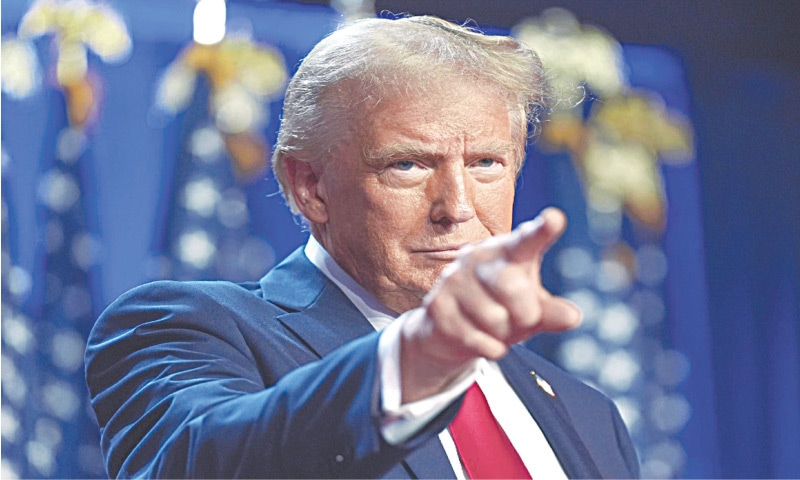
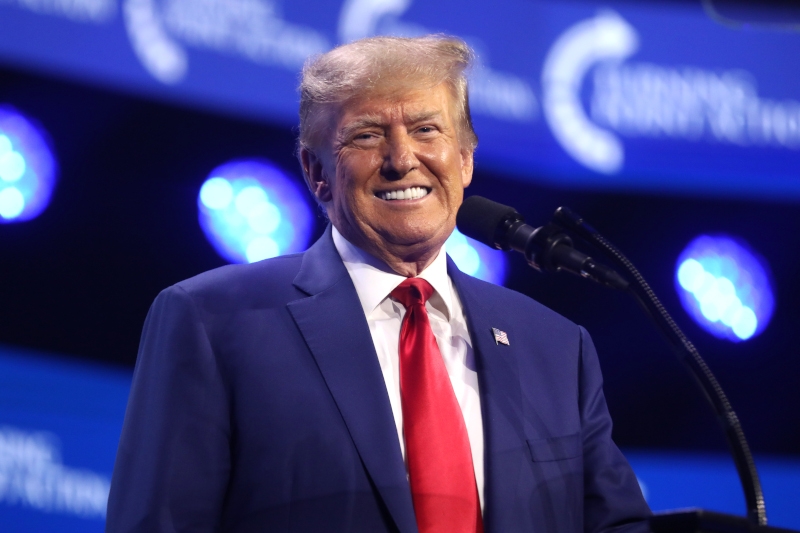
US President Donald Trump is preparing to use his upcoming Asian tour to reaffirm his influence on American foreign policy after his Republican Party suffered a major setback in the midterm elections.
The president faces the challenge of showing world leaders that he remains the dominant figure in US foreign affairs, even as his political position weakens following the Democrats’ takeover of both the House of Representatives and Senate.
As Trump enters the final two years of his presidency, often described as the ‘lame duck’ period, foreign governments may be reassessing their approach to Washington in light of the changed political balance.
The 80-year-old Republican is scheduled to attend the ASEAN summit in the Philippines and the APEC summit in China, with his domestic political landscape now significantly transformed.
Unable to contest the 2028 presidential election because of the constitutional two-term limit, Trump could increasingly turn his attention to international affairs.
“After bad midterms, this is how presidents reset,” said Edgard Kagan, an expert at the Center for Strategic and International Studies (CSIS), during a news briefing.
Asian Leaders Watch Iran and China Policy
Trump’s visit to Asia is expected to provide an opportunity to concentrate on foreign policy, with domestic political issues unlikely to dominate public discussions.
China has characterised the US midterm elections as an “internal affair” and expressed its “willingness to continue working” with Washington following the Republicans’ loss of control in Congress.
Nevertheless, the outcome of the elections is expected to influence how Asian governments engage with the United States.
Joshua Kurlantzick, an expert in Southeast Asia and South Asia at the Council on Foreign Relations, wrote that many regional leaders were privately encouraged by the results.
“In private, many (Asian) leaders are relieved,” Kurlantzick wrote in an article this month.
“The Iran war has been particularly challenging for the United States’ Asian partners and allies, and they hope that after the midterm results US President Donald Trump’s decision-making on the issue will become more predictable.”
Trump has said on several occasions since the elections that a fresh outbreak of fighting between the United States and Iran is unlikely.
Kurlantzick further suggested that Democrats controlling Congress could pursue a more confrontational approach towards China, reversing the Trump administration’s “soft approach” to Beijing, which has unsettled some US allies in the region.
Asian governments are also looking to Democrats to challenge Trump’s tariffs, which have placed considerable pressure on export-dependent economies across the continent.
Democratic House leader Hakeem Jeffries has urged lawmakers to restore Congress’s authority over American trade policy.
Despite this, efforts to roll back Trump’s trade measures could face significant obstacles because the president has wide-ranging authority over trade matters and can veto congressional legislation. Trump has already vowed to use that power.
Trump Eyes Xi, Putin Meetings
Trump’s preference for high-profile diplomatic displays could shape his engagements during the Asian tour, particularly if he meets Chinese President Xi Jinping and Russian President Vladimir Putin.
The US president told reporters this week that he expects to meet Xi and Putin at the APEC summit in Shenzhen, China, scheduled for November 18-19.
According to Trump, discussions would include “denuclearization” and ending the war in Iran.
Kurt Campbell, chair of The Asia Group and a senior diplomat during the Biden administration, suggested that the symbolic value of a photograph showing Trump alongside Xi and Putin could be one of the president’s major objectives.
“I think in many respects this could be ‘the meeting is the message’,” Campbell said.
Meanwhile, Ukrainian President Volodymyr Zelensky has cautioned against what he called a “Yalta 2.0”, recalling the 1945 arrangement in which Western leaders and the Soviet Union divided Europe. His warning comes after concerns that the White House appeared to move closer to Moscow this year.
Victor Cha, president of geopolitics and foreign policy and Korea chair at CSIS, argued that the Republicans’ poor midterm performance had increased the likelihood of Trump pursuing a major diplomatic meeting.
“One that he (Trump) has personally staked a lot of time over two terms has been on North Korea,” Cha said.
“There’s nobody else in the US government that makes policy on North Korea except the president, so I think that he’ll be focused on that sort of legacy issue.”
Africans Angle News










You must be logged in to post a comment Login