
Education
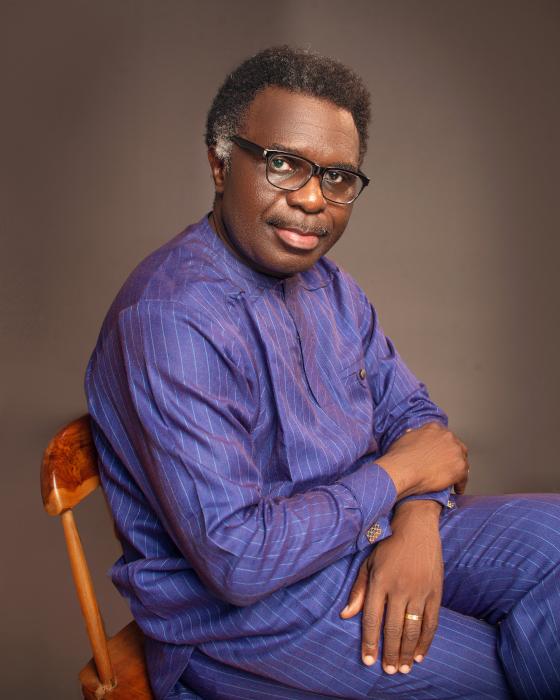
The Curious Case of the Academic Freeloader -By Professor Leonard Karshima Shilgba
The restoration of academic decency requires more than impressive titles, lengthy curricula vitae, or inflated citation counts. It requires intellectual honesty, disciplinary humility, respect for evidence, and the courage to admit, “This lies outside my expertise.”

There is an irony too delicious to ignore.
The same university don who boldly proclaims that a professor in another discipline is a “fake professor”—despite official university records affirming the contrary—may never have demonstrated genuine scholarly independence in his own discipline.
One discovers, upon examining the curriculum vitae of some of these intellectual interlopers, a curious pattern. Publication after publication. Paper after paper. Yet almost every one is accompanied by two, three, four, or even half a dozen co-authors. There is nothing inherently wrong with collaboration; indeed, many of the world’s greatest scientific discoveries have emerged from collaborative research.
The problem arises when collaboration becomes camouflage.
When a scholar reaches the pinnacle of academia without ever demonstrating the capacity to conceive, develop, execute, defend, and publish an independent line of inquiry, legitimate questions may be asked—not about the value of collaboration—but about the evidence of intellectual independence.
The tragedy is compounded by the “add-me syndrome” that has quietly infiltrated sections of academia. Authorship is sometimes treated as a social favour rather than a scholarly responsibility. It is therefore not unusual to encounter a listed co-author who struggles to explain the methodology, defend the conclusions, or even understand substantial portions of the paper bearing his or her name.
That is not collaboration.
It is authorship inflation.
And authorship inflation is a form of academic dishonesty.
This is precisely why many internationally respected universities place great emphasis on evidence of independent scholarship in appointments and promotions. Promotion committees are interested not merely in how many papers bear your name but whether you have demonstrated the intellectual capacity to initiate original research, formulate significant questions, justify their importance, develop rigorous methodology, analyse evidence, and defend your conclusions as an independent scholar. Promotion guidelines at institutions such as the University of Michigan and Johns Hopkins explicitly emphasise principal or lead authorship and independent research programmes, while some departments and universities go further by requiring a specified number of single- or first-authored publications before promotion to the professorial ranks. These standards exist for a simple reason: scholarship should reveal intellectual leadership, not merely participation. (NCBI)
Claiming authorship of dozens of publications simultaneously claimed by dozens of others does not, by itself, distinguish a scholar. What distinguishes scholarship is evidence that one can think independently, create independently, and defend one’s ideas independently.
The Citation Lobby
Equally troubling is the theatre surrounding citation metrics.
Citation was intended to acknowledge intellectual influence. In some quarters, however, it has degenerated into an organised campaign of mutual admiration.
Some scholars lobby colleagues to cite their work regardless of relevance. Others pressure postgraduate students into inserting unnecessary citations simply to inflate citation counts. Networks emerge whose members repeatedly cite one another in what amounts to an academic exchange programme.
When citation becomes a negotiated favour instead of an acknowledgment of genuine intellectual debt, the metric loses much of its meaning.
Scholarship should persuade readers to cite it.
It should never have to campaign for votes.
Even Specialists Know Their Limits
Perhaps the greatest irony of all is that genuine scholars are usually the most cautious.
Even within the same discipline, specialists understand the limits of their expertise. An honest professor of Mathematics whose life’s work is in Abstract Algebra or Numerical Analysis would hesitate before making authoritative pronouncements on the originality or technical depth of research in Elliptic Hamiltonian Systems or other highly specialised branches of Dynamical Systems without first undertaking a careful study of the work. Such restraint is not ignorance; it is intellectual maturity.
The unintellectual interloper knows no such restraint.
He speaks confidently where experts tread carefully.
He pontificates where scholars investigate.
He pronounces verdicts where honest academics ask questions.
That, perhaps, is the clearest distinction between scholarship and intellectual performance.
The restoration of academic decency requires more than impressive titles, lengthy curricula vitae, or inflated citation counts. It requires intellectual honesty, disciplinary humility, respect for evidence, and the courage to admit, “This lies outside my expertise.”
The academy deserves nothing less.
Leonard Karshima Shilgba, PhD (Yokohama)






















You must be logged in to post a comment Login