
Economy
Nigeria’s Economic Challenges: The Devastating Impact Of Insecurity -By Orofe Eloh Anointed
Nigeria’s pressing economic crises are inextricably intertwined with its deteriorating security architecture. Meaningful infrastructural development, economic diversification, and structural reforms cannot materialize in an environment devoid of basic peace and physical safety. Therefore, the federal government must prioritize national security as its absolute strategic objective. This demands a aggressive reallocation of fiscal revenues toward empowering security personnel, enforcing institutional accountability, and simultaneously executing robust job-creation initiatives for the youth. Only by restoring absolute stability can Nigeria establish a resilient foundation for long-term economic prosperity and national renewal.

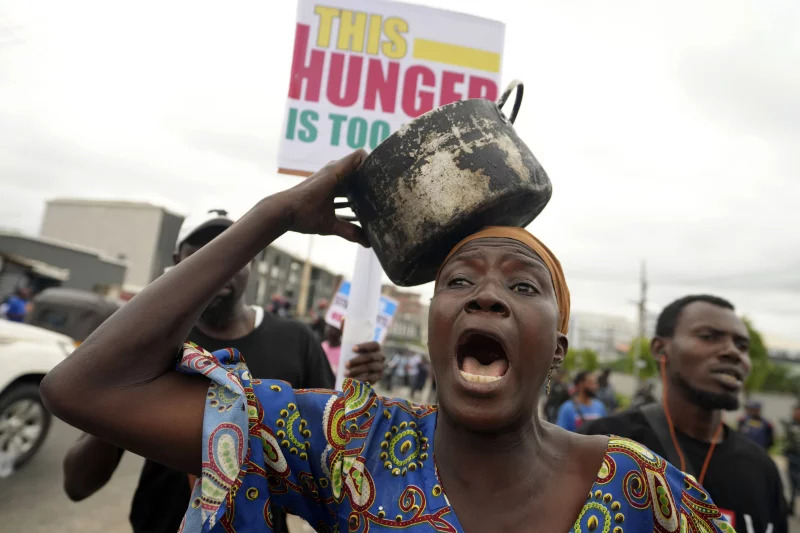
Nigeria is currently grappling with severe economic challenges that fundamentally undermine the daily lives and well-being of millions of its citizens. The astronomical rise in the cost of food, transportation, and basic housing has created an unsustainable burden for ordinary families across the nation. At the core of this economic stagnation is a pervasive crisis of insecurity, which serves as a massive drain on national resources and stymies productive commerce. Today, citizens find themselves unable to conduct routine businesses or move freely across the country due to the constant, paralyzing fear of violent attacks and kidnapping.
This insecurity has dealt a near-fatal blow to the agricultural sector, which forms the bedrock of Nigeria’s rural economy. Farmers are increasingly unable to access their fields due to the imminent threat of banditry and violence. This disruption has directly triggered an unprecedented inflation in food prices, lowered agricultural productivity, and escalated the costs associated with moving harvest to urban markets. For the millions of rural families who depend entirely on subsistence and commercial farming for survival, the loss of land access means total economic disenfranchisement. Farmlands have been transformed into highly volatile zones where farmers are routinely coerced into paying exorbitant ‘protection fees’ to criminal elements, ultimately forcing many to abandon their fields and modern agricultural investments entirely.
Beyond agriculture, the educational sector has suffered catastrophic damage as schools have increasingly become targets for criminal syndicates. The frequent abduction of students and teachers directly from classrooms has injected deep-seated trauma and terror into the minds of children and parents alike, discouraging school attendance. Consequently, numerous educational institutions have been forced to close temporarily, while others struggle to operate under hyper-militarized conditions. This dangerous environment has driven qualified educators to seek refuge in secure private institutions equipped with surveillance systems, leaving public institutions understaffed. The resulting spike in student dropout rates not only fuels long-term illiteracy but also funnels vulnerable youth into cybercrime, financial fraud, and anti-social behavior.
The logistics and transport sectors are equally paralyzed by this structural lawlessness. Commercial drivers now operate under perpetual anxiety, frequently avoiding high-risk corridors or suspending night travel altogether to escape highway ambushes. These operational constraints inevitably result in severe delays in the distribution of essential commodities, driving up procurement and operational costs for transport enterprises. To mitigate these risks, logistics companies are forced to expend substantial capital on private security details and transit levies, expenses that are directly passed down to consumers in the form of inflated transport fares and market prices, further worsening the psychological strain on the populace.
The broader societal and public health ramifications of this crisis are equally profound. Displaced by regular rural conflicts, millions of Nigerians now subsist in temporary camps characterized by substandard housing, severe food scarcity, and an absence of formal employment. This prolonged displacement has triggered a secondary crisis of severe malnutrition, trauma, and complex psychological disorders such as chronic anxiety and depression. Simultaneously, medical practitioners and emergency personnel are increasingly reluctant to work overnight shifts or accept postings in vulnerable regional hospitals. This structural decay in the healthcare ecosystem has driven up maternal and child mortality rates and accelerated disease transmission within displaced populations.
The youth demographic, traditionally regarded as the catalysts for national development, innovation, and economic growth, has been severely compromised by this systemic breakdown. Deprived of stable educational environments and viable employment opportunities, a growing number of young people have transitioned from national assets into socio-economic liabilities. Many have turned to sophisticated cyber-fraud, local banditry, and kidnapping syndicates as alternative survival mechanisms, often relying on the abuse of controlled substances like codeine and tramadol to cope with their realities. Growing up in an environment defined by pervasive violence strips the younger generation of institutional trust and hope, fostering systemic disillusionment, idleness, and a severe brain drain as talented individuals flee the country.
In conclusion, Nigeria’s pressing economic crises are inextricably intertwined with its deteriorating security architecture. Meaningful infrastructural development, economic diversification, and structural reforms cannot materialize in an environment devoid of basic peace and physical safety. Therefore, the federal government must prioritize national security as its absolute strategic objective. This demands a aggressive reallocation of fiscal revenues toward empowering security personnel, enforcing institutional accountability, and simultaneously executing robust job-creation initiatives for the youth. Only by restoring absolute stability can Nigeria establish a resilient foundation for long-term economic prosperity and national renewal.

























You must be logged in to post a comment Login