
Forgotten Dairies
An Examination of Inmate Welfare and Human Rights Protection under the Nigerian Correctional Service System -By Edeh Elijah Unazi
Therefore, closing that gap will require firmer implementation of non-custodial measures, greater investment in correctional infrastructure, expanded legal aid services, and continuous human rights training for correctional personnel, alongside stronger monitoring mechanisms capable of holding officials to the standards the Constitution and the Act already demand of them. On the whole, a correctional system that balances public safety with human dignity depends less on the elegance of its statutes than on the state’s willingness to enforce them in practice.

-
Introduction
The welfare and human rights of incarcerated persons remain a pressing concern in Nigeria’s criminal justice system. For most of its history, the Nigerian prison system was built around custody and punishment rather than reform, and inmates were treated less as citizens temporarily deprived of liberty than as people the state had simply set aside. Today, the justice system rejects this view. In fact, in reality, imprisonment, properly understood, restricts liberty; it does not strip a person of dignity or of the chance to become a useful member of society again.
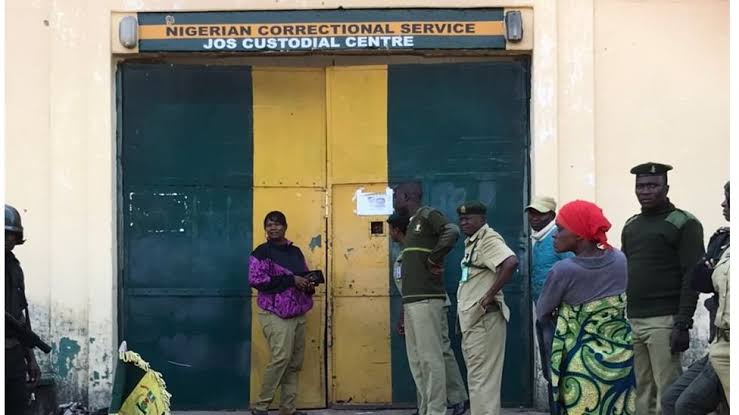
This shift found legislative expression when the Nigerian Prisons Service was renamed and restructured into the Nigerian Correctional Service under the Nigerian Correctional Service Act 2019.1 The Act replaced a colonial-era statute that had operated for decades without any stated objective beyond custody, introducing instead a rehabilitation-centred approach emphasising reformation, reintegration and non-custodial measures.2 Notwithstanding, legislative change on paper has not translated smoothly into change on the ground. Nigerian correctional centres still contend with overcrowding, poor healthcare, inadequate feeding and limited rehabilitation programmes. Although, imprisonment does not extinguish fundamental rights. The Constitution of the Federal Republic of Nigeria 1999 (as amended), together with statutory provisions, judicial decisions and international human rights instruments, recognises an obligation to treat every person deprived of liberty with dignity and humanity.3 A convicted person forfeits liberty for the duration of a lawful sentence; nothing in that sentence, however, authorises the withdrawal of medical care, decent feeding, or basic sanitation. This article examines that legal framework, considers the realities within Nigerian correctional facilities, and identifies the challenges that continue to limit enforcement.
2.0. Legal Framework for the Protection of Inmates’ Rights
The protection of inmates in Nigeria rests on three pillars: the Constitution, domestic legislation and international instruments. Chapter IV of the Constitution guarantees rights that apply to every person, inmates included: the right to dignity of the human person under section 34, personal liberty under section 35, fair hearing under section 36, freedom of religion under section 38, freedom of association under section 40, and freedom from discrimination under section 42.4 Imprisonment lawfully restricts movement, but it does not licence degrading treatment; correctional authorities remain bound to maintain conditions consistent with these constitutional guarantees.
The most significant statutory reform is the Nigerian Correctional Service Act 2019, which repealed the Prisons Act (Cap P29, Laws of the Federation of Nigeria 2004) and reoriented the system around reformation, rehabilitation and reintegration.5 Section 2(1)(a) of the Act commits the Service to compliance with international human rights standards, while section 14 obliges it to provide education, vocational training and modern farming instruction for inmates.6 These are genuine advances, though their effectiveness is still constrained by poor implementation and inadequate resources.
The Administration of Criminal Justice Act 2015 complements this framework by promoting speedy trials and, under Part 44 of the Act, non-custodial alternatives such as probation, suspended sentences and community service.7 These provisions were designed to reduce reliance on custodial sentencing and, by extension, ease pressure on correctional centres.8 Nevertheless, the continued high number of awaiting-trial inmates suggests that delay in investigation and prosecution, rather than the absence of alternatives, remains the deeper problem.
The Anti-Torture Act 2017 prohibits torture and other cruel, inhuman or degrading treatment by public officers,9 a commitment that reflects Nigeria’s stated dedication to human rights protection even where allegations of abuse within custodial institutions continue to surface, exposing weaknesses in enforcement and accountability. Internationally, this domestic effort is reinforced by the Universal Declaration of Human Rights 194810 and the United Nations Standard Minimum Rules for the Treatment of Prisoners, commonly called the Nelson Mandela Rules, which require humane treatment, adequate healthcare, proper accommodation and respect for the dignity of every prisoner.11 Nigeria has also ratified the African Charter on Human and Peoples’ Rights, which the Supreme Court in Abacha v Fawehinmi held to possess a status superior to ordinary domestic legislation once incorporated by statute.12 Article 5 of the Charter, prohibiting cruel and degrading treatment, is directly relevant to conditions inside correctional centres.13 The persistent gap, however, is not the absence of standards but their translation into daily practice.
3.0. Welfare Conditions within Nigerian Correctional Facilities
Welfare is the practical test of any correctional system, and it is here that Nigeria’s record is most exposed. Overcrowding remains the most visible failure. Many facilities hold populations far beyond their designed capacity, a problem documented for decades and still unresolved today.14 The Controller-General of Corrections told the House of Representatives Committee on Reformatory Institutions in February 2026 that congestion, driven largely by the volume of awaiting-trial detainees, continues to strain infrastructure nationwide.15 Congestion of this kind is not merely inconvenient; it produces poor ventilation, negligible privacy and heightened disease risk, undermining the basic proposition that imprisonment should restrict liberty without degrading the person.
Healthcare delivery is similarly strained. Many correctional centres lack sufficient medical personnel, equipment and medication. Where this failure becomes acute, it can amount to a constitutional violation: in Odafe v Attorney-General of the Federation, the Federal High Court held that the continued denial of proper medical attention to HIV-positive detainees breached their right to dignity under section 34 of the Constitution.16 Feeding and sanitation raise comparable concerns. Adequate nutrition and clean water are not luxuries but preconditions for humane custody, and their absence quietly defeats the rehabilitative purpose the 2019 Act was meant to serve.
Beyond the physical, prolonged and uncertain detention takes a psychological toll. Inmates held for years without trial, in congested and unpredictable conditions, face real barriers to eventual reintegration. The Act’s promise of educational and vocational programmes under section 14 is a genuine attempt to address this,17 but where implementation lags, inmates are released with little more preparation for lawful living than they had on admission.
4.0. Enforcement of Inmates’ Rights
Constitutional and statutory rights are only as strong as the mechanisms available to enforce them. The Fundamental Rights (Enforcement Procedure) Rules 2009 allow inmates to seek judicial redress where their rights are violated,18 and Nigerian courts have shown a consistent willingness to hold that imprisonment does not extinguish constitutional protection. In Peter Nemi v Attorney-General of Lagos State, the Court of Appeal affirmed that prisoners retain their fundamental rights except to the extent lawfully restricted by their sentence.19
In practice, however, access to justice is the weak link. Poverty, illiteracy, lack of legal representation and limited awareness of one’s own rights frequently prevent inmates from ever bringing a claim, no matter how strong that claim might be on paper. Institutions such as the National Human Rights Commission20 and the Legal Aid Council, established under the Legal Aid Act 2011,21 exist precisely to close this gap by offering oversight and free representation, but their reach into correctional centres remains limited relative to the scale of need, particularly in facilities far removed from major cities.
5.0. Challenges Affecting Inmate Welfare and Rights Protection
The main issue across each of the areas discussed above is the distance between legislation and implementation. Nigeria’s legal framework compares favourably with many jurisdictions on paper; what it lacks is consistent funding, adequate staffing and institutional follow-through.22 This shortfall is most visible in its practical effects: funding constraints limit infrastructure upgrades, healthcare provision and rehabilitation programming all at once, so that even well-designed schemes under the 2019 Act struggle to reach the inmates they were written for.
A second, related challenge is Nigeria’s continued reliance on custodial sentencing despite the non-custodial options created by the 2015 and 2019 Acts. Courts and prosecutors do not always turn to probation, suspended sentences or community service where they might, and the result is a system that keeps sending people into facilities already congested well beyond their intended capacity. Underlying both problems is a third, harder challenge: institutional culture. Changing an institution’s name from prison to correctional centre does not, by itself, change the professional habits of those who run it. Longpoe and Longpoe make this point directly, this is to the effect that decades of a purely custodial mindset do not disappear simply because a statute has been renamed and re-purposed; what is needed instead is sustained training and real accountability among correctional personnel, which legislation alone cannot deliver.23
6.0. Conclusion and Recommendations
It is indisputable that Nigeria’s correctional system has undergone genuine legal reform through the Nigerian Correctional Service Act 2019 and the human rights protections that surround it. However, overcrowding, inadequate healthcare, weak infrastructure and underdeveloped rehabilitation programmes show that legal commitment has outpaced practical delivery which is not meant to be the order of the day. Therefore, closing that gap will require firmer implementation of non-custodial measures, greater investment in correctional infrastructure, expanded legal aid services, and continuous human rights training for correctional personnel, alongside stronger monitoring mechanisms capable of holding officials to the standards the Constitution and the Act already demand of them. On the whole, a correctional system that balances public safety with human dignity depends less on the elegance of its statutes than on the state’s willingness to enforce them in practice.
Bibliography
- Legislation
Administration of Criminal Justice Act 2015.
African Charter on Human and Peoples’ Rights (Ratification and Enforcement) Act, Cap A9 Laws of the Federation of Nigeria 2004.
Anti-Torture Act 2017.
Constitution of the Federal Republic of Nigeria 1999 (as amended).
Fundamental Rights (Enforcement Procedure) Rules 2009.
Legal Aid Act 2011.
National Human Rights Commission Act, Cap N46 Laws of the Federation of Nigeria 2004.
Nigerian Correctional Service Act 2019.
- Cases
Abacha v Fawehinmi (2000) 6 NWLR (Pt 660) 228.
Odafe v Attorney-General of the Federation (2004) AHRLR 205 (NgHC 2004).
Peter Nemi v Attorney-General of Lagos State (1996) 6 NWLR (Pt 452) 42.
- International Instruments
African Charter on Human and Peoples’ Rights (adopted 27 June 1981, entered into force 21 October 1986).
Universal Declaration of Human Rights (adopted 10 December 1948) UNGA Res 217A(III).
United Nations Standard Minimum Rules for the Treatment of Prisoners (Nelson Mandela Rules) UNGA Res 70/175 (17 December 2015).
- Reports
National Bureau of Statistics, Nigerian Correctional Service Statistics Report (2017-Q2 2025) (NBS January 2026).
Nigeria Correctional Service, Presentation by the Controller-General of Corrections before the House of Representatives Committee on Reformatory Institutions (National Assembly, Abuja, 9 February 2026).
- Secondary Sources
Grace AR, ‘An Assessment of Prison Overcrowding in Nigeria: Implications for Rehabilitation, Reformation and Reintegration of Inmates’ (2014) 19(3) Journal of Humanities and Social Science 23.
Longpoe H and Longpoe W, ‘Analysis of the Transformation from the Nigeria Prisons Service to the Nigerian Correctional Service’ (2021) 3(3) International Journal of Comparative Law and Legal Philosophy 73.

























You must be logged in to post a comment Login