
Breaking News
Oborevwori Endorse Tinubu For 2027 Election: DELSU Campus Reaction Unfolds, by Ighorue Deborah Ufuoma
Political analysts who have commented on the development note that issues such as economic reforms, infrastructure, youth empowerment and job creation are likely to dominate campaigns ahead of the 2027 polls, with youths and students expected to be a decisive constituency given their numbers and growing political awareness.

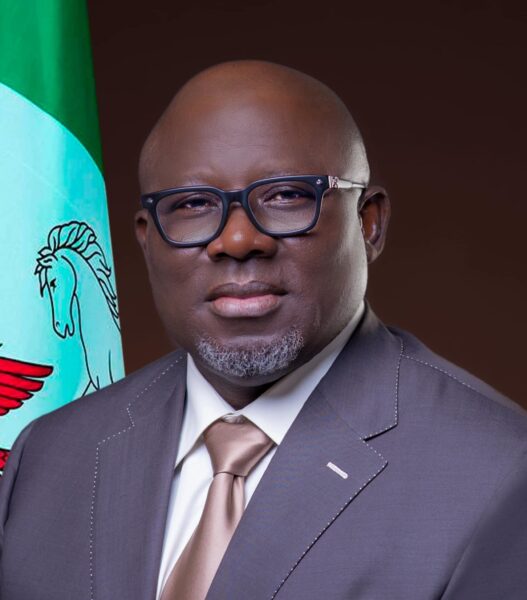
ABRAKA — Governor Sheriff Oborevwori’s public endorsement of President Bola Tinubu’s bid for a second term in 2027 has triggered a wave of conversation among students of Delta State University (DELSU), Abraka, with many tying their support for the political alignment to concrete improvements in campus welfare and education funding.
The governor announced his backing for the President during an interaction with journalists in Asaba, citing continuity of federal economic policies as a key driver of development at the state level. According to him, improved federal allocations arising from the Tinubu administration’s economic reforms have strengthened the state’s capacity to execute road projects, renovate classrooms and settle contractor obligations promptly.
The endorsement has since been echoed by several groups across the state, including traditional and political bodies in Abraka, Ughelli, Warri and it’s environs with some describing it as an early indication of alignment ahead of the 2027 general elections. Political observers say such declarations by sitting governors typically carry weight because of their influence over party structures and grassroots mobilisation, and often signal the shape of political permutations to come.
For students at DELSU, however, the political undertones matter less than the practical outcomes. Reactions gathered around campus reflect cautious optimism, with many insisting that continued political support from the state must translate into tangible benefits in hostels, lecture halls and job markets.
In an interview, a prominent executive of the Delta State University Students’ Union Government, who spoke on condition of anonymity, said, the endorsement means little to students unless it results in improved infrastructure. “We hear about all these political alignments every election season, but what we want to see is better hostels, regular power supply, and lecture halls that are not overcrowded. If this endorsement brings more funding to the university, then it is welcome,” he said.
Another student, President Sheikh, a 200-level student in the Faculty of Communication and Media Studies from the department of Mass Communication, and film , expressed a more hopeful view, linking the governor’s political alignment to recent infrastructural projects across the state. “Governor Oborevwori has shown commitment to development in Delta State, and if that partnership with the federal government continues, we as students stand to benefit through scholarships, employment opportunities and improved facilities,” he said.
A third student, Ajiroghene Precious, who is also from the department of Mass communication and film offered a more measured perspective, noting that students should evaluate such endorsements based on performance rather than sentiment. “Endorsements are part of politics, and every governor will support the president of their party. What matters to us as students is whether the promises translate into policies that reduce our cost of education and create jobs after graduation,” she said. “We will judge by what changes on ground, not by the endorsement itself.”
Political analysts who have commented on the development note that issues such as economic reforms, infrastructure, youth empowerment and job creation are likely to dominate campaigns ahead of the 2027 polls, with youths and students expected to be a decisive constituency given their numbers and growing political awareness.
As the conversation continues to trail campus corridors and social media platforms, many students say they will be paying close attention to how the endorsement shapes budgetary allocations to education in the coming months, particularly as it concerns tuition, hostel accommodation and research funding at DELSU.
For now, the reaction on campus remains largely one of watchful expectation, with students positioning themselves not as spectators to the unfolding political permutations, but as stakeholders whose academic future may well be shaped by the outcome.



























You must be logged in to post a comment Login