
Opinion
Quality Of Life: Decaying Infrastructure And Insecurities -By Eriaguna Oboden
The country’s debt profile is on the rise on a daily basis. It has been argued in some quarters that what the country has borrowed in the last three years is more than what it borrowed thirteen years back. As it is, close to half of our income is used to service debt, which is a sign of a failing nation.

For the past three years or so, the quality of life in Nigeria has been on a steady decline. This can be measured in terms of standard of living, national minimum wage, galloping inflation, and escalating insecurity. For example, the minimum wage in Nigeria is seventy thousand naira, which can only buy a bag of rice. This simply means that there are workers in Nigeria whose take-home pay in thirty days cannot afford them anything more than a bag of rice.
When the quality of life is in steady decline and the infrastructural facilities that help build the economic base of a society are decaying, the best thing to do is to look at the economic policies of the governments, especially at the national level, to detect the root cause of the problem. The current government’s removal of petroleum subsidy on inauguration as a policy that will help revamp the economy by way of removing the loopholes in the petroleum sector in order to make more money available for infrastructural development did not help matters. The policy may be good as we were told, but the implementation was very poor. The major argument in favour of this policy is that more money is made available for subnational governments at the expense of rising transportation costs and the falling value of the naira. The first question that comes to mind is: does the subsidy removal result in infrastructural development or an increase in the quality of life? The answer to this question is a capital no. Let us look at this from the point of view of electric power availability, debt profile, the state of Nigerian roads, hospitals, and insecurity.
Insecurity has become a common phenomenon in the country. We now live with the problem of terrorism and banditry in Nigeria. Particularly in the northern states, school children are being kidnapped for ransom. While some die in hostage, others are released for ransom, depending on the financial capability of their parents. In places like Kogi, Benue, and Plateau states, internally displaced persons centers are on the rise. Houses are being razed down on a daily basis, and farmlands are taken over by terrorists and bandits. The consequences of this are a sharp decrease in the production of agricultural products and loss of life. Electric power is a catalyst or the bedrock for meaningful development. There cannot be growth without power. As of today, Nigeria does not have the capacity to generate power. How can a country with an estimated population of over two hundred million people generate less than three megawatts of electricity? The failure to increase power generation capacity has led to the death of small-scale industries. As we all know, small industry is the lifewire of economic development of any country.
The country’s debt profile is on the rise on a daily basis. It has been argued in some quarters that what the country has borrowed in the last three years is more than what it borrowed thirteen years back. As it is, close to half of our income is used to service debt, which is a sign of a failing nation. The state of the roads is nothing to write home about. The roads are characterized by trenches, and in some cases, they are completely unpleasant and unpassable. Accidents are a common phenomenon on our roads. A journey that should take an hour can take a whole day. Transport fares have been on the increase, resulting in an increase in the cost of food and social amenities.
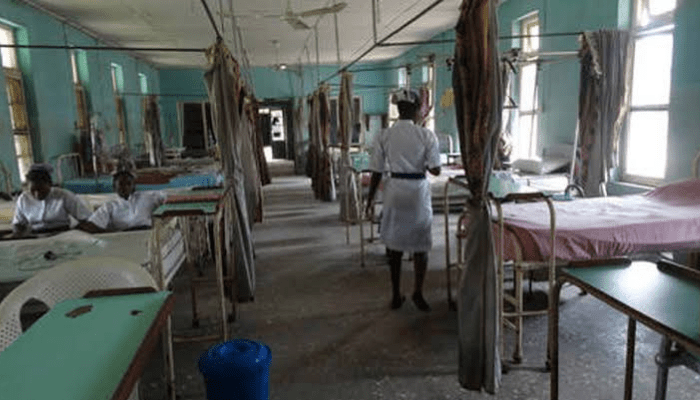
“Health is wealth,” they say. This is because a healthy population can produce more goods and services. A healthy society is measured by the number of hospitals and how well-equipped they are in terms of personnel, medical equipment, etc. In most hospitals, we lack doctors, drugs, and hospital beds, to the extent that the hospitals are called death centers. Since the economy is not improving, it suggests that the policies of governments, both at the national and subnational levels, should be people-oriented, not just making more money available that will not reflect in the living standard of the people.























You must be logged in to post a comment Login