Africa
Why the Nigerian Army And Police Must Build A Harmonious Relationship -By Adewole Kehinde
The Nigerian Army and Police must see themselves as partners, not rivals. They must acknowledge their interdependence and complementary relevance if Nigeria is to win the war against crime, insurgency, and insecurity.

“Communication will bring understanding, and understanding will cause harmonious mutual relationships, which can establish peace and stability.” – Lobsang Tenzin
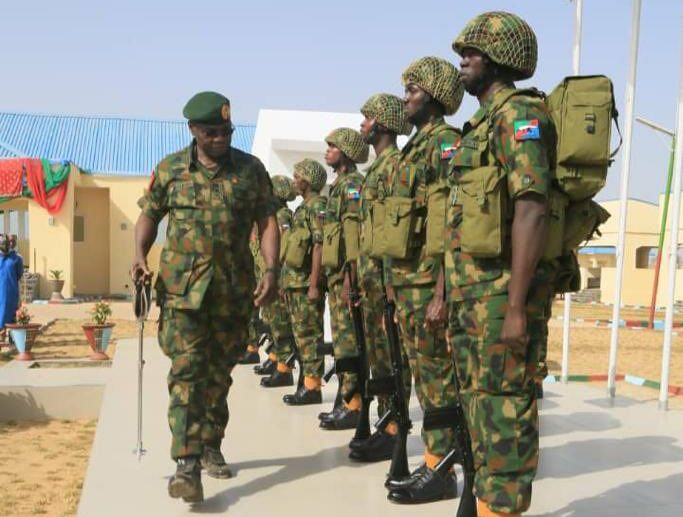
The recent disturbing report that some police officers involved in providing security during Saturday’s concluded Anambra State governorship election were allegedly shot by Nigerian Army personnel is a tragic reminder of the urgent need for harmony between our security agencies.
According to sources, the unfortunate incident occurred on Sunday along Onitsha Road, when an argument reportedly ensued between some army personnel and policemen at a checkpoint, which regrettably escalated into gunfire. This uncalled-for confrontation, coming right after a largely peaceful election, is both unfortunate and unacceptable.
The incessant clashes between the Police and the Army remain an enigma despite repeated efforts by various stakeholders to find a permanent solution. This ongoing inter-agency conflict is counterproductive to Nigeria’s overall security objectives. When brothers-in-arms begin to see each other with suspicion, the result is mistrust, inefficiency, and the emboldening of criminal elements.
For too long, the relationship between the Nigeria Police Force and the Nigerian Army has been likened to that of a cat and a mouse, an uneasy coexistence characterised by subtle demonisation and competition for supremacy. Yet both institutions were established to protect and defend the same people and nation.
The objectives of the Nigeria Police Force are clear: to ensure internal national security through crime prevention, detection, preservation of law and order, and protection of life and property. The Nigerian Army, on the other hand, is primarily tasked with defending the nation from external aggression, maintaining internal peace when called upon, and participating in international peacekeeping missions.
In principle, the relationship between the Army and the Police should be one of collaboration and synergy. Official rhetoric has always emphasised cooperation, joint operations, and mutual respect. However, in practice, the reality is often clouded by historical rivalries, institutional pride, and internal competition for authority. These power struggles sometimes erupt into violent clashes that undermine the morale of security personnel and public confidence in the system.
It must be clearly understood that while the Army’s constitutional duty is to defend against external aggression, the Police are primarily responsible for maintaining internal law and order. When the Army is co-opted to assist in internal operations, such as elections, riots, or counterinsurgency efforts, the soldiers become subject to police direction within the operational context. This is not subordination but rather adherence to the constitutional framework that guides inter-agency cooperation.
Therefore, both institutions must learn to collaborate effectively, sharing intelligence, conducting joint operations, and respecting their complementary roles. Rather than struggle for authority, they should build bridges of trust, understanding that their ultimate goal is the same: safeguarding Nigeria and its people.
Beyond joint training and synergy, the government must also develop a clear policy for rank parity between both institutions to reduce unnecessary inferiority or superiority complexes that often fuel inter-agency conflicts.
The Nigerian Army and Police must see themselves as partners, not rivals. They must acknowledge their interdependence and complementary relevance if Nigeria is to win the war against crime, insurgency, and insecurity.
True national security can only be achieved when our protectors, whether in uniform of khaki or camouflage, work hand in hand in mutual respect, professionalism, and patriotism.
Only through harmony and unity can the nation be safe.
Adewole Kehinde is a public affairs analyst and writes from Abuja. Email: kennyadewole@gmail.com, 08166240846