
Opinion
Wike’s Fiery Threat: Does He Realize He’s Playing With Nigeria’s Unity?, by Isaac Asabor

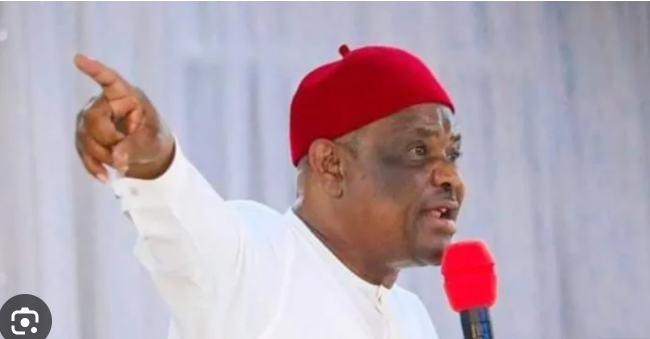
In the complex tapestry that makes up Nigeria, each of the 36 states plays a crucial role in maintaining the nation’s unity. This is why the recent threat by Nyesom Wike to “set fire” on states whose governors support Rivers State Governor Siminalayi Fubara is not only alarming but also potentially treasonable.
Wike’s declaration, made with his characteristic bravado, seems to forget a fundamental truth: by threatening any state in Nigeria, he is, in essence, threatening the entire nation. The implications of such reckless rhetoric cannot be overstated. Nigeria’s stability, already precarious due to economic and social challenges, does not need the added fuel of political leaders making incendiary statements that could ignite further division and unrest.
As a lawyer, Wike ought to fully understand the legal and constitutional implications of his unguided utterances. By threatening to set fire on states, which are integral parts of the Nigerian federation, he is not merely attacking isolated entities but is, in effect, threatening the unity and sovereignty of Nigeria itself. Such statements, whether made out of frustration or political maneuvering, are deeply irresponsible and border on treason.
The constitution of Nigeria is clear in its stance on any action or speech that threatens the peace and sovereignty of the nation. Wike’s statement, therefore, veers dangerously close to treason. A threat to burn down states because their governors are aligning with Fubara is not just an assault on those individual states; it is an assault on Nigeria as a whole.
At this point, the presidency must step in and call Wike to order. It is crucial for the highest office in the land to remind him that no individual, regardless of their political stature, is above the law or the unity of Nigeria. Wike’s recent actions show that he is overreaching himself in Nigerian politics, attempting to wield influence and power far beyond the confines of his role as the FCT Minister.
This is a time for leaders to unite the country, not fragment it. Wike must realize that his words carry weight far beyond the borders of Rivers State or the Federal Capital Territory. The consequences of such threats could be dire, setting a dangerous precedent where political disagreements are settled with threats of violence rather than dialogue and compromise.
Nigeria’s democracy thrives on the principle of federalism, where all 36 states have the right to govern without interference or threats from individuals, no matter how powerful. Wike’s comments undermine this principle and should be condemned in the strongest terms.
It is imperative for leaders at all levels to exercise restraint and wisdom in their public statements. The security and unity of Nigeria should be their primary concern. Wike, like every other Nigerian leader, must be held accountable for his words and actions. His recent threat is not only reckless but borders on treason, as it endangers the very fabric of the nation he once swore to serve and protect. The presidency must not turn a blind eye to this; swift action is needed to reaffirm that Nigeria’s unity is sacrosanct and cannot be toyed with by any individual, no matter how influential.
Without a doubt, the minister’s statement is not only alarming but also treasonable. Such a statement, especially coming from a high-ranking public official, carries significant implications for national security, political stability, and the rule of law in Nigeria.
In fact, Wike’s statement is particularly concerning given Nigeria’s fragile political landscape, where ethnic and regional tensions often run high. Any call to incite violence, particularly at the level of inter-state conflict, could easily spiral out of control, leading to a breakdown of law and order. The constitution of the Federal Republic of Nigeria places a high premium on the preservation of national unity, peace, and security.
According to Section 14(2)(b) of the 1999 Constitution of Nigeria (as amended), “The security and welfare of the people shall be the primary purpose of government.” By threatening to incite violence, Wike is ostensibly violating this constitutional provision, as such an act could endanger the security and welfare of citizens in the affected states. This alone could be grounds for legal action against him, as it directly contravenes the duties and responsibilities expected of any public officer.
Besides, his threat could also be interpreted as incitement to violence, which is a serious offense under Nigerian law. Section 50(2) of the Criminal Code Act states that “Any person who by any means whatsoever aids, counsels, or procures the commission of an offense, or who incites any other person to commit an offense, is guilty of the like offense and liable to the same punishment.”
Given that Wike’s statement could be seen as inciting governors and their supporters to engage in violence, he could potentially be held criminally liable under this provision. Moreover, if such violence were to lead to the destabilization of the Nigerian state or the overthrow of a duly elected government, it could be classified as treason, a capital offense under Nigerian law.
His comments also raise serious concerns about the abuse of power and political intimidation. As a former governor and current minister, Wike holds significant influence in Nigerian politics. His threat to “set fire” on states that oppose his political interests can be seen as an attempt to coerce other political actors into submission, thereby undermining democratic principles.
In fact, Section 15(5) of the 1999 Constitution explicitly states that “the State shall abolish all corrupt practices and abuse of power.” Wike’s statement, directly contradicts this constitutional mandate, as it suggests the use of political power for personal gain and retribution. This sets a dangerous precedent for political conduct in Nigeria and could further erode public trust in the political system.
In light of these serious implications, it is crucial for the relevant authorities, including the Nigerian judiciary and the National Assembly, to investigate Wike’s alleged statement and take appropriate action. Public officials must be held accountable for their words and actions, particularly when those words and actions threaten the peace, security, and unity of the nation.
Furthermore, it is essential for political leaders to exercise restraint and engage in constructive dialogue, rather than resorting to threats of violence. Nigeria’s democracy can only thrive when its leaders respect the rule of law and work towards the common good, rather than pursuing personal vendettas.
Reiteratively put, Wike’s threat to “set fire” on states whose governors are supporting Siminalayi Fubara is not only dangerous but also potentially treasonable. Such statements undermine Nigeria’s national unity, incite violence, and constitute an abuse of political power. It is imperative that the relevant authorities address this issue promptly and ensure that public officials are held accountable for their actions. The preservation of Nigeria’s democracy and the rule of law depend on it.



























