Africa
Workers Day: Do Nigerian Workers Have Anything To Celebrate? -By Isaac Asabor
Let this year’s May Day be a wake-up call to all stakeholders. Because, until the Nigerian worker has genuine reasons to celebrate, not just today, but every day, then May 1st will remain a mockery rather than a tribute.

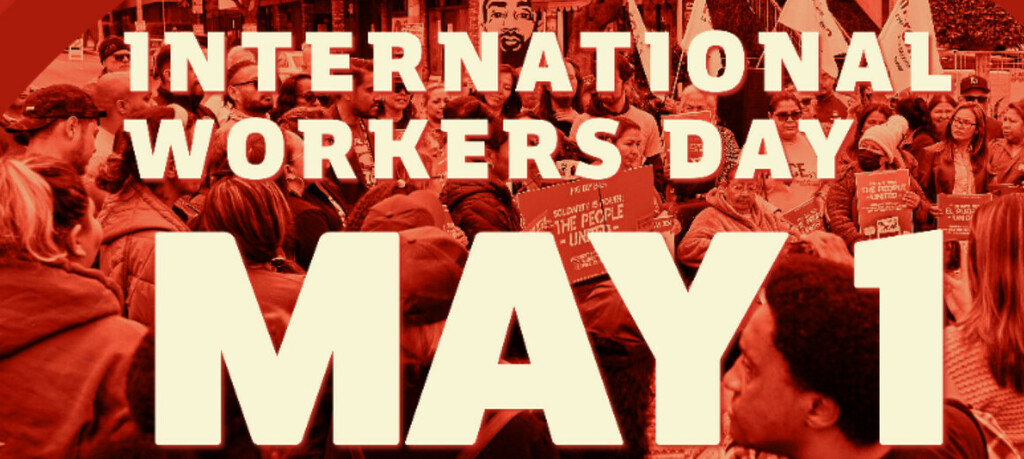
As the world marks another International Workers’ Day, a day traditionally set aside to celebrate the sacrifices, struggles, and achievements of the working class, one cannot help but ask a painfully honest question: “Do Nigerian workers truly have anything to celebrate?” The answer, for many, is a resounding no.
Across various sectors, from the civil service to private enterprise, from factories to farms, classrooms to clinics, Nigerian workers are breaking their backs daily, yet have little or nothing to show for it. While the world uses this day to appreciate workers as the engines of the economy, in Nigeria, the occasion often serves more as a grim reminder of the broken social contract between the state and its workforce.
Without a doubt, not a few workers in Nigeria are earning salaries that cannot feed their families. Perhaps the most glaring injustice Nigerian workers face is the insultingly low remuneration. When compared with other nations, even within Africa, Nigerian workers are paid among the least. As of today, the national minimum wage stands at a paltry ₦70,000 per month, and which is not being paid by majority of employers in the private sector. You can imagine! A full-grown adult working full time in Africa’s largest economy earns the equivalent of less than a week’s grocery bill in most countries.
To put it into perspective, in South Africa, the minimum wage is undeniably higher, and also in Ghana, which has a higher minimum wage than Nigeria. Meanwhile, the Nigerian worker is expected to live, pay transport, feed a family, and maybe send children to school with ₦1,000 a day, and that is for those even lucky enough to receive the minimum wage consistently.
Ironically, even those in relatively well-paying jobs, and who are majorly medical doctors, engineers, lecturers, mid-level civil servants are not spared. Inflation has swallowed their salaries whole. By the time rent, food, transportation, and school fees are paid, there is little or nothing left. Most survive on multiple side hustles. A university lecturer, for instance, might be running tutorial centers, farming, consulting, and other side hustles, all just to keep the home running.
Without any iota of exaggeration, inflation has remained a silent killer of workers in Nigeria. Even more troubling is how inflation has silently and steadily eroded whatever value those wages once held. The cost of living has skyrocketed. A bag of rice now sells for roughly ₦85,000, up from ₦7,000 just ten years ago. A loaf of bread that cost ₦100 a few years ago now costs ₦1,500. Public transport has tripled in cost. Electricity bills have risen sharply, even when power supply remains epileptic. For those living in cities, especially Lagos and Abuja, it is a daily miracle to survive.
Medical bills? Out of reach. Most workers today can no longer afford quality healthcare. In emergencies, many resort to traditional remedies or prayer. Sadly, even death has become a luxury, coffins are expensive, and burials even more so.
Another plague Nigerian workers face is debt. Many are buried in personal loans, cooperative deductions, and loan apps just to make ends meet. Salary advances are normalized, and pension savings, if they exist at all, are either tampered with or inaccessible.
Then there is the modern-day slavery practiced by many employers, especially in the private sector. In some establishments, workers are overworked and underpaid, denied leave, compelled to work weekends, and even forced to sign “no union” agreements. Domestic workers, security guards, factory hands, and junior staff are among the worst hit, with no protection whatsoever.
Worse still is the fact that job insecurity hangs over every employee like a sword. Retrenchments happen without warning. Contracts are terminated without compensation. The average Nigerian worker lives in fear; fear of speaking up, fear of being replaced, fear of unemployment.
Even in the public sector, where job security is supposedly guaranteed, workers suffer. Many are owed months of salary arrears. Promotions are delayed. Pensioners are treated like afterthoughts. Some states still struggle to pay gratuities owed to retirees from as far back as 2010. These old men and women, who spent their productive years serving the country, now die waiting for their entitlements, some collapsing in queues at government offices.
Many federal workers, teachers, and health workers have protested poor working conditions in the past year, but these protests are often met with empty promises or outright threats. Strikes, which ought to be a last resort, have become routine in Nigeria, not because workers enjoy abandoning their duty posts, but because it has become the only language governments and employers understand.
Given the backdrop of the foregoing view, it is disheartening that May 1st, a day that should serve as a beacon of appreciation and hope, has become a mere photo-op for politicians and employers. Year after year, we hear the same platitudes: “We appreciate our workers,” “We are working on improving salaries,” “We are committed to better welfare.” Yet nothing changes.
Beyond the empty speeches and token gestures, workers are left to navigate the same harsh realities year-round. Even worse, some state governors and government parastatals have hijacked the Workers’ Day celebration as a platform to campaign for popularity or divert attention from their failures. The parade grounds are littered with branded T-shirts, hollow speeches, and choreographed applause, but no real policy shifts or structural reforms.
Let us be clear: no nation can rise above the quality of life it provides its workforce. The real strength of any economy lies not just in GDP numbers but in the lives of the people who grease its wheels. The doctors saving lives in government hospitals. The teachers nurturing future leaders in under-equipped schools. The police officers and soldiers risking their lives for security. The journalists digging out the truth. The market women, drivers, bankers, engineers, factory workers, and artisans.
These people are the true heroes of our nation. They deserve more than one day of remembrance. They deserve more than token increments. They deserve dignity, respect, and most importantly, fair compensation.
Having lamented much in this context, it is high time the Nigerian government and corporate entities started treating workers like humans, not tools. The much-hyped minimum wage being paid to somewhat privileged workers in the civil service and some corporate bodies in the private sector of the economy, is not enough. Frankly speaking, it is still far below subsistence as it does not align with the real cost of living. Wage policies must be linked to inflation indices, reviewed periodically, and enforced uniformly across states.
Also, there is a dire need for stronger labor laws and stricter enforcement. Employers, both public and private, must be held accountable for violating workers’ rights. Pension systems must be sanitized, arrears cleared, and retirees paid promptly.
In a similar vein, unions must wake up. Some labor leaders have become too cozy with government, selling out the people they are meant to represent. A reawakening of principled, uncompromising labor activism is needed now more than ever.
Finally, we must all, as a society, change our perception of workers. Let us restore honor to labor. Let us recognize that there is dignity in work, whether white-collar or blue-collar.
In fact, workers deserve daily recognition, not just a date on the calendar. Therefore, as Nigeria joins the rest of the world to mark Workers’ Day, we must move beyond shallow celebrations. Workers do not need fanfare. They need food on the table, salaries that make sense, housing they can afford, and the assurance that their future, and that of their children, is secure.
Let this year’s May Day be a wake-up call to all stakeholders. Because, until the Nigerian worker has genuine reasons to celebrate, not just today, but every day, then May 1st will remain a mockery rather than a tribute.
While there is need for us to let the applause stop, and let the action begin, it is expedient to ask “Do Nigerian Workers Have Anything To Celebrate today, being Workers’ Day?