Africa
2026 Budget Appropriation Bill, Abuja Accord, and the Future of Nigeria’s Health Sector -By Ali Tijjani Hassan
To redeem ourselves, the government must urgently ramp up to 15%—redirecting from wasteful subsidies, tax evasion loopholes, and corruption black holes. Invest in primary care: build 10,000 more health centers and train 50,000 midwives and doctors annually. Prioritize prevention: free CKD screenings, anti-malaria campaigns, and NCD education in schools. Forge public-private partnerships, like Rwanda’s with tech firms for telemedicine. Address demographics via family planning integrated into health services. And hold leaders accountable—civil society, demand audits; lawmakers, reject budgets below 10% as a start.

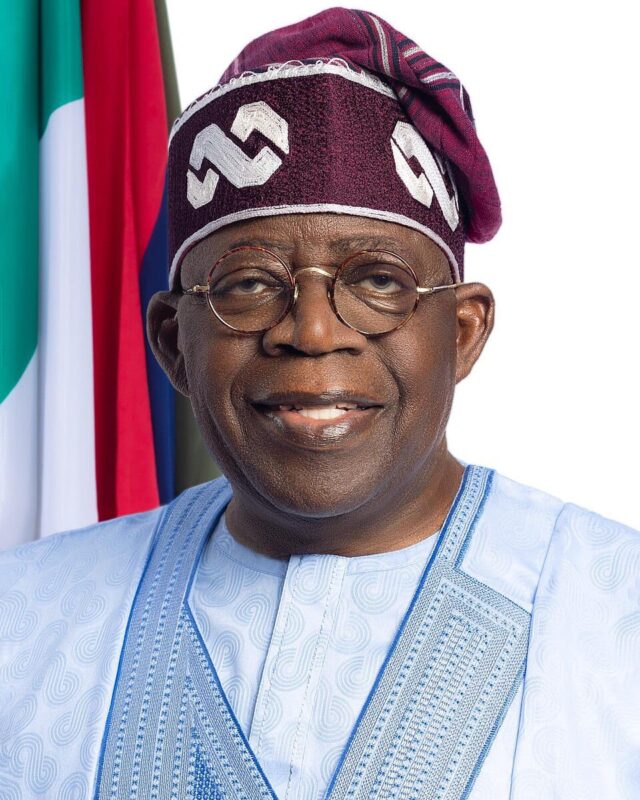
On the 19th of December, 2025, the President of the Federal Republic of Nigeria and the Commander-in-Chief of the Armed Forces, His Excellency Asiwaju Bola Ahmad Tinubu, GCFR, exercised his essential constitutional obligation by presenting the 2026 budget appropriation bill before the combined session of the National Assembly. As a public health advocate, I was curious to hear about sector-dispersed allocation, specifically the health sector. Maybe that is due to my belief in President Tinubu’s Renewed Hope Agenda and commitment toward revitalizing and strengthening Nigeria’s healthcare system, which was evident at the onset of his administration. I wished that the Tinubu-led administration would commit to the 2001 Abuja Declaration, where the African leaders met under the umbrella of the African Union and pledged the commitment of at least 15% of their budget. This is to address the problem of underfunding that has a long history of bedeviling the African health sector, putting a setback to our shared mission of improving the quality of life across the African continent and strengthening the health sector through sufficient fund allocation. Learning that Nigeria proposed to spend 2.82 trillion naira, just 4.26% of its gross 2026 national budget.
I was nearly buried in shame when I heard the president repeating that “this health allocation represents approximately 6% of the total budget net of liabilities.” Meaning that excluding the net liabilities, the health sector’s take-home after deduction of debt servicing of almost 15 trillion Naira from the gross budget will be only 4.26%. Which makes me pause and ask myself, “Is this allocation holistic toward changing the narrative of the dilapidated healthcare system in Nigeria?” 4.26% against the 15% is relatively less than one-third of the Abuja Declaration—a beacon of hope to combat the ravages of HIV/AIDS, tuberculosis, malaria, and other scourges plaguing our continent.
Yet, here we are in 2025, over two decades later, and Nigeria, the self-proclaimed Giant of Africa, continues to stumble in the darkness of illusion, allocating a paltry 4-6% to health in the just-presented 2026 budget. How can a nation so rich in oil, talent, and potential treat its people’s health like an afterthought?
This is not just negligence; it is a disappointment that endangers millions, especially as the United States government slashes its global health aid, leaving citizens exposed to infectious diseases, non-communicable ailments like chronic kidney disease (CKD), and a rapid population boom that threatens to overwhelm our fragile systems. The Abuja Declaration was no mere rhetoric; it was a collective vow by African Union members to prioritize health financing, recognizing that without robust funding, diseases would continue to feast on our people like vultures on carrion. Nigeria is a party that signed on to this decree, but history shows we’ve never come close to honoring it. From 2001 to now, our health allocations have hovered below 10%, peaking at around 5.95% in recent years before dipping again in the 2026 proposal of ₦2.48 trillion out of ₦58.18 trillion—a measly 4.26% when including liabilities.
Our leaders always cite debt servicing, infrastructure, and security as excuses, but I want to ask a single question: “Is the life of a Nigerian child not worth more than another flyover or armored vehicle?”
Although they are relatively important, one thing is certain: no nation can grow beyond the quality of its people. Apology to President Tinubu.
I can’t comprehend that we parade as Africa’s economic powerhouse, yet we fund health like beggars at the roadside. In comparison to our African brothers who have shown what true commitment looks like. Rwanda, rising from the ashes of genocide, consistently meets or exceeds the 15% mark, allocating up to 18% in recent budgets, which has built a universal health coverage system envied across the continent. In Botswana, with its prudent diamond revenues, which hit 15-17%, investing in HIV programs that have slashed infection rates. On the other hand, the Cote D’Ivoire joined this elite club, channeling funds into preventive care that keeps NCDs at bay. Even Tanzania briefly touched the target in 2011. While we proclaimed the giant of Africa’s band, these nations have long proved it’s possible by prioritizing health as a national security issue, not an optional charity. The Giant of Africa lags behind most West African peers, where allocations average below 10%. We boast the largest GDP in Africa, yet our per capita health spending is a shameful $15-20 annually, far below Rwanda’s more than $50. This comparative disgrace isn’t just numbers; they represent the lives lost. While Rwanda’s life expectancy climbs to 69 years, ours stagnates at 55, a gap widened by our funding failures. The consequences are alarming, starting with the relentless burden of infectious diseases that stalk our land like ghosts in the night. Nigeria bears the heaviest malaria load globally, with millions infected annually and economic losses of $1.1 billion each year from treatment and lost productivity. In 2025 alone, Lassa fever has claimed 195 lives, with over 1,069 confirmed cases amid 9,041 suspected—a fatality rate hovering at 18.5%, higher than previous years. Cholera surges during rains, diphtheria ravages unvaccinated children, and HIV/AIDS affects millions, with Nigeria hosting the second-largest HIV population worldwide. These figures aren’t abstract statistics; they are the number of our brothers dying in rural clinics without drugs and mothers burying infants from preventable fevers.
Underfunded surveillance systems mean outbreaks explode before response, as seen in the 2025 Lassa resurgence that cost billions in emergency measures. If we met the 15% pledge, we could bolster primary health centers, stockpile vaccines, and train more community health workers—turning defense into offense against these microbial invaders. But wait, the horror deepens with non-communicable diseases (NCDs), silent killers creeping up as our lifestyles urbanize. Chronic kidney disease (CKD) exemplifies this scourge, with prevalence rates of 10-19% among adults, yet awareness is abysmally low. In Lagos alone, hypertension affects 29% of adults, fueling CKD and cardiovascular woes. NCDs now cause 73.6% of deaths in developing nations like ours, surpassing infectious ones. Diabetes and cancer add to the tally, with households spending fortunes on out-of-pocket care—up to ₦384 billion annually, pushing families into poverty. The double burden is real: As we fight malaria, the CKD dialysis costs bankrupt families, while public facilities are overwhelmed. In armed conflict zones of Northern Nigeria, NCD prevalence hits 15% for hypertension and diabetes, compounding the trauma of insurgency. Without the pledged funding, proper disease screening programs remain dreams, and preventive education is sparse. Compare to Botswana, where 15% allocation funds NCD clinics, reducing mortality by 20% in a decade. Exacerbating Nigeria’s demographic tsunami. Our population stands at 237.5 million in 2025, growing at 2.5-3% annually, and is projected to hit 380 million by 2043 and 440 million by 2050. Nearly half are under 15, a youthful bulge that could be a dividend but risks becoming a curse without health investment. More mouths mean more disease vectors: crowded slums breed cholera, and rapid urbanization spikes NCDs from poor diets and pollution. By 2050, we’ll add 130 million souls, straining hospitals already at breaking point.
Rwanda, with controlled growth and high health spending, harnesses its youth; we risk a generation crippled by untreated ailments. And now, the dagger twist: US funding cuts. In early 2025, the Trump administration froze billions in global aid, slashing USAID programs by 23-40%. Nigeria lost over $600 million—a fifth of our health budget—crippling HIV treatment for millions, dropping coverage from 1.1 million to 350,000. Malaria and TB programs falter, with NGOs downsizing and lives lost estimated in the thousands.
We’ve long relied on foreign donors for 30-40% of health funding; now, with cuts, the gap yawns wider. Botswana and Rwanda, self-reliant through domestic pledges, weather this storm; we scramble with supplements like ₦4.8 billion for HIV packs, mere band-aids.
To redeem ourselves, the government must urgently ramp up to 15%—redirecting from wasteful subsidies, tax evasion loopholes, and corruption black holes. Invest in primary care: build 10,000 more health centers and train 50,000 midwives and doctors annually. Prioritize prevention: free CKD screenings, anti-malaria campaigns, and NCD education in schools. Forge public-private partnerships, like Rwanda’s with tech firms for telemedicine. Address demographics via family planning integrated into health services. And hold leaders accountable—civil society, demand audits; lawmakers, reject budgets below 10% as a start.
My compatriots, the clock ticks. It’s high time to hold our leaders accountable for their words and actions. If we sleep on this, infectious outbreaks will merge with NCD epidemics amid population surges, turning Nigeria into a health wasteland.
But with resolve, we can honor the Abuja Declaration spirit, outshine our peers, and build a nation where health is a right, not a lottery.
Arise, O Nigerians—demand better, for our future’s sake!
Ali Tijjani Hassan is a public health enthusiast, civil society actor, and public affairs analyst. He writes from Potiskum, Yobe State.