
Politics
2027 General Elections, Soba Must Choose Credible Leadership Over Sentiment and Godfatherism -By Abdullahi Adda’u Turawa
The future of Soba is too important to be sacrificed for selfish politics. The time has come for voters to rise above division and make decisions based on competence, vision, honesty, and service to humanity. If this is done, then the 2027 elections may become a turning point toward better governance, stronger representation, and sustainable development for the good people of Soba Local Government and Nigeria at large.

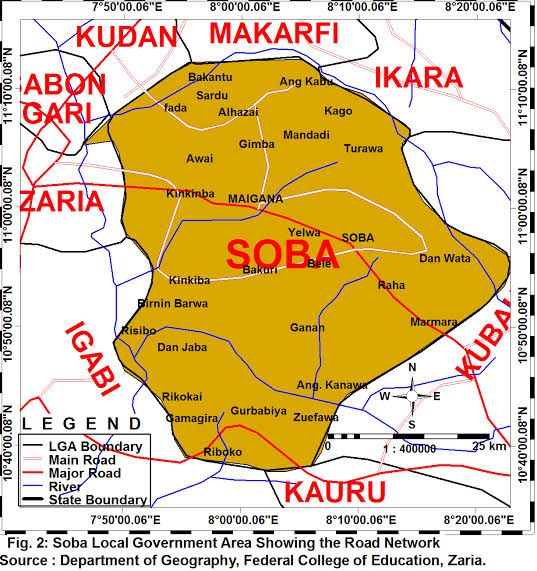
As the countdown to Nigeria’s 2027 general elections gradually begins, political activities across the country are already gathering momentum. In many local governments, conversations about leadership, representation, accountability, and the future of democracy have taken center stage. In Soba Local Government, the political atmosphere is becoming increasingly intense as major political actors position themselves ahead of what promises to be another defining electoral contest.
One political development that continues to attract attention is the rising strength of the opposition African Democratic Congress (ADC). What once appeared to be a silent political movement is now gradually transforming into a force that cannot be ignored. Across different parts of the country, and particularly in Northern Nigeria, the ADC is gaining supporters day by day. Many citizens who are frustrated with the current political system are beginning to see the party as a possible alternative capable of challenging the dominance of the traditional ruling structures.
In Soba Local Government, political discussions are centered around two prominent figures who are believed to be strong contenders for future elections. These include the former Chairman of the Local Government, Hon. Aliyu Makaman Gimba, and the current member representing the good people of Soba in the House of Representatives, Engineer Sulaiman Richifa. Both politicians have established political structures and loyal supporters within the local government, making the coming contest one that many observers believe will be highly competitive.
However, politics in Soba has never been static. The political history of the local government clearly shows that elections are often dynamic and unpredictable. There have been moments when opposition parties successfully defeated incumbents despite the influence and resources available to those in power. This demonstrates that the people of Soba are politically conscious and capable of making independent decisions whenever they feel dissatisfied with their leaders.
Whichever candidate eventually emerges victorious either through direct primaries or indirect delegate systems will still have to face a serious challenge from the ruling party during the general elections. Victory at the party level does not automatically guarantee success at the polls. The real battle will begin when candidates are forced to convince ordinary voters that they truly deserve another opportunity to lead and represent them.
One important question that continues to dominate public discussions is, what exactly have the people benefited from the current leadership? Many citizens are asking whether the present representative has truly met the expectations of the electorate. While supporters may point to certain achievements, critics argue that many communities in Soba still face serious developmental challenges that require urgent attention.
Across the local government, issues such as poor road networks, inadequate healthcare facilities, unemployment among youths, poor educational infrastructure, insecurity, lack of access to clean water, and insufficient empowerment programs remain major concerns. In many rural communities, people still struggle to enjoy the basic dividends of democracy despite years of political promises and campaigns.
The people are therefore justified in asking critical questions ahead of 2027. If given another chance, will there be visible changes? Will the current member of the House of Representatives bring a different level of commitment and performance? If the former local government chairman emerges as the preferred candidate, what fresh ideas and practical solutions does he intend to introduce to improve the lives of the people?
These are not questions driven by hatred or political bias. They are legitimate concerns from citizens who desire better governance and effective representation. Democracy works best when leaders are held accountable and voters actively demand results rather than empty promises.
The reality on ground is too serious for voters to ignore. Soba Local Government cannot afford to elect another “ghost representative” for another four years. The era where politicians only appear during elections and disappear immediately after winning should be rejected by the electorate. Representation is not merely about occupying political offices; it is about being present, listening to the people, speaking for them, and bringing development closer to the grassroots.
Fortunately, the people of Soba have long demonstrated political wisdom and maturity. Since the early democratic years, voters in the area have shown that they understand the value of their votes and the importance of credible leadership. They have proven repeatedly that no politician should take the electorate for granted.
As the next election approaches, there is a growing need for citizens to put sentiments, tribal considerations, blind loyalty, and godfatherism aside. Elections should not be based on emotional attachment or political intimidation. Instead, voters must carefully examine the character, track record, competence, accessibility, and sincerity of every aspirant before making their final decision.
Leadership should be entrusted to individuals who genuinely understand the problems facing the people and possess the courage and vision to address them. The future of Soba depends greatly on the quality of leaders chosen by the electorate. The wrong choice could prolong hardship and underdevelopment, while the right choice could open a new chapter of progress and opportunities for the younger generation.
This call for wisdom should not only apply to House of Representatives elections. It should extend to all elective positions including the Senate, governorship, presidency, state assembly, and local government offices. Nigerians must begin to prioritize credibility, integrity, competence, and accountability over empty political slogans.
At the same time, government institutions and agencies responsible for conducting elections also have an important role to play. The integrity of the democratic process must be protected at all costs. Electoral bodies, security agencies, and other relevant stakeholders must ensure that elections are conducted fairly, transparently, and peacefully without intimidation, manipulation, or interference.
Ultimately, democracy becomes meaningful only when the will of the people is respected. The people must be allowed to decide freely who governs them. Their votes must count, and their voices must be heard.
As 2027 gradually approaches, the political atmosphere in Soba Local Government will certainly become more active and competitive. Political alliances will emerge, campaigns will intensify, and promises will multiply. But beyond the noise of politics, the people must remain focused on one important objective: choosing leaders who will genuinely serve the interests of the people rather than personal ambitions.
The future of Soba is too important to be sacrificed for selfish politics. The time has come for voters to rise above division and make decisions based on competence, vision, honesty, and service to humanity. If this is done, then the 2027 elections may become a turning point toward better governance, stronger representation, and sustainable development for the good people of Soba Local Government and Nigeria at large.
Abdullahi Adda’u Turawa, wrote from Zaria, Nigeria



















You must be logged in to post a comment Login