
Forgotten Dairies
Can Obi Break Tinubu’s Incumbency, and Can Northern Alliances Unseat Jagaban? -By Daniel Nduka Okonkwo
There are also arguments from some conservative Northern circles questioning whether Obi’s business background and investments in breweries may limit his appeal among certain demographics in the region. Although supporters dismiss such criticisms as politically motivated, they remain part of the wider political conversation ahead of the election.

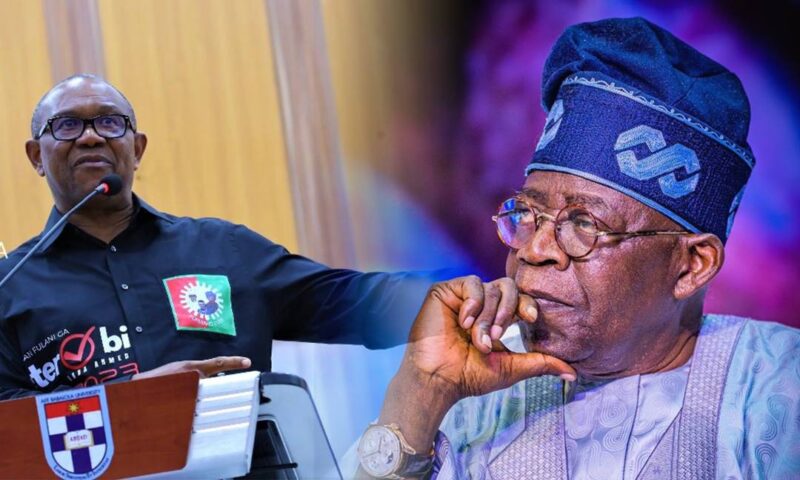
As Nigeria gradually moves toward the 2027 presidential election, political conversations across the country are increasingly dominated by one central question: Can opposition forces rally strongly enough to defeat incumbent President Bola Ahmed Tinubu and the ruling All Progressives Congress?
At the heart of the debate stands Peter Obi, the former Labour Party presidential candidate whose unexpected rise in the 2023 elections transformed Nigeria’s political landscape and galvanized millions of young voters under the now-famous “Obidient” movement.
Political analysts, party strategists, and civil society observers remain sharply divided over Obi’s chances. While supporters insist that the worsening economic realities facing many Nigerians have strengthened his appeal, critics argue that defeating an incumbent president backed by Nigeria’s powerful political machinery remains an enormous challenge.
For many Nigerians, the current political climate is being shaped largely by economic realities. Rising inflation, fuel subsidy removal, currency instability, and the increasing cost of living have generated frustration across several regions of the country.
Supporters of Obi believe these conditions may significantly reshape voter behavior ahead of 2027. They argue that public dissatisfaction with economic hardship could strengthen the appetite for alternative leadership, particularly among young voters and urban populations that already formed the backbone of Obi’s support base during the 2023 elections.
Obi’s image as a disciplined manager and businessman continues to resonate with sections of the electorate seeking economic reforms, accountability, and transparent governance.
However, public frustration alone may not automatically translate into electoral victory. Nigeria’s elections are historically influenced not only by popularity but also by political structures, grassroots mobilization, regional alliances, and elite negotiations.
Perhaps the most decisive factor in the 2027 calculations is that Obi’s path to victory may depend heavily on building a formidable Northern alliance capable of weakening the APC’s traditional dominance in the region.
Some political observers argue that a Southern candidate paired with a credible Northern political figure could create a competitive national ticket capable of challenging the ruling party. Obi’s reported openness to serving only a single term is also viewed by some analysts as a strategic attempt to reassure Northern stakeholders concerned about power rotation.
Political watchers are closely monitoring efforts by Obi and allied political actors to consolidate opposition forces under a more coordinated national structure.
Still, questions remain over whether such alliances can move beyond elite negotiations and translate into actual electoral strength across Nigeria’s diverse voting blocs.
Despite growing opposition discussions, the APC continues to project confidence.
Party loyalists insist that President Tinubu’s incumbency advantage, combined with the APC’s nationwide political structure, remains a powerful electoral weapon. The ruling party retains significant influence through governors, federal appointments, party networks, and institutional leverage that have historically provided strong advantages during elections.
Supporters of the administration also argue that some of the government’s economic reforms may begin yielding measurable results before the next election cycle. They point to gradual improvements in foreign exchange management, agricultural initiatives, and investment policies as possible factors that could improve public perception before 2027.
The Presidency has repeatedly dismissed claims that opposition coalitions pose a serious threat to the Tinubu-Shettima ticket, maintaining that fragmented opposition parties lack the cohesion necessary to defeat the APC.
While Obi remains one of Nigeria’s most visible opposition figures, questions persist over whether popularity on social media alone can guarantee electoral success.
He still faces difficulties expanding his influence in parts of Northern rural communities, where voting patterns are often shaped by long-established political structures, religious considerations, and local alliances.
Obi’s relatively calm and gentlemanly political approach may struggle against the aggressive and highly strategic political culture traditionally associated with Nigerian power politics.
Political commentators have previously warned that, without a united and strategic coalition, opposition forces could suffer what some describe as a “humiliating defeat.”
There are also arguments from some conservative Northern circles questioning whether Obi’s business background and investments in breweries may limit his appeal among certain demographics in the region. Although supporters dismiss such criticisms as politically motivated, they remain part of the wider political conversation ahead of the election.
Across political camps, one point of consensus appears increasingly clear: the 2027 presidential race is likely to become one of Nigeria’s fiercest democratic contests in recent history.
Whether President Tinubu secures re-election or Peter Obi emerges as the face of a united opposition may ultimately depend on several critical factors, including economic realities, voter turnout, coalition-building, Northern alliances, grassroots mobilization, and the opposition’s ability to avoid fragmentation.
For now, Nigeria’s political atmosphere remains fluid, unpredictable, and intensely competitive.
As political maneuvering accelerates and alliances continue to evolve, the road to 2027 is shaping into a defining contest not only about personalities and political parties, but also about the future direction of Africa’s largest democracy.
Nigerians want credible leaders who will fulfill their campaign promises and build a greater Nigeria founded on unity, fairness, security, and opportunity for all. Nigerians are not asking for too much. They simply want leaders who will govern responsibly, improve living conditions, and place national interest above personal or political interests.
About the Author
Daniel Nduka Okonkwo is a Nigerian investigative journalist, publisher of Profiles International, human rights advocate, and policy analyst whose work focuses on governance, institutional accountability, and political power.
His reporting and analysis have been featured in Sahara Reporters, African Defence Forum, Vanguard Newspaper, Daily Trust, Opinion Nigeria, African Angle, NewsBreak, Daily Intel Newspapers, and other international media platforms.
He writes from Nigeria and can be reached at dan.okonkwo.73@gmail.com.


















You must be logged in to post a comment Login