
Forgotten Dairies
Our Own Oil, Their Own Wealth: Breaking Nigeria’s Cycle of Foreign Dependency -By Muhammad Bashir Abdulhafiz
The world is moving away from oil. The age of renewable energy is coming. If we do not build our own refineries, our own factories, and our own markets now, we will be left with nothing but a dry well and empty hands. So I am asking you, my fellow Nigerian: the next time you reach for a product, ask yourself, did a Nigerian make this? If not, why not?

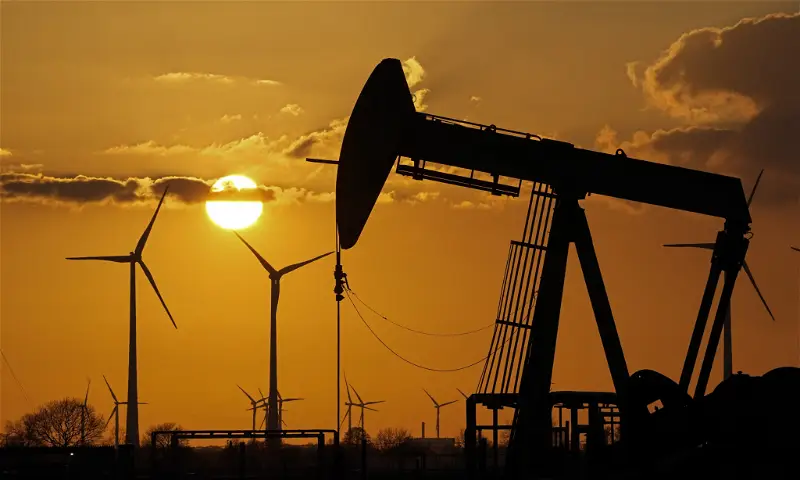
We are a nation that sleeps on a sea of crude oil yet wakes up hungry. We pump millions of barrels every day, but our people still line up for hours just to buy petrol. We have the biggest refinery in Africa, the Dangote Refinery right here in our backyard, yet we continue to bow down to foreign refineries in Europe and America. Something is terribly wrong.
For too long, Nigeria has acted like a lazy giant. We dig the ground, sell the crude raw, and then rush to buy back the same fuel, plastics, and chemicals at three times the price. This is not economics. This is madness. And the madness has finally caught up with us. Today, our Naira is weak, inflation is choking families, and millions of young people have no jobs. The breakdown of our economy is not a sudden accident. It is the direct result of our addiction to crude oil and our refusal to trust ourselves.
Let me speak plainly about the Dangote Refinery. This is not just a rich man’s toy. It is a 650,000 barrel-per-day dream that could change everything for Nigeria. For the first time, we have the ability to refine our own crude, sell our own petrol, diesel, and kerosene, and even export to our neighbours. That means keeping jobs here. Keeping money here. Keeping dignity here.
But what are we doing? We are neglecting it. Foreign oil companies prefer to ship our crude to Europe because they make more profit there. Our own regulators still issue licences to import fuel from refineries in Holland and Belgium. Meanwhile, the Dangote Refinery sometimes struggles to get enough crude supply from Nigeria. Imagine that: a Nigerian refinery begging for Nigerian oil, while foreign refineries feast on it. This neglect is a betrayal of our future. Every time we choose a foreign refiner over Dangote, we choose to export jobs. We choose to keep our engineers unemployed. We choose to keep our currency weak because we have to buy dollars to pay for imported fuel. This is a slow suicide.
But the problem is not only with our leaders. It is also in our hearts and in our markets. We Nigerians have a sickness: we believe anything foreign is superior. Walk into any supermarket in Lagos, Kano, Plateau, Benue, or Abuja. You will see foreign rice, foreign spaghetti, foreign tomato paste, foreign toothpicks, and even foreign water. We ignore local rice farmers, local textile makers, local shoe cobblers, and local furniture builders. Why? Because we have convinced ourselves that ‘foreign’ means quality and ‘local’ means inferior. This is a lie we must kill.
When you buy foreign rice, you are not just buying food. You are killing the Nigerian farmer in Kebbi, Nassarawa, Bauchi, or Enugu who grew that same rice. When you buy foreign fuel, you are closing the gates of the Dangote Refinery and sending our engineers to the streets. Every foreign product on your shelf is a Nigerian job buried in the ground. I am not saying local products are perfect. Some need improvement. But you cannot kill your own child because he is not yet a doctor. You train him. You support him. You give him time. That is what patriotism looks like. We cannot wait for the government to save us. We must save ourselves. Here is what you can do, starting today.
Firstly, deliberately buy Nigerian products. It does not have to be everything at once. Start with one thing: rice, soap, textiles, or clothes. If the local option is slightly more expensive, see that extra cost as a school fee for Nigeria’s future. Over time, as we all buy local, production will grow, prices will drop, and quality will rise. Secondly, stop shaming local brands. When you see a Nigerian company trying, do not mock them. Encourage them. Give constructive feedback, not destructive insults. If a product is bad, complain to the company, not to your friends on social media. Give them a chance to improve. Thirdly, teach your children. Tell your sons and daughters that Made in Nigeria is not a curse. It is a crown. Let them grow up proud to wear Nigerian shoes, eat Nigerian rice, and drive cars fueled by Nigerian petrol from a Nigerian refinery. Lastly, use your wallet as a weapon. Every time you spend money, you are voting for the kind of economy you want. Vote for Nigeria.
Advice to Those in Authority.
To our leaders, ministers, governors, senators, and regulators: your speeches about diversification are empty if your actions are not. Here is what you must do.
First, enforce the law. The Petroleum Industry Act allows for domestic crude supply obligations. Use it. Order international oil companies to supply the Dangote Refinery and other local refineries before a single barrel is exported. If we can extract it here, we must refine it here. No excuses.
Second, stop issuing import licences for what we can produce locally. If Dangote can produce enough petrol, diesel, kerosene, and aviation fuel for Nigeria, why are we still importing? Protect our refinery the same way America protects its farmers and China protects its factories. This is not anti-trade. This is call patriotism.
Third, lead by example. Every government agency, from the military to the road safety corps to the civil service must patronize local products: uniforms, furnitures, vehicles, food, medicine. If the government itself rejects Nigerian products, how can you ask citizens to do otherwise?
Fourth, fix the foreign exchange madness. The unstable Naira makes importers rich and local manufacturers poor. Create a predictable, transparent forex system. Give local industries confidence to plan for the next five or ten years. Stop the roller coaster.
Fifth, invest in quality. You cannot force citizens to buy local if local products are truly bad. Use taxes from oil to build technology hubs, quality control labs, and training centres for local manufacturers. Help them compete. Do not abandon them.
I am not naive. I know change does not happen overnight. I know corruption is real, and the system is heavy. Our generation has inherited a broken economy. But we have also inherited something our fathers did not have: a 650,000 barrel-per-day refinery, a vibrant tech ecosystem, and a growing consciousness that no one will save us except ourselves.
The breakdown of Nigeria’s oil dependent economy is not our end. It is our beginning. It is forcing us to finally look inward. For decades, we sang ‘we have the resources, and we have the people’. Now is the time to prove it.
Let us stop begging foreign refineries to feed us. Let us stop bowing to foreign rice and foreign shoes. Let us look at the Dangote Refinery not as a miracle, but as a mirror. It reflects what we can achieve when we trust ourselves.
The world is moving away from oil. The age of renewable energy is coming. If we do not build our own refineries, our own factories, and our own markets now, we will be left with nothing but a dry well and empty hands. So I am asking you, my fellow Nigerian: the next time you reach for a product, ask yourself, did a Nigerian make this? If not, why not?
It is time to break the cycle. Buy local. Support local. And demand that our leaders do the same. Our economy is broken, but it is not dead. The repair must begin with us.
God bless the Federal Republic of Nigeria.
Muhammad Bashir Abdulhafiz wrote from Jos, and can be reached via abdulhafizmuhammad81@gmail.com instantly.




















You must be logged in to post a comment Login