Politics
An ADC Moment: Why Peter Obi Is the Strongest Bet to Defeat Tinubu in 2027 -By Jeff Okoroafor
I analysed why Peter Obi is the strategic choice for the ADC in Nigeria’s 2027 election. From youth appeal and urban support to fiscal discipline and reform credibility, Obi offers the opposition the best chance to unseat President Tinubu.

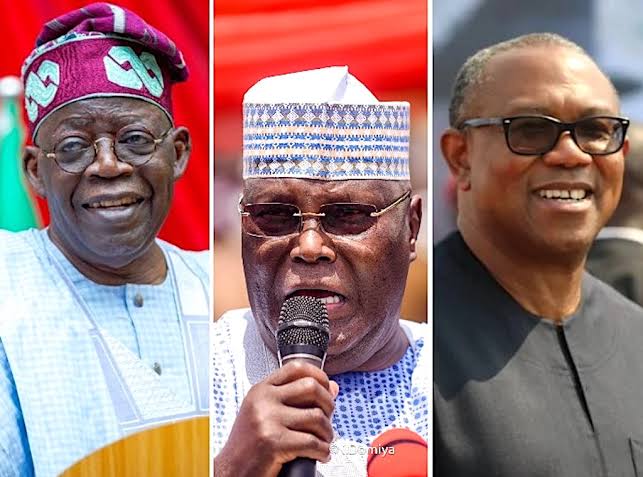
Nigeria’s opposition stands at a decisive moment. With major figures converging under the banner of the African Democratic Congress (ADC), the conversation has shifted from whether unity is possible to who should lead it. If the objective is clear — defeating incumbent president Bola Ahmed Tinubu in 2027 — then strategy must outweigh sentiment. And strategy, at this moment, points to Peter Obi.
The 2023 election altered Nigeria’s political landscape. Peter Obi did not simply run; he disrupted a two-party structure that had defined national politics for years. Without governors, without entrenched patronage networks, and without the financial depth of the major parties, he secured more than six million votes and reshaped voter expectations. He energized urban centers, mobilized first-time voters, and built a coalition of young Nigerians who had long felt politically invisible. That kind of momentum is not ordinary. It is structural.
If that level of performance was possible without national party machinery, one must ask what could be achieved with it. A unified ADC offers precisely what Peter Obi lacked in 2023: deeper northern penetration, established grassroots networks, and broader institutional support. The combination of enthusiasm and structure is politically potent. Structure without energy is mechanical; energy without structure is fleeting. Together, they are formidable.
President Tinubu’s tenure has been defined by bold economic reforms — fuel subsidy removal, exchange-rate unification, and fiscal restructuring. These measures were framed as necessary corrections to long-standing distortions in Nigeria’s economy. Yet they have also brought immediate hardship. Inflation, currency instability, and declining purchasing power have shaped everyday life for millions. By 2027, the election will likely hinge not on whether reforms were courageous, but whether they delivered tangible improvement.
In that climate, credibility becomes the central currency. Peter Obi’s political identity has been built on fiscal discipline and measured governance. His tenure in Anambra State is frequently cited as evidence of financial prudence and prioritization of education. Whether one agrees entirely with that record is less politically relevant than the perception it created: that he governs with restraint rather than excess. In a contest framed as continuity versus recalibration, he embodies recalibration more convincingly than any other opposition figure.
This does not diminish the stature of Atiku Abubakar. Atiku brings decades of political experience and extensive northern networks. His understanding of coalition-building is substantial. But elections are not won by experience alone; they are won by expansion. Atiku’s base is established. Peter Obi’s is still growing. Nigeria’s demographic trajectory favors youth participation, urbanization, and policy-conscious voters. The candidate who best channels that future-facing energy is strategically advantaged.
There is also a practical consideration. If Atiku heads a unified ticket, there is a real risk that some of Peter Obi’s youth-driven supporters could disengage, perceiving the arrangement as a return to conventional politics. If Peter Obi leads, however, Atiku’s established networks can reinforce rather than replace the movement’s momentum. The direction of enthusiasm matters as much as arithmetic.
Tinubu, of course, retains the power of incumbency and the formidable structure of the All Progressives Congress. Incumbency provides visibility, institutional leverage, and seasoned political alliances. Yet incumbency can also concentrate voter frustration if economic relief feels distant. If economic pressures persist into the next election cycle, the appetite for credible change may intensify.
The ADC must therefore ask a hard question: is it seeking merely to consolidate opposition forces, or to expand beyond them? Consolidation may narrow margins. Expansion wins elections. Peter Obi has already demonstrated an ability to expand the electorate — to bring into politics Nigerians who had previously remained spectators. That capacity is not easily manufactured.
Unity alone will not defeat an incumbent president. Unity around the right standard-bearer might. In 2027, Nigeria’s opposition will need more than a coalition of parties; it will need a coalition of conviction and credibility. If the goal is to maximize the probability of unseating Tinubu, then Peter Obi stands as the ADC’s strongest strategic choice.

Jeff Okoroafor
Jeff Okoroafor is a social accountability advocate and a political commentator focused on governance, accountability, and social justice in West Africa.