Opinion
Atiku Abubakar: A True Democrat at 79 -By Abba Dukawa
Atiku’s special day offers a moment of quiet reflection on his fruitful service to humanity and his efforts in strengthening the nation’s democracy. May Allah grant him continued strength, wisdom, prosperity, and many more healthy, fulfilling years ahead. May God continue to grant him grace as he contributes to peace and nation‑building.

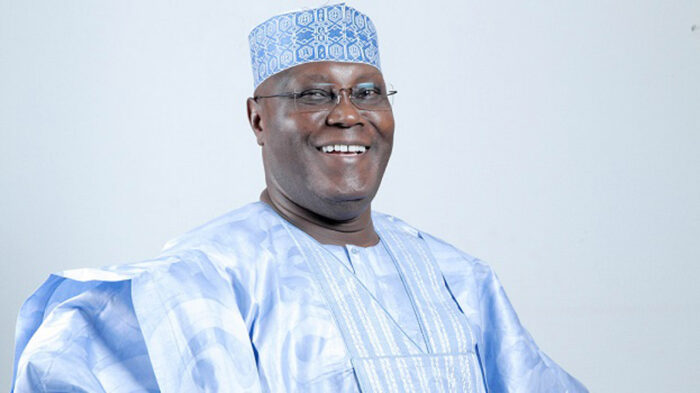
Former Vice‑President Alhaji Atiku Abubakar turned 79 last Monday, drawing widespread national attention. To his political associates, Waziri Adamawa is an undisputed democrat, celebrated for his long‑standing contributions to governance, democratic deepening, and public service in Nigeria.
To his political opponents, he remains both the most feared and the most outspoken politician in the country, despite their orchestrated attempts to tarnish his image in black. To detractors claimed he is wealthy, yet his fortune comes from private business ventures he pursued before becoming Vice President and he has lost more money in government than he ever did in private business. Atiku built his fortune through real estate, farming, trading and oil‑servicing. According to his biography, his first foray into real estate began in 1974.
Atiku Abubakar’s unblemished record as a civil servant . He served in the Nigeria Customs Service and voluntarily resigned as the most senior Deputy Director to pursue business. Even before his resignation, his impeccable service record no queries, no sanctions—had earned him numerous commendations for meeting and exceeding revenue targets at every post he held..
During his service with the Nigerian Customs Service, when an issue arose at Murtala Muhammad Airport in Lagos, former finance minister Mr. Onaolapo Soleye who oversaw the Department of Customs and Excise—stated that he acted on the facts before him and it would be unfair to punish him for doing his job and for standing by his officers.
Waziri entered the turbulent world of politics during IBB’s transition. Atiku Abubakar contested the governorship of Gongola State (now Adamawa and Taraba States) under the Social Democratic Party (SDP) in 1991. This marked his first serious attempt at elected office, as part of General Ibrahim Babangida’s political transition program. Although he won the SDP primaries, he was disqualified by the government from contesting the elections . Interestingly, Gongola State was split into Adamawa and Taraba States in August 1991, just before the elections, and Atiku Abubakar fell into the new Adamawa State. Yet remained committed and unfiltered in his political ambition. In 1993, Atiku Abubakar contested the Social Democratic Party (SDP) presidential primaries in 1993. The results from the first ballot showed Moshood Abiola leading with 3,617 votes, followed by Baba Gana Kingibe with 3,255 votes, and Atiku Abubakar came in third with 2,066 votes.He stepped aside to let Abiola secure the nomination.
Atiku opposed the military regime after the annulment of the June 12 election that ushered in the late General Sani Abacha’s rule. He co‑founded the People’s Democratic Movement (PDM) and openly challenged military authority.He presented a seven‑point proposal for a return to democracy to Abacha and played a key role in the 1994 Constitutional Conference, which demanded a military handover.
In the same year, he wrote an open letter to Abacha outlining a seven‑point solution to the political crisis and advocating a transition to a democratically elected government by 1 January 1995. Atiku’s political activism during the late General Abacha administration forced him into exile after an assassination attempt.
After the demised of late Head of State his efforts, along with others, politicians formed part of the wider struggle that ultimately paved the way for the restoration of civilian rule in 1999 under General Abdulsalami Abubakar’s transition programme.
General Abdulsalami Abubakar’s transition programme, after Olusegun Obasanjo was released from prison and secured the PDP presidential nomination, Atiku Abubakar (the Waziri) was tapped as his running‑mate for the 1999 election . At that moment he was also the PDP governor‑elect of Adamawa State, waiting to be sworn. By then he had already earned a reputation as a rising political force.
Waziri Adamawa’s democratic credentials are defined by persistent advocacy for reforms, active participation in landmark legal battles to uphold constitutional principles, and repeated efforts to strengthen Nigeria’s political institutions and electoral processes.
His stance on defending Nigeria’s democracy led to a major fallout with President Obasanjo over the latter’s alleged attempt to amend the constitution to permit a third presidential term. Atiku’s resistance is widely regarded as a key action that prevented a potential derailment of Nigeria’s democratic trajectory. Although Atiku prevailed in that political battle culminating in Parliament’s rejection of the third‑term agenda—it marked the beginning of a coordinated effort by presidential loyalists to marginalise, undermine, and discredit him.
A series of politically motivated prosecutions were initiated to illegally remove him from office, strip him of constitutional immunity, and subject him to arrest and prosecution. The Independent National Electoral Commission (INEC), acting under presidential directives, disqualified him from contesting the 2007 elections; the Code of Conduct Bureau (CCB) launched proceedings against him; and the Peoples Democratic Party (PDP) the party he helped establish expelled him outright. These assaults illustrate the multifaceted pressures and vilification Atiku faced while defending democracy.
Atiku challenged all violations of his constitutional rights within Nigeria’s legal framework, pursuing each case to the Supreme Court—and he won every single one. Former Chief Justice of Nigeria, Dahiru Musdapher, commended the determination with which Atiku pursued these cases for the advancement of democracy and the rule of law.
Atiku’s courage and commitment to due process have strengthened Nigeria’s democracy in several key ways: A president cannot remove or sack his deputy under any circumstance; both are elected on a joint ticket and must serve together until the end of their constitutional term. Section 308 of the Constitution bars a president from establishing any inquiry to probe or investigate the Vice‑President and INEC cannot unilaterally disqualify a candidate; only the judiciary holds that authority.
His legal challenges not only upheld his constitutional rights but also fortified Nigeria’s democratic architecture, curbing executive impunity and establishing a deterrent that mirrors best international practice. Waziri Adamawa has been a steadfast advocate of internal party democracy, consistently opposing the imposition of candidates by party leaders and pushing for rules that enforce adherence to party statutes. He also stresses the need for democratic funding models in which ordinary members invest in and co‑own the party, rather than relying on political gods fathers or state governors..
Atiku Abubakar was born in Jada, Adamawa State, and was named after his paternal grandfather, Atiku Abdulkadir. . His grandfather, Atiku, originally came from Wurno in Sokoto State, where he met and befriended Ardo Usman, a Fulani nobleman from what is now Adamawa State. The Atiku’s grandfather accompanied his friend back to Adamawa, where he raised a family. Atiku Abdulkadir married a girl from Kojoli and gave birth to his father, Garba Atiku Abdulkadir, who was their only child. When it was time for Garba to marry, he chose a young woman from nearby Jada whose parents had migrated from Dutse, the capital of Jigawa State.
Atiku Abubakar’s family life is quite large, with four wives and twenty-eight children. He has explained that his decision to have a big family stems from his own experience of feeling lonely as a child, being an only child. He wanted to ensure his children wouldn’t face the same loneliness, which influenced his decision to marry multiple wives.
To celebrate his birthday, the former Vice‑President formally registered as a member of the African Democratic Congress (ADC). Receiving his ADC membership card and a custom “Waziri 01” jersey. Atiku used his birthday visit to Adamawa state to seal the new political alliance, a trip that also included several community engagements. Speaking after collecting his ADC card, Atiku said, “Now I have picked my membership card of the ADC. The real opposition has begun. We will work in concert with other opposition leaders and Nigerians to chase the APC out of government.”
Atiku’s special day offers a moment of quiet reflection on his fruitful service to humanity and his efforts in strengthening the nation’s democracy. May Allah grant him continued strength, wisdom, prosperity, and many more healthy, fulfilling years ahead. May God continue to grant him grace as he contributes to peace and nation‑building.
Dukawa write from Kano can be reached at abbahydukawa@gmail.com



![Gaza has been under heavy Israeli bombardment for weeks [File: Ohad Zwigenberg/AP]](https://www.africansangle.com/wp-content/uploads/2023/10/Gaza-has-been-under-heavy-Israeli-bombardment-for-weeks.jpg)