
Forgotten Dairies
Chris Kwaja: The Senate Is Not A Hobby -By Prince Charles Dickson PhD
For a people who have buried too many, endured too much, and waited too long deserve more than ambition in native attire. They deserve representation that trembles before responsibility.

And Paul said unto the people of Plateau North: be not deceived by garments, by grammar, by convoys, nor by the sudden holiness that falls upon men when election season draweth near. For many shall come unto you in white flowing robes and tailored humility, speaking peace with their lips while ambition burns like dry season fire in their hearts. They shall say, “I have come to serve,” when what they mean is, “I have come to sit.” They shall say, “I have heard the cry of the people,” when truly they have only heard the music of title, the sweet clinking of protocol, and the intoxicating perfume of being called Distinguished.
For the Senate, brethren, is not a hobby.
It is not a retirement lounge for tired governors who, having tasted power in the executive, now seek a softer throne upon which to rest their political bones. It is not a rehabilitation centre for former officeholders who lost relevance and now seek resurrection by ballot. It is not a reward scheme for loyal party men, nor a consolation prize for those bruised by internal party quarrels. Neither is it a family heirloom to be handed from one local government to another as though the people were merely custodians of an arrangement and not citizens entitled to merit.
And yet, this is often the tragedy of our politics. The people are told to dream, but the political class comes to negotiate inheritance.
In every senatorial district, and certainly in Plateau North, there is always the incumbent. Sometimes he got there by hard work. Sometimes by accident wearing the garment of destiny. Sometimes by the implosion of others. Sometimes by the arithmetic of party confusion. But once he enters, a new temptation is born: to confuse occupancy with usefulness. There are incumbents who understand that the office is rented, not owned. And there are those who begin to behave as if the red chamber were an ancestral compound, as if representation were a birthright sealed by heaven and signed by party elders.
Then there are the former ones, the once-anointed, the men of “I get am before.” They come with memories as a manifesto. They point to the road they once tarred, the motions they once raised, the scholarships they once announced, and they ask the people to look backward until backward begins to resemble vision. But a district cannot be governed by nostalgia. Yesterday’s title cannot automatically become tomorrow’s argument. A people must ask, not merely who has been there, but what exactly did he do there? Did he speak when it mattered? Did he build when it counted? Did he carry the anxieties of the people into law, oversight, and influence, or did he merely carry the title home like a trophy?
There are also the perpetual runners, the men who campaign the way some people breathe. Every election must find them on the poster, smiling with recycled conviction. They are contestants by profession, aspirants by instinct, veterans of defeat who interpret endurance as entitlement. One almost wants to admire their stamina until one realizes that persistence is not the same thing as purpose. To always run is not necessarily to know why you are running.
And then, every now and then, there emerges another kind.
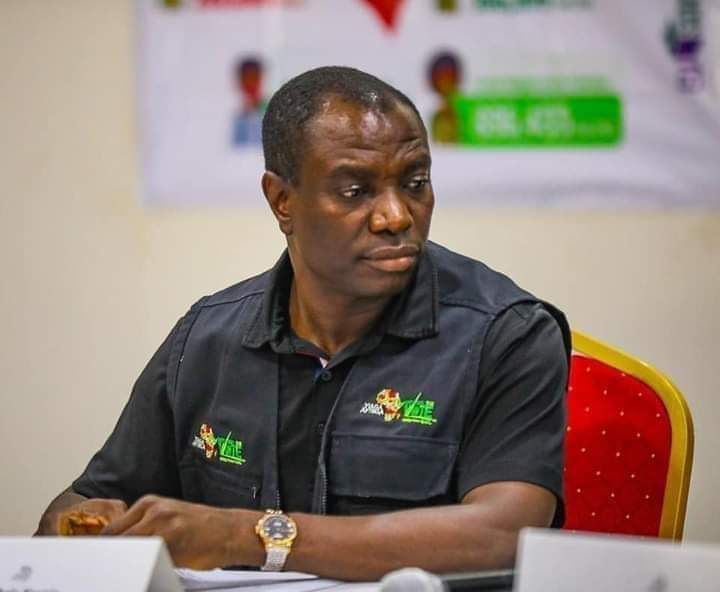
A man, sometimes a woman, who steps toward politics from a place not of appetite alone but of burden. A person with a name outside electoral noise. A mind formed in service, thought, sacrifice, or professional rigour. Someone who already has an identity and therefore does not need office to become visible. That is where the matter of Professor Chris Kwaja becomes useful, not because he should be canonized before scrutiny, but because his emergence invites a more serious question: what kind of people should seek the Senate in the first place?
Kwaja is not arriving from nowhere. He is known publicly as a peacebuilding scholar and practitioner, and has worked in conflict, governance, and security spaces over the years. He has also served in Plateau State government on peace and security matters, and in February 2026 he formally defected to the APC, a move that made clear he was stepping more fully from policy influence into partisan politics.
What matters here is not praise singing. It is the symbolism of a certain type of entrant. When a man already respected in another field enters politics, the people must ask him hard questions, yes, but they must also ask themselves whether they truly want competence in politics or whether they merely enjoy complaining about its absence.
For this is the contradiction of our public life: we lament that unserious men dominate the arena, yet when serious people consider entering, we whisper to them about dirty waters, lost integrity, and contaminated reputations. We have, in this country, romanticized the spectator. We honour the critic in the gallery, but we are suspicious of the thinker who dares descend into the ring. So, politics is left to those with the strongest stomach for mud, and then we act surprised that governance keeps smelling like a swamp.
But let no one misunderstand the argument. The Senate is not holy because a professor wants to enter it. Degrees do not equal character. Policy language does not automatically become public courage. A peace scholar can fail in politics just as a career politician can sometimes exceed expectations. The issue is not whether Chris Kwaja is perfect. The issue is whether the office itself should demand seriousness, vision, legislative imagination, constituency grounding, and moral stamina.
Plateau North does not merely need a senator who can win. It needs one who understands that lawmaking is not a side hustle. The district sits in a state repeatedly visited by violence, mistrust, fragile peace, contested memory, and the exhausting ritual of mourning. This is not a constituency that can afford ornamental representation. The current senator, Pam Dachungyang, holds the seat today.
That simple fact should force every aspirant, incumbent or challenger, into a harder conversation. Beyond slogans and turnout machines, what exactly is the work? What bills will be pursued? What oversight battles will be fought? What federal leverage will be brought home? What security conversations will be reframed? What development imagination will move beyond token projects and condolence politics?
For too long, many Nigerians have approached the Senate as a chamber of arrival rather than a chamber of labour. To become senator is seen by too many as the climax, not the commencement. That is why some seek it for name, some for immunity by association, some for elite relevance, some for soft landing, some for revenge against rivals, and some simply because in this republic title has become a substitute for substance. But a title cannot heal a grieving constituency. A convoy cannot sponsor a good law. A television interview cannot replace oversight. A well-sewn agbada cannot interrogate a budget.
And Paul said again unto the people of Plateau North: test every spirit. Ask not only who is popular, but who is prepared. Ask not only who is connected, but who is convicted. Ask not only who has contested before, but who has actually grown. Ask the incumbent to account. Ask the former officeholder to explain. Ask the perpetual aspirant to reveal his burden. Ask the new entrant whether he seeks service or theatre. For democracy is mocked whenever voters become choir members singing for men they have not examined.
If Chris Kwaja seeks the Senate, let him be questioned robustly. Let his record be opened. Let his ideas be stretched on the rack of public scrutiny. Let no one give him a halo because he can speak the language of peace. But let the same standard, sharp and unsentimental, fall upon every other aspirant too. That is the point. The Senate is too important to be reduced to a hobby for the bored, a refuge for the displaced, or a vanity fair for the titled.
For a people who have buried too many, endured too much, and waited too long deserve more than ambition in native attire. They deserve representation that trembles before responsibility.
And the people of Plateau North should say, Amen and may Nigeria win!

















You must be logged in to post a comment Login