
Forgotten Dairies
Hospitals Are Being Bombed With Impunity -By Fransiscus Nanga Roka
The world does not face a problem of the availability of information. It has a courage problem. We have the coordinates of hospitals. The law is known. The attacks are known. What is less clear is how many burnt wards and bloodied gurneys it requires before “never acceptable” means anything more than a press conference.

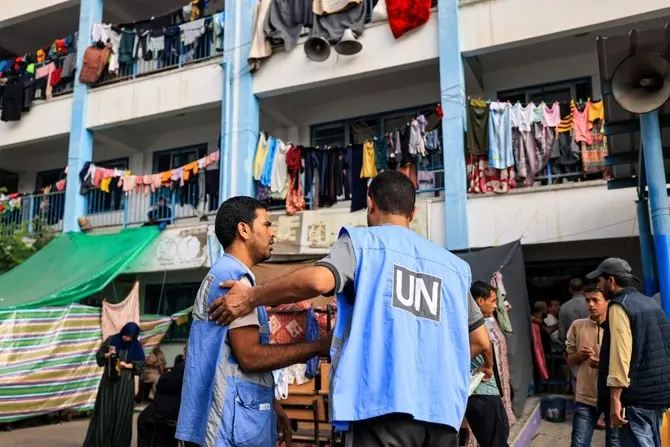
The story is not so much that hospitals are being bombed in war. The outrage is that the world has learned to tally the rubble, count it off as a response to circumstance.
Not just the doctors and nurses, not just patients on the operating tables, pregnant women giving birth, babies in incubators, paramedics and through an avalanche of auxiliary health care employees and entities: medicine stock outs even hospitals systems hanging by a thread. It said its surveillance system have recorded more than 10,400 attacks on health care in 29 countries and territories since 2018, which resulted in approximately 5,700 deaths and near to a**0,000 injuries. In 2026 alone, WHO recorded 914 attacks more than four per day.
It means hospitals flattened, ambulances blocked or hit, supply chains cut and communities deprived of care for months on end after the explosion. WHO indicates that the hardest-hit contexts in 2026 consisted of: Ukraine, followed by Lebanon, and the occupied Palestinian territory where other attacks also took place (attributed to Sudan and Myanmar, DR Congo, South Sudan, Syria and Nigeria).
On paper, very clear. International humanitarian law dictates that civilian hospitals are protected and must not be targeted. Article 18, Fourth Geneva Convention, on the protection of civilian hospitals states it must be respected and protected and shall not be the object of attack. But the reality of battle has revealed a uglier truth: the law exists, but there is no enforcement.
Years ago, which cannot hide the disgrace today. A decade on from UN Security Council Resolution 2286, WHO, the ICRC and MSF say it has gotten not better, but worse. Their message has an awful simplicity: that we are not here to celebrate success but rather failure.
Why are the perpetrators still roaming free? Because the architecture of accountability is not designed to punish horror, but to record it. According to WHO own admission, of over 10,000 verified integrity breaches, none had been incorporated into a functional accountability structure. States assert military necessity, contest facts, or contend medical sites lost immunity. Powerful allies shield clients. International bodies condemn, investigate and catalogue but too seldom punish. And that results in a grotesque legal theatre, for which the bombing of hospitals is treated with shock at every turn, and punishments almost never.
Through repetition. While attacks on health care come at little cost, they cease to be aberrations; they become tactics. A hospital is more than a building, it is the foundation of civilian existence. If you strike it, it is not just people locked inside; if you hit, you do not only kill. Weeks or months after the smoke does clear, you make worse emergency care, maternal health, vaccination, trauma response and disease control. That downstream collapse has been precisely what WHO documented.
Three strategic recommendations are urgent:
First, develop an automatic international trigger for independent investigations whenever medical facilities are struck, we recommend a publicly accessible timeline marking key events in the investigation process and preserved chain of evidence.
The second point is that military aid, arms transfers and security cooperation should be conditioned on measurable compliance with protections for the health care in conflict zones as stipulated by international humanitarian law (IHL).
Third, the UN and regional bodies, along with national courts, must broaden pathways to such sanctions of universal jurisdiction or even ordinary criminal accountability in which commanders and political superiors are personally at risk of legal sanction rather than just diplomatic condemnation.
The world does not face a problem of the availability of information. It has a courage problem. We have the coordinates of hospitals. The law is known. The attacks are known. What is less clear is how many burnt wards and bloodied gurneys it requires before “never acceptable” means anything more than a press conference.
Fransiscus Nanga Roka
Faculty of Law University 17 August 1945 Surabaya and Managing Partner Law Firm Victorious Indonesia
























You must be logged in to post a comment Login