
Forgotten Dairies
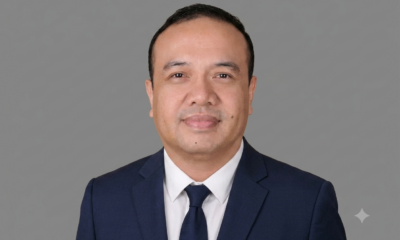
Biobanks Without Boundaries: The Legal Vacuum in the Age of Genetic Surveillance -By Fransiscus Nanga Roka
Without this recognition, the picture is clear. Biobanks will continue to grow, data will continue to spread and the gap between technological capability and legal protection increases.

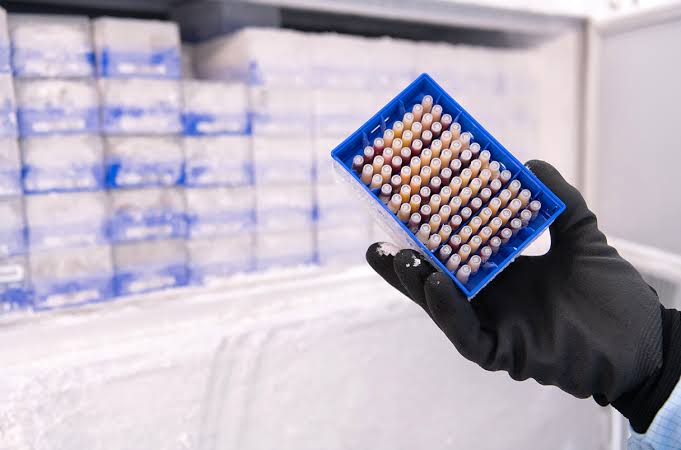
Biobank is promising just three plain things: to collect the specimens of living organisms, store them safely, and use them promote humanity means keep promise of Lives to believe in biobanks. Science can heal and will heal, scientists from universities, hospitals research laboratories uphold the ethical obligation as they pursue their work filled with compassion for life. Biobanks: What started as a promise becomes a present reality and future prospect. The whole world has failed to prevent biobanks from becoming tools of genetic surveillance.
Those of us engaged in this enterprise are not simply preserving materials. We are preserving the very essence of humanity.
Today’s biobanks store vast repositories of DNA, tissue samples, and health data. This information tells us who we are now as well as what we might be tomorrow. It can be employed to foretell disease, re-search genetic origins of Western society, trace human tendencies towards certain kinds of behaviour. Misused, this data can not only contribute to stereotypes and prejudices but ultimately interfere with, bully and even control the lives of others. The threat is not abstract: it is built into the very fabric of how these systems operate.
At the heart of this lies an emptiness in the law.
Most biobank regulatory frameworks were not constructed with today’s big data age, Artificial Intelligence (AI), and cross border data flows in mind. There is a farcical quality to the much vaunted Consent, on which ethical research depends. Increasingly the individual is asked to submit “broad consent” for future, unspecified uses of his or her biological materials. In effect this means they are signing not only for unknown dangers and unknown actors but also unknown purposes.
In this context, consent is no longer a bulwark but a mere formality once data enters a biobank, it is little seen again. It is shared on international networks, transferred across national boundaries, and subjected even to globalized research. Such passing from place to location only increases the possibility of abuse, reidentification or utilization for purposes never intended. Furthermore, anonymization once thought a sure means of protection is no longer reliable. Datasets can in this age be put back together accurately and with comparative ease. This means a system where the moment they agree to participate, people lose control over their most private information. This lost control is made worse by the advent of genetic surveillance. Governments and private enterprises now both see the strategic value in genetic data. It can be used for public health monitoring: at the same time, it is valuable in producing a picture of national configuration, predictive policing and related tasks. When legal boundaries are absent, however, the line between research and observation becomes dangerously relaxed.It’s almost like rights belong to those who can draw on the right to interpret them.The commercial exploitation of biobanks adds another layer of concern in all this. People donate their biological samples, often in the spirit of altruism; but the research and drug industries increasingly transform them into the drivers of profit. Corporations get vast sets of genetic data which have been patented after use in therapies that, at the end of day, may not even be available to peoples who gave them.This isn’t cooperation; it’s outright plunder.The ethical asymmetry couldn’t be clearer: individuals donate their biological materials with no compensation, no control and often little real understanding but institutions gain power, knowledge and profit. The human body, once a place of dignity and self-determination protected by law, is reduced to something merely exploitable.
The law has failed to respond to the crisis with the urgency it demands. International governance remains fragmentary, with little in the way of a global consensus for biobanking regulation that is actually enforced: no common world-wide standards whatsoever. National laws differ widely. This creates loopholes which can be exploited by those wishing to operate outside the boundaries set up by more restrictive nations. Accountability gets diluted in such a fragmented environment, and enforcement weakens.
We are looking not just at regulatory lag. This is systemic neglect.
The results are huge. Genetic data is permanent and uniquely identifiable, unlike other forms of information: it does not change. It does not expire. Once people’s genetic data is exposed, they have lost control over it forever. The hazards apply not just to individuals but also to their relatives, to whole families and communities, and even to entire races of people.
All of this makes the stakes so high.
The answer lies not in blocking scientific progress per se, but in redefining its limits. Biobanking should be subject to rights-based, binding frameworks that put transparency, accountability and proper consent first. Data owners should decide how their data are used as well as shared and monetized. Cross-border data transfer has to be carefully supervised in place of informal agreements and institutional laissez-faire.
Above all, genetic data must be respected for what it truly is: not just information, but also a part of the human person.
Without this recognition, the picture is clear. Biobanks will continue to grow, data will continue to spread and the gap between technological capability and legal protection increases.
A system that claims to advance health and carefully hidden surveillance and Implied exploitation are not part of the same thing. They are manipulation out of rule.
And unless the law resumes its identity not as a spectator, but as a facilitator, the age of genetic surveillance will not announce itself with a bang. It will emerge quietly and gradually, til beyond repair one data set at a time.
Fransiscus Nanga Roka
Faculty of Law Univesity 17 August 1945 Surabaya Indonesia





















You must be logged in to post a comment Login