
Politics
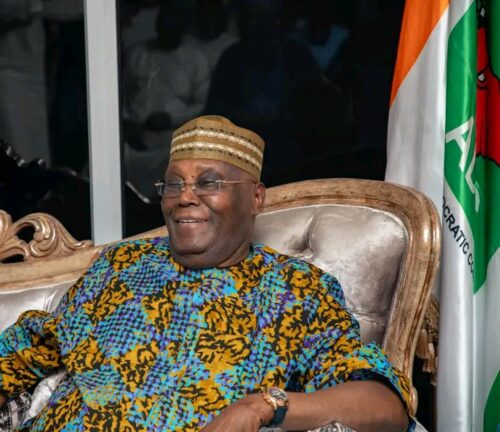
Atiku And The Politics Of Fuel Subsidy -By Bashir Bello
Buhari promised to end the subsidy fraud but left the country with unresolved structural problems. Tinubu abolished the subsidy but imposed enormous adjustment costs on a population already struggling with poverty and declining purchasing power. Now,if Atiku promises to restore subsidy, Nigerians must insist on knowing whether he intends to reform the system or simply revive its most politically convenient features. The Nigerian people do not need another politician who promises cheap fuel. They need a government that can guarantee reliable supply, transparent management, affordable energy and an oil industry that serves the public interest rather than a privileged few. Until politicians demonstrate how they intend to achieve these objectives, their promises should remain campaign declarations and not articles of faith.

Why should Nigerians take politicians at their word? What guarantees that campaign promises will translate into policies that improve the lives of ordinary citizens? The late President Muhammadu Buhari offers a compelling answer. He came to power on the back of enormous popular support, having cultivated a reputation for integrity, credibility and an uncompromising stance against corruption. His electoral campaigns were built around promises of change, economic recovery, security and an end to corruption. Yet,after eight years in power, Buhari left behind a country grappling with worsening economic hardship,insecurity,fuel scarcity and an unprecedented erosion of purchasing power. The much-celebrated promises of change failed to deliver the relief Nigerians desperately needed. In many respects, the suffering of ordinary citizens multiplied.
Fuel subsidy was one of the issues on which Buhari spoke with particular conviction. He denounced the subsidy regime as fraudulent, arguing that Nigerians were being fleeced in its name. He even questioned why Nigerians should pay more than N40 per litre when the prevailing official price was about N75. But what happened when he assumed office? After eight years, Nigerians were still battling perennial fuel scarcity, endless queues at filling stations, black-market racketeering and a powerful network of interests that profited from the contradictions of the subsidy system. The government also accumulated enormous unpaid subsidy obligations, while the official pump price rose dramatically.
The man who had promised to dismantle the subsidy fraud left office without resolving the fundamental problems of the petroleum sector.Buhari’s experience should teach Nigerians a fundamental political lesson: the credibility of a promise is not determined by the popularity of the person making it, but by the policies, institutions and political will required to fulfil it.
President Bola Ahmed Tinubu took office and,almost immediately,announced the removal of fuel subsidy.His administration subsequently allowed the naira to float, resulting in a sharp depreciation of the currency, while the government pursued broader market-oriented economic reforms.
These measures, implemented within a relatively short period, delivered a devastating economic shock to millions of Nigerians.The removal of subsidy increased the domestic cost of petrol. The depreciation of the naira compounded the problem by making imported petroleum products and other essential goods more expensive. The combined effect was an explosive increase in transportation costs,food prices and the general cost of living.
For millions of households already struggling to survive, these policies became the final straw that broke the camel’s back.The fundamental question, therefore, is not simply whether fuel subsidy should exist or be abolished. It is whether the government has a credible, transparent and socially responsible strategy for ensuring that Nigerians have access to affordable energy and that the country’s enormous petroleum resources benefit its people.
Can Atiku Abubakar restore subsidy without restoring the conditions that made it possible? Atiku Abubakar’s promise to restore fuel subsidy raises an important question: What exactly does he intend to restore,and how does he intend to make it work? Can a government return to the old subsidy regime without addressing the exchange-rate crisis,the country’s dependence on imported petroleum products,the collapse of domestic refining capacity and the entrenched interests that manipulated the system?
The economics cannot be wished away.
Returning to an administered pump price while the naira remains substantially weaker and the costs of importing petroleum products remain high would require the government to finance the difference between the actual supply cost and the regulated price. That difference would have to be funded through public revenue,borrowing or another financing mechanism.
Unless the underlying problems are addressed,the country could find itself back where it started: mounting subsidy bills, opaque payments, diversion of petroleum products and opportunities for corruption. This is why campaign rhetoric must be subjected to rigorous scrutiny. Atiku must explain not merely whether he intends to restore subsidy, but how he intends to prevent a return to the very abuses that discredited the system.
WAS IT REALLY A SUBSIDY, OR A SYSTEM OF ORGANISED FRAUD?
For years, Nigerians were told that fuel subsidy was a mechanism for protecting consumers from the high cost of petroleum products. Yet the system was riddled with allegations of inflated claims, diversion of products, smuggling and the manipulation of supply records.
In practice, the distinction between the official pump price and the price paid by consumers was often blurred by persistent scarcity and black-market sales. In some places, Nigerians paid substantially more than the official price simply to obtain petrol.
The subsidy regime therefore presented a disturbing contradiction: the government claimed to be subsidising fuel for the benefit of the masses, yet those same masses were frequently forced to purchase it at exorbitant prices.
However, it would be inaccurate to conclude that no genuine subsidy existed. The more fundamental problem was that a policy ostensibly designed to protect consumers became vulnerable to manipulation by powerful commercial interests and weaknesses in public administration.
The real tragedy was not merely the existence of subsidy, but the failure to build a petroleum supply system that could deliver affordable fuel transparently, reliably and sustainably.
Removing subsidy without dismantling the structures that created these distortions risks transferring the burden from public accounts directly to the pockets of ordinary Nigerians.The question is whether the policy has eliminated the underlying inefficiencies or merely changed who pays for them.
WHAT MUST ATIKU DO IF HE IS SERIOUS?
If Atiku Abubakar is genuinely committed to restoring affordable fuel, he must go beyond campaign promises and confront the structural problems of Nigeria’s petroleum industry.
First, he must clarify his position on public ownership and control of the strategic petroleum sector. If his programme requires greater state control, he must explain the form that control would take, how it would be financed and how it would be protected from political interference and corruption.
Second, he must make the rehabilitation and efficient operation of Nigeria’s refineries a priority. A country endowed with enormous crude-oil resources should not remain perpetually vulnerable to the costs and uncertainties of importing refined petroleum products.
Third, crude oil should be made available to domestic refineries through a transparent and accountable allocation framework. This should include both state-owned and qualified private refineries, with clear pricing arrangements and safeguards against preferential treatment.
Fourth,the country’s petroleum storage depots and distribution infrastructure must be rehabilitated. Refineries cannot guarantee nationwide fuel availability if storage facilities remain dysfunctional and the pipelines connecting them to distribution centres are neglected. Where pipelines are no longer viable, alternative distribution infrastructure must be developed.
Fifth,the government must dismantle the networks that profit from artificial scarcity, diversion and fraudulent claims. This requires transparent accounting, independent audits, effective regulatory oversight and prosecution where wrongdoing is established.
Finally,any fuel-pricing policy must be accompanied by a credible assessment of its fiscal cost, its distributional consequences and the measures required to protect low-income households. Nationalisation,by itself, is not a magic wand. Public ownership without accountability can reproduce the same inefficiencies and corruption that undermined the previous system. The objective must be effective public control, competent management, transparent operations and measurable benefits for the Nigerian people.
NIGERIANS MUST DEMAND MORE THAN CAMPAIGN PROMISES
Atiku’s promise to restore fuel subsidy should not be accepted or rejected merely because it comes from a politician seeking power. It should be judged against a clear set of questions.
How will he finance it? How will he prevent diversion? What will he do about the exchange rate? How will he restore domestic refining? How will he guarantee reliable distribution? And what institutional safeguards will prevent the return of the abuses that characterised the old regime? These are the questions that matter. Nigeria cannot continue moving from one failed petroleum policy to another,with each administration blaming its predecessor while ordinary citizens bear the cost of political experimentation.
Buhari promised to end the subsidy fraud but left the country with unresolved structural problems. Tinubu abolished the subsidy but imposed enormous adjustment costs on a population already struggling with poverty and declining purchasing power. Now,if Atiku promises to restore subsidy, Nigerians must insist on knowing whether he intends to reform the system or simply revive its most politically convenient features. The Nigerian people do not need another politician who promises cheap fuel. They need a government that can guarantee reliable supply, transparent management, affordable energy and an oil industry that serves the public interest rather than a privileged few. Until politicians demonstrate how they intend to achieve these objectives, their promises should remain campaign declarations and not articles of faith.
Bashir Bello, kaduna state.+234 803 5007240



























You must be logged in to post a comment Login