Africa
Beauty Or Bias? How Identity Politics Is Stealing Miss Universe Nigeria’s Crown, by Isaac Asabor

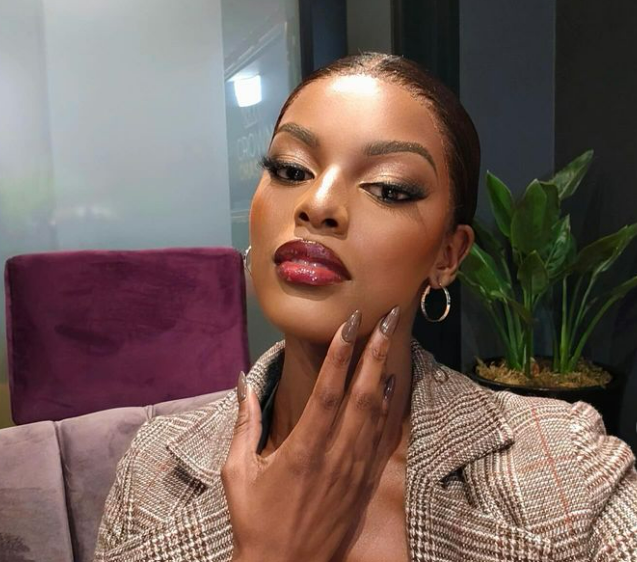
In a world that celebrates unity and cultural diversity, beauty pageants offer more than just a stage for glamour; they serve as platforms to foster inclusion, break down stereotypes, and empower women globally. Yet, recent actions taken against Miss Universe Nigeria, Chidimma Adetshina, by South African authorities threaten to undermine these values. The Progressive Forces of South Africa have launched a petition to bar Adetshina from representing Nigeria at the international Miss Universe pageant, citing allegations of identity theft due to unresolved concerns surrounding her and her mother’s South African identity documents. This move, while draped in legal concerns, appears to be rooted more in prejudice and a skewed view of nationality than in legitimate claims of identity fraud.
Despite having previously withdrawn from the Miss South Africa pageant under similar pressure, Adetshina’s resilience and ultimate victory at Miss Universe Nigeria demonstrate her rightful place on the global stage. The accusations against her, fueled by a vocal faction, raise important questions about the boundaries of citizenship, belonging, and the unnecessary politicization of a platform meant for celebration and empowerment.
It is essential to understand the unique dynamics that underpin Adetshina’s story. Born to a Nigerian father and a Mozambican-born mother, she represents a merging of cultures that echoes Africa’s rich and diverse heritage. For centuries, African identity has been more of a tapestry than a linear tale, with interwoven roots stretching across borders. As such, it is troubling when the legitimacy of one’s identity is called into question based solely on bureaucratic technicalities.
In Adetshina’s case, the Department of Home Affairs in South Africa recently announced its intent to revoke her and her mother’s South African identity and travel documents. While the Department’s legal justification for this decision hinges on document verification, this appears disproportionately severe given the lack of proven criminal intent or harm. In most cases, people are given a grace period to correct any issues related to documentation. Revoking identification, especially without due process, strips an individual of their dignity and fundamental rights.
Adetshina’s experience reflects a concerning pattern, as this marks the second instance of South Africans attempting to bar her from a pageant. In her first brush with discrimination, she was forced to withdraw from the Miss South Africa pageant, succumbing to pressure and the notion that she was “not South African enough.” Her re-entry into the world of pageantry through Miss Universe Nigeria should have symbolized a fresh start, a reclamation of her dignity and potential. Instead, it has reawakened the same old prejudices, suggesting that the opposition against her may be less about adherence to laws and more about identity politics.
The Progressive Forces of South Africa justify their stance by arguing that her participation compromises Miss Universe’s “integrity.” This, however, seems to imply a misguided understanding of what the pageant stands for. Miss Universe prides itself on inclusivity, diversity, and the celebration of multicultural backgrounds. To impose rigid nationalistic constraints on contestants erodes these core values and threatens to turn the platform into a battleground for exclusionary identity politics.
Adetshina’s situation underscores a troubling contradiction within modern-day pageantry. Beauty contests today are marketed as platforms for women’s empowerment, pushing contestants to be ambassadors of change in their societies. They celebrate qualities like resilience, intelligence, and compassion over mere physical appearance. Yet, Adetshina’s experience illustrates how easily women’s achievements can be dismissed based on arbitrary criteria. The intense scrutiny over her identity not only shifts attention away from her accomplishments but actively belittles them.
One has to question why, in an age that champions women’s progress, we still see cases where a woman’s achievements are overshadowed by attempts to delegitimize her for reasons she cannot control. Her success in winning the Miss Universe Nigeria title should have granted her a fair opportunity to showcase her talent and serve as a role model on an international stage. Instead, she is being unfairly penalized.
The petition against Adetshina, backed by over 1,182 signatories, is a stark reminder of how easily a platform meant to unite can be weaponized to divide. South Africa, like much of Africa, faces ongoing challenges in fostering unity among its diverse populations. Anti-immigrant sentiment has flared in various contexts, often targeting individuals and communities with long-standing roots in the country. By targeting Adetshina, this petition does more than attempt to deny one person an opportunity, it sends a message to all Africans of mixed heritage that they must “prove” their worthiness and defend their identity at every turn.
In a world that is increasingly globalized, where people of different backgrounds live and thrive together, the fixation on rigid, single-nation identities is outdated and counterproductive. Miss Universe, as an institution, should exemplify progress, unity, and the celebration of shared humanity. Excluding Adetshina from this stage sends the wrong message, portraying beauty pageants not as inclusive events but as nationalist exercises, a perception that could have long-lasting, negative effects on the industry.
The Miss Universe Organization has a choice in how it responds to the pressures surrounding Adetshina’s participation. If the organization gives in to these exclusionary demands, it risks compromising its principles of inclusivity and representation. If, however, it stands firm in support of her rightful place on stage, it will uphold its mission of breaking down borders and uniting people across cultures.
As individuals, it is essential for us to question why some people are so quick to erect walls around identity, especially in contexts where those barriers do more harm than good. Adetshina’s fight is not merely a personal struggle; it reflects the broader challenges of young Africans who face complex identity issues amid stringent nationalism.
To truly support young African women, we must encourage platforms like Miss Universe to be places of acceptance and opportunity, not spaces where nationality overshadows talent, character, and commitment.
In closing, let us not allow rigid identity politics to rob deserving individuals like Chidimma Adetshina of their dreams. Let her beauty and intellect shine, for she represents more than herself, she embodies the hope of a united, progressive Africa. Miss Universe has the potential to be a beacon of this unity, a reminder that beauty knows no borders and that diversity is our greatest strength. Will the pageant stand up for these ideals, or will it cave to narrow definitions of belonging? For the sake of progress, let’s hope it chooses the former.