Africa
Beyond Roads and Airstrikes: Dismantling Nigeria’s Internal Colonialism in 2026 -By Leonard Karshima Shilgba
The obsession with visible infrastructure, while neglecting invisible human suffering, has produced a nation where millions feel abandoned by the state — and abandoned citizens eventually withdraw loyalty, obedience, and hope.

As Nigeria steps into 2026, the nation stands at a paradoxical crossroads. On one hand, we witness an unprecedented display of physical infrastructure — highways, flyovers, rail lines, bridges, and gleaming government edifices — loudly advertised as evidence of progress. On the other hand, beneath this concrete veneer lies a growing ocean of human deprivation: mass poverty, food insecurity, collapsing access to healthcare and education, and a swelling population of young Nigerians whose lives are structurally excluded from hope.
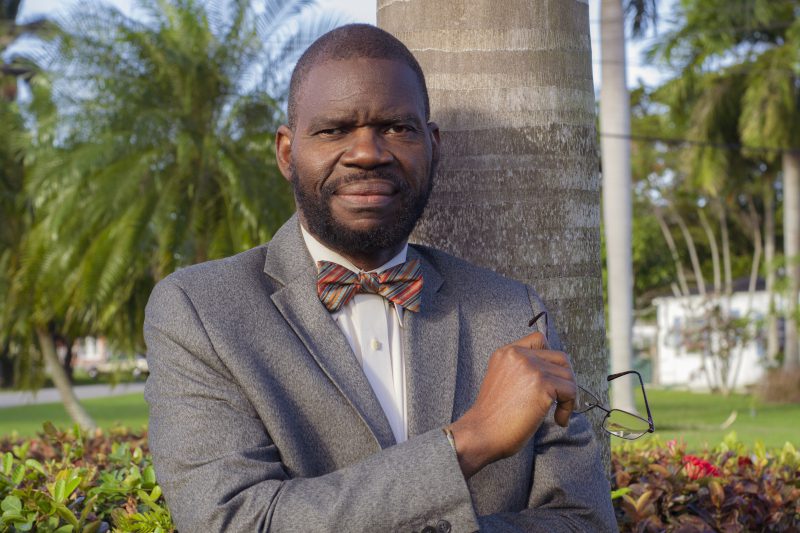
This contradiction lies at the heart of what I have described — both in my serialized essays and in my now-published book, Nigeria and Her Seven Secrets: Building a More Perfect Union — as Nigeria’s internal colonialism: a system in which large segments of the population are governed but not developed, counted but not invested in, taxed emotionally through patriotic rhetoric but denied tangible social citizenship.
Recent international developments — including foreign military actions against insurgent groups operating within Nigeria — have again drawn global attention to our security crisis. While such external interventions may degrade violent networks tactically, they do not address the fertile soil in which insecurity grows. That soil is not ideological extremism alone; it is grotesque material poverty produced by deliberate policy neglect.
Internal Colonialism and the Myth of Infrastructure-Only Development
Nigeria’s ruling elite, across party lines, have perfected a narrow definition of governance: build physical infrastructure, commission it publicly, and declare progress. Roads are important. Bridges matter. Railways have value. But infrastructure without social architecture is a hollow triumph.
A nation cannot asphalt its way out of insecurity.
Across vast swathes of Nigeria today:
- There is no functional national health insurance system that covers the poor in a meaningful way.
- There is no structured food assistance framework tied to nutrition data and household vulnerability.
- There is no public housing or rent-support architecture for low-income families in urban or rural Nigeria.
- There is no integrated, data-driven education support system that tracks children from primary school through tertiary education and intervenes early to prevent dropout, illiteracy, and despair.
This is not a failure of capacity. It is a failure of political philosophy.
Internal colonialism thrives when governments invest heavily in things but not in people — when citizens become spectators to development rather than beneficiaries of it. And where mass poverty is normalized, violent and criminal alternatives inevitably emerge.
What the Nigerian President Must Do in 2026
2026 must mark a pivot from symbolic governance to social-state construction. The President must:
- Declare Social Welfare a National Security Priority
Insecurity must be formally recognized as a downstream effect of poverty, not merely a policing failure. This reframes welfare spending as preventive security investment. - Establish a Unified National Social Protection Framework
Fragmented and politicized interventions must give way to a single, legally backed system covering:- Universal basic health coverage for the poorest 40%
- Conditional food and nutrition support
- Education support linked to attendance and performance
- Transitional housing and rent support for vulnerable households
- Mandate a National Social Registry with Real-Time Data
Without reliable data, welfare becomes patronage. The President must insist on a technology-driven registry that cuts across states and ministries (Nigeria may leverage on existing databases such the National Identity registry). - Rebalance Capital and Recurrent Spending
Capital projects should no longer crowd out human development expenditure. Roads must not be funded at the expense of lives.
What the National Assembly Must Do
The federal legislature has largely abdicated its historic responsibility by acting as a budget-clearing house rather than a nation-building institution. In 2026, it must:
- Legislate Social Citizenship Rights
Nigerians must enjoy enforceable rights to basic healthcare access, basic education support, and minimum social protection — not discretionary charity provocatively called “palliatives” in the Nigerian jargon. - Enact a National Food Security and Assistance Act
Hunger in a food-producing nation is legislative malpractice. Food assistance must be structured, transparent, and measurable. - Strengthen Fiscal Federalism for Human Development
Revenue allocation debates must shift from elite sharing formulas to outcomes: literacy rates, maternal mortality, school completion, and employment.
What State Governments and Legislatures Must Do
States cannot hide behind federal excuses. Internal colonialism is often most brutal at the sub-national level.
State governments must:
- Redirect prestige projects toward community-level social investment
- Establish state health insurance schemes that actually work for informal workers
- Pass tenancy, housing, and mortgage-support laws that protect low-income earners
- Use education data to prevent children from disappearing into generational poverty
State assemblies must stop functioning as appendages of governors and become defenders of social justice.
The Responsibility of the Political Opposition
Nigeria’s opposition parties face a moral test in 2026. Opposition that exists solely to win the next election — without offering a new national structure — is a betrayal of the future.
The opposition must:
- Articulate an Alternative Social Contract
Nigerians need to know not just who will govern, but how society will be reorganized for inclusion. - Build Cross-Ethnic, Cross-Regional Policy Coalitions
Internal colonialism survives on division. Opposition politics must rise above ethnic mobilization. - Champion Structural Reform, Not Just Power Rotation
Changing faces without changing systems only recycles injustice.
From Internal Colonialism to a More Perfect Union
Nigeria does not lack talent. It lacks moral courage in governance.
The obsession with visible infrastructure, while neglecting invisible human suffering, has produced a nation where millions feel abandoned by the state — and abandoned citizens eventually withdraw loyalty, obedience, and hope.
Security operations, whether domestic or foreign-assisted, can suppress violence temporarily. But only justice, inclusion, and social investment can dry up its source.
If 2026 is to be remembered as a turning point, Nigeria must finally accept a simple truth:
A nation that refuses to care for its poorest citizens is quietly manufacturing its own insecurity.
Dismantling internal colonialism is no longer optional. It is the unfinished work of nationhood — and the only path toward a truly more perfect union.