Africa
Cardoso: Placing Nigeria at the Heart of Africa’s Financial Future -By Zekeri Idakwo Laruba
Ultimately, when Cardoso brings heads of African apex banks together, he is not merely hosting diplomatic meetings, he is building the scaffolding for a continental monetary alliance. It is a bold, forward-looking strategy that places Nigeria at the heart of Africa’s financial future and redefines what it means to be a Central Bank in the 21st century.

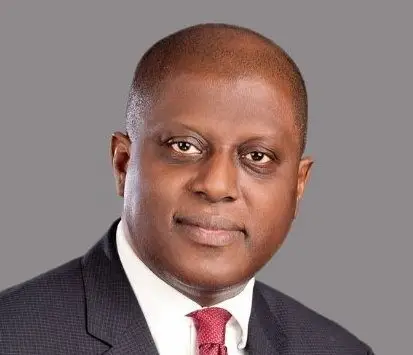
It is often said that “if you want to go fast, go alone, but if you want to go far, go together.” This African proverb found new relevance when the Governor of the Central Bank of Nigeria (CBN), Mr. Olayemi Cardoso, began spearheading efforts to foster stronger collaboration among African central banks. His recent engagements with counterparts from Egypt and Malawi reflect a deliberate shift toward a more united monetary and economic future for the continent, one built not on isolated reforms, but on collective strength, policy alignment, and shared vision.
On Thursday, June 26, 2025, Mr. Cardoso hosted Mr. Hassan Abdalla, the Governor of the Central Bank of Egypt, at the CBN Headquarters in Abuja. The meeting was followed the next day by the visit of Dr. MacDonald Mwale, Governor of the Central Bank of Malawi. These were not routine diplomatic visits but targeted high-level discussions focused on bilateral central banking cooperation, monetary policy coordination, and the joint pursuit of institutional development. They mark a turning point in how Nigeria, under Cardoso’s leadership, sees its role within Africa’s financial ecosystem, as a catalyst for unity and a driver of continental economic resilience.
The significance of these engagements is profound. For too long, African central banks have operated in silos, often guided by national objectives without deep consideration for regional synchronisation In an era where economies are more interconnected than ever, particularly under frameworks such as the African Continental Free Trade Area (AfCFTA), such collaborations are not only desirable but necessary. Coordinated monetary policies can help mitigate the negative spillover effects of global shocks, stabilise currencies, and ensure that financial regulations evolve in tandem across borders, thus reducing systemic vulnerabilities.
For Nigeria, these collaborations offer several strategic advantages. Firstly, they enable the CBN to position itself as a leading voice on the continent, especially at a time when its macroeconomic fundamentals are showing cautious signs of recovery. The latest balance of payments report for Q1 2025 revealed a current account surplus of $3.73 billion, driven primarily by a significant rise in non-oil exports and a decline in imports. This marks a 1.08 percent increase from the $3.69 billion recorded in the same period in 2024. These improvements stem from stronger export performance and currency depreciation, which enhanced the global competitiveness of Nigerian goods.
Crude oil exports stood at $8.59 billion, while non-oil and electricity exports rose to $2.66 billion, bolstered by a 30.39 percent increase in non-oil exports. On the other hand, non-oil imports declined from $7.37 billion to $6.77 billion, indicating a shift toward domestic consumption and import substitution. Total exports climbed to $13.91 billion, representing a 9.79 percent increase, while imports fell to $9.75 billion, down from $10.05 billion. These figures illustrate a narrowing trade gap and the gradual rebalancing of Nigeria’s external sector.
However, these domestic gains must be seen in a broader African context. Without regional alignment, Nigeria risks being an outlier in a fragmented system vulnerable to inconsistent regulations, unstable cross-border capital flows, and duplicative financial infrastructures. By collaborating with Egypt, a key economic hub in North Africa, and Malawi, an emerging player in Southern Africa, Nigeria is helping to lay the groundwork for a more integrated continental financial architecture. Such efforts could eventually lead to a harmonised African payment system, standardised regulatory norms, and even discussions around regional currency stability mechanisms.
These engagements also come at a time when foreign aid and grants to African countries are shrinking, as noted by the CBN in its analysis of a 17.86 percent drop in secondary income flows in Q1 2025. The apex bank linked this decline to a recent executive order by the United States President, underscoring the urgency for African countries to look inward and to one another for solutions. Intra-African cooperation, particularly among central banks, presents a pathway to resilience in the face of reduced external support.
Governor Cardoso’s broader message is equally compelling. In calling on African leaders both on the continent and in the Diaspora to commit to building “the resilient institutions our people need, our economies require, and our continent deserves,” he is articulating a vision that transcends national interest. It is a call for institutional rebirth, a recognition that true economic sovereignty for Africa will not come through isolated reforms, but through united efforts that reinforce shared values and amplify collective strength.
Ultimately, when Cardoso brings heads of African apex banks together, he is not merely hosting diplomatic meetings, he is building the scaffolding for a continental monetary alliance. It is a bold, forward-looking strategy that places Nigeria at the heart of Africa’s financial future and redefines what it means to be a Central Bank in the 21st century.
Zekeri Idakwo Laruba is the Assistant Editor PRNigeria and Economic Confidential. idakwozekeri93@gmail.com