Forgotten Dairies
Changes To The Indonesian Constitution In The Shadow Of Global Norms: A Criticism Of Global Constitutionalism And The Practice Of Constitutional Borrowing -By Tomy Michael
Nevertheless, it must be acknowledged that Indonesia is not a completely passive object of constitutional globalization. The decision to retain Pancasila as the state’s foundation and not amend the Preamble to the Indonesian Constitution demonstrates a deliberate ideological barrier to the influence of global norms. This indicates that Indonesia is engaging in selective constitutional borrowing, even though the amendment ultimately seeks to restore the original form to maintain the integrity of the state.

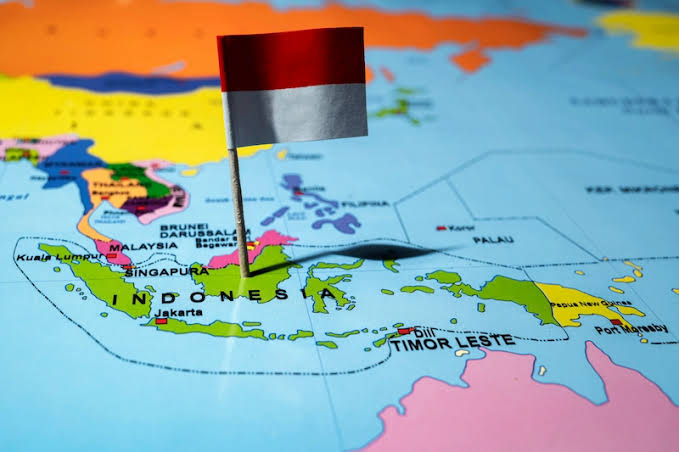
The 1945 Constitution of the Republic of Indonesia (the Indonesian Constitution) is an inseparable part of the Unitary State of the Republic of Indonesia. The Indonesian Constitution is the primary source of legislation. This is because Pancasila, as an ideology, cannot be forced, and therefore remains a central element of national life. Some empirical examples of calls for changes to the Indonesian Constitution include demonstrations against the creation of a job creation law, nutritional security, and the concept of a peace board. The most significant changes to the Indonesian Constitution occurred between 1999 and 2002, a time when the global economy was shrinking. Indonesia ultimately enacted Law of the Republic of Indonesia Number 5 of 1999 concerning the Prohibition of Monopolistic Practices and Unfair Business Competition. The form of this law is part of the International Monetary Fund’s funding offer to provide economic justice for the people of Indonesia.
The dominant narrative portrays constitutional amendments as the pure result of internal popular demands for restrictions on power and strengthening of human rights. However, this reading is incomplete if it ignores the global context that shaped the direction, substance, and design of Indonesian constitutional changes. Within this framework, the crucial question to ask is not simply whether global norms influenced Indonesian constitutional changes, but rather the extent to which these influences shaped Indonesia’s constitutional character post-Reformasi.
From the perspective of global constitutionalism, national constitutions no longer stand as closed, fully sovereign documents, but rather as part of a global normative regime that emphasizes liberal democracy, the rule of law, and the protection of human rights. Universal constitutional values can be internalized by all nations, one of which is the development of human rights, which stems from fundamental human obligations. The influence of the Universal Declaration of Human Rights is clearly evident in Articles 28A to 28J of the Indonesian Constitution.
Global constitutionalism carries an ideological bias in the form of individualistic liberalism, often assumed to be the most valid form of democracy. As a result, local constitutional values, which are communal and contextual, are at risk of being marginalized. In the Indonesian context, the formulation of human rights guarantees stems from the individualistic international human rights. It excludes God but relies on the free human being. This is one reason why Indonesia has not ratified the Universal Declaration of Human Rights, but has incorporated its teachings into the Indonesian Constitution.
The influence of global norms is also evident through the practice of constitutional borrowing, namely the adoption of constitutional institutions, principles, and mechanisms from other countries’ legal systems. For example, the establishment of the Constitutional Court, influenced by Hans Kelsen, the impeachment of a president and/or vice president from the United States, and the state’s concern for the poor, which is synonymous with socialist teachings. This pattern reflects global norms, and theoretically, constitutional borrowing is often interpreted as a rational process of adopting best practices. Constitutional borrowing is often driven by international pressure, the interests of domestic elites, and the need for global legitimacy.
Referring to Ran Hirschl’s theory in his book, City, State: Constitutionalism and the Megacity, it is known that modern constitutions no longer consider state constitutions but rather city constitutions. The mechanism of hegemonic preservation, defined as the growth of judicial power, can be explained by the interaction between the vested interests of political actors, economic elites, and judges, all working to create constitutional reforms in a manner that suits their own agendas. The construction of the Indonesian state will be paralleled by that of large cities like Brisbane or Sydney. The existence of these two cities, similar to Surabaya or Jakarta, means that the influence of constitutional changes from these two cities is greater without negating other cities in Indonesia.
Criticism of constitutional borrowing also lies in the issue of contextual appropriateness. Constitutional institutions that are successful in one country are not necessarily effective when transplanted to another country with different social, cultural, and political conditions. In practice, some institutional designs resulting from amendments to the Indonesian Constitution have actually given rise to fragmentation of authority, conflict between state institutions, and legal uncertainty.
Furthermore, the dominance of global norms in the amendments to the Indonesian Constitution also raises serious questions about constitutional sovereignty. When global standards become the primary measure of constitutional legitimacy, there is a risk that the constitution no longer fully reflects the will of the people, but rather the will of the international community. This means that the constitution is part of the global order, and this has a more positive impact on Indonesian society than solely considering domestic needs.
Nevertheless, it must be acknowledged that Indonesia is not a completely passive object of constitutional globalization. The decision to retain Pancasila as the state’s foundation and not amend the Preamble to the Indonesian Constitution demonstrates a deliberate ideological barrier to the influence of global norms. This indicates that Indonesia is engaging in selective constitutional borrowing, even though the amendment ultimately seeks to restore the original form to maintain the integrity of the state.
Thus, amending the Indonesian Constitution represents a meeting point between global constitutionalism and national constitutional identity. The challenge ahead lies not in rejecting global norms a priori, but rather in building a constitutional model that is critical, contextual, and rooted in the values of Pancasila. Without such a critical stance, the constitution risks becoming an instrument of global imitation that loses its emancipatory power for the Indonesian people. Global norms must remain, but their influence remains determined by the attitudes of those in power. Global norms must be a source of justification for amendments, without neglecting Indonesia’s legal sources, namely customary and religious law. For rapid change to occur, global norms must be accompanied by a minor disaster, such as COVID-19, but Indonesia must still be able to maintain them.
Tomy Michael is the Head of the Undergraduate Law Program at Universitas 17 Agustus 1945 Surabaya, Indonesia. He holds a doctorate in law from Brawijaya University and is interested in state studies and legal hermeneutics.