Africa
Deforestation: The Steady Destruction of Our Natural Lifeline -By Abdulhamid Rabiu
Deforestation is not just the loss of trees; it is the loss of life, balance, and future security. Protecting our forests today is an investment in a healthier planet and a safer tomorrow for generations to come.

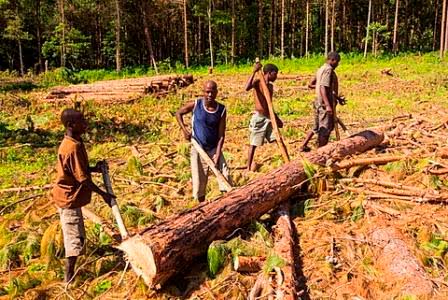
Deforestation remains one of the most pressing environmental challenges facing the world today. It refers to the large-scale cutting down of trees and clearing of forests, often without adequate plans for replacement. While forests once covered vast portions of the earth, human activities have rapidly reduced them, placing both nature and human survival at serious risk.
Forests play a critical role in maintaining ecological balance. They absorb carbon dioxide from the atmosphere, help regulate climate, protect soil from erosion, and serve as habitats for countless plant and animal species. In many communities, forests also provide livelihoods through farming, medicine, fuelwood, and timber. When forests are destroyed, these benefits are lost, and the effects ripple through the environment and society.
The causes of deforestation are largely driven by human demand. Agricultural expansion, logging for timber, fuelwood collection, urban development, and road construction are among the leading contributors. In developing countries, poverty and lack of alternatives often push communities to depend heavily on forest resources for survival. Illegal logging and weak enforcement of environmental laws further worsen the situation.
The consequences of deforestation are severe and far-reaching. One major impact is climate change. Trees act as carbon sinks, and when they are cut down or burned, the stored carbon is released into the atmosphere, increasing global warming. Deforestation also leads to loss of biodiversity, as many species lose their natural habitats and face extinction. Additionally, the removal of trees exposes soil to erosion, resulting in poor agricultural yields, flooding, and desertification.
Human communities are not spared from these effects. Flooding becomes more frequent when forests can no longer absorb rainfall. Water sources dry up, and weather patterns become unpredictable. In rural areas, farmers suffer reduced productivity, while urban populations face rising food prices and environmental hazards.
Addressing deforestation requires collective responsibility. Governments must enforce forestry laws, promote sustainable land use, and invest in reforestation programs. Communities should be educated on the importance of forest conservation and encouraged to adopt alternative sources of energy and income. Individuals can contribute by planting trees, reducing paper waste, and supporting environmentally responsible policies.
Deforestation is not just the loss of trees; it is the loss of life, balance, and future security. Protecting our forests today is an investment in a healthier planet and a safer tomorrow for generations to come.