Connect with us

Africa

Deji Adeyanju Crossed The Line In Attacks On IGP Egbetokun; Speech Has Limits -By Danjuma Lamido

The law, while not a gag tool, is there to protect individuals from reckless and reputation-damaging speech. It may be time for it to remind us all that words, especially when spoken in public, have consequences.

Published

on

Deji-Adeyanju
In a time when democratic discourse and civic engagement are vital for national growth, the right to free speech remains one of the bedrocks of a free society.
Activists and citizens alike must have the freedom to critique public officials. However, that right comes with responsibility and legal boundaries.

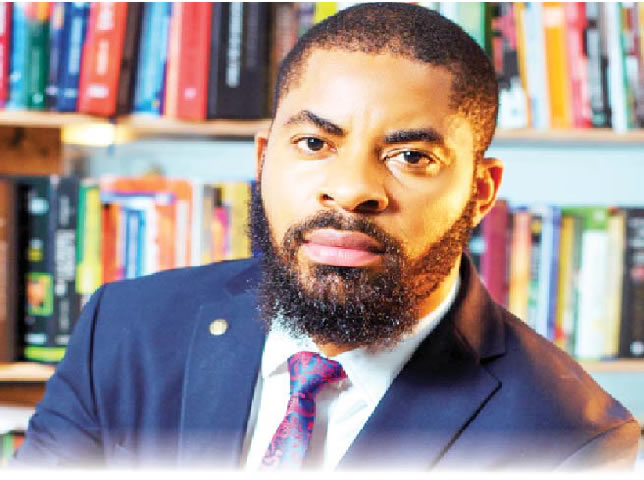
In the case of Deji Adeyanju’s recent remarks labelling the Inspector General of Police, Kayode Egbetokun, as “useless and shameless,” there is no doubt that the activist crossed the line, morally, ethically, and legally.

Criticism of public officials is not only allowed, it is necessary. But there is a difference between informed critique and malicious insult. Calling the IGP “useless” and “shameless” isn’t just inflammatory; it serves no constructive purpose in a national dialogue.

These words are not policy criticisms. They are personal attacks, intended to demean rather than enlighten.

There is a standard of decorum expected in public debate, especially when targeting individuals holding public office.

Advertisement

One can question the effectiveness of the police under Egbetokun’s leadership or highlight failures in handling specific incidents. But reducing the country’s top law enforcement officer to a target of crude insult undermines not only the individual but the institution he represents.

While Nigeria’s constitution guarantees freedom of expression under Section 39, this freedom is not absolute. The Cybercrimes (Prohibition, Prevention, etc.) Act 2015, the Penal Code, and the Criminal Code all contain provisions against defamation and injurious falsehoods.

Since Adeyanju made these remarks on a public platform, social media, he is already exposed to potential charges under Section 24 of the Cybercrimes Act, which criminalises knowingly sending offensive or menacing messages through communication services.

Moreover, his words could meet the threshold for criminal defamation, depending on the context, reach, and intent behind them.

Let’s be clear: criminalising speech should be a measure of last resort, especially in a democracy. But when speech descends into outright character assassination, the law must be considered.

Advertisement

Adeyanju’s comments also risk undermining public trust in national institutions. The IGP, regardless of political leanings or administrative shortcomings, is the symbol of law enforcement in Nigeria.

Vilifying him with base language damages not just his personal integrity but chips away at public confidence in policing and governance.

There is also a matter of consistency. Adeyanju has been a vocal critic of the abuse of power, but by resorting to name-calling, he mirrors the very behaviour he opposes. Accountability must be pursued with intellect, facts, and civility, not insults.

Deji Adeyanju has every right to challenge the IGP’s performance, policies, or perceived inaction. That’s democracy. But calling him “useless and shameless” is not democratic discourse; it is slander cloaked in activism. We must not confuse vulgarity for courage or defamation for dissent.

Public figures and activists have a duty to elevate the national conversation, not degrade it. If Adeyanju truly believes the IGP has failed in his duty, let him make his case with facts, not invective.

Advertisement

The law, while not a gag tool, is there to protect individuals from reckless and reputation-damaging speech. It may be time for it to remind us all that words, especially when spoken in public, have consequences.

Danjuma Lamido is the Publicity Director of the Integrity Youth Alliance and writes from Adamawa. Email: danjumalamido2011@gmail.com

Continue Reading
Advertisement
Click to comment

Leave a Reply

Your email address will not be published. Required fields are marked *

Trending Contents

Topical Issues

EL-Rufai EL-Rufai
Africa6 hours ago

If You Live in a Glass House, Don’t Throw Stones: Nemesis and the Legal and Political Battles Surrounding Nasir El-Rufai -By Daniel Nduka Okonkwo

The unfolding drama reflects the ancient concept of nemesis, not merely as an enemy, but as an inevitable reckoning. In...

Peter Obi Peter Obi
Africa15 hours ago

Is Presidential Ambition Now A Crime? The Ordeal Of Peter Obi And The Cost Of Political Aspiration -By Isaac Asabor

If the right to oppose is weakened, the right to choose is weakened with it. The future of Nigeria’s democracy...

Mukaila Habeebullah Mukaila Habeebullah
Africa1 day ago

Jungle Justice And Criminal Justice System In Nigeria: Its Evaluation And Implication -By Mukaila Habeebullah

Mob justice has been something rampant in our society and it is the rationale behind the death of many innocent...

Hajia-Hadiza-Mohammed Hajia-Hadiza-Mohammed
Africa2 days ago

Issues In The Just Concluded FCT Council Elections -By Hajia Hadiza Mohammed

Perhaps, the issue of the electronic transmission of results will be revisited if we are desirous of credible elections in...

Daniel Nduka Okonkwo Daniel Nduka Okonkwo
Africa2 days ago

Nigeria’s Man-Made Darkness: Corruption, Grid Failure, and Why the Government Must Adopt Renewable Energy -By Daniel Nduka Okonkwo

Nigeria’s electricity crisis is not caused by a lack of resources. It is the product of governance failure. Corruption, policy...

Oluwafemi Popoola Oluwafemi Popoola
Africa2 days ago

The Mirabel Confession and Simi’s Reckoning -By Oluwafemi Popoola

What complicates this narrative for me is that I genuinely admire Simi’s artistry. There is something profoundly disarming about Simi’s...

beautiful-national-state-flags-nigeria-indonesia-together-blue-sky_337817-3350 beautiful-national-state-flags-nigeria-indonesia-together-blue-sky_337817-3350
Africa2 days ago

Procedural Democracy Without Substance: What Can Indonesia Learn From Nigeria? -By Tomy Michael

These two countries reflect a broader phenomenon: procedural democracy without substance. This form of democracy retains elections, political parties, and...

Breastfeeding mother Breastfeeding mother
Africa2 days ago

Growing Up Without a Safety Net: Examining the Impact of Single Motherhood on Child Upbringing in Nigeria -By Abdulazeez Toheeb Olawale

Single motherhood in Nigeria is shaped by diverse realities, ranging from personal choice to economic hardship and social disruption. While...

Hajia-Hadiza-Mohammed Hajia-Hadiza-Mohammed
Africa3 days ago

Still On The Travails Of El-Rufai And The Renewed Onslaught Against Opposition -By Hajia Hadiza Mohammed

That members of the APC are desperate to hang on to power at all costs is not in doubt and...

Sahara-Reporters Sahara-Reporters
Africa3 days ago

Two Decades of Truth Without Borders: Celebrating 20 Years of Sahara Reporters’ Fearless Journalism -By Daniel Nduka Okonkwo

It has reported on political crises, economic developments, and cultural shifts, providing alternative perspectives on African and global affairs. Its...